Legacy at Risk: The Uncertain Future of Western North Carolina’s Barn Quilt Trails
How ArtsvilleUSA’s Marks of Our Heritage program is racing to save the stories and traditions behind WNC’s barn quilt trails before they’re lost forever.

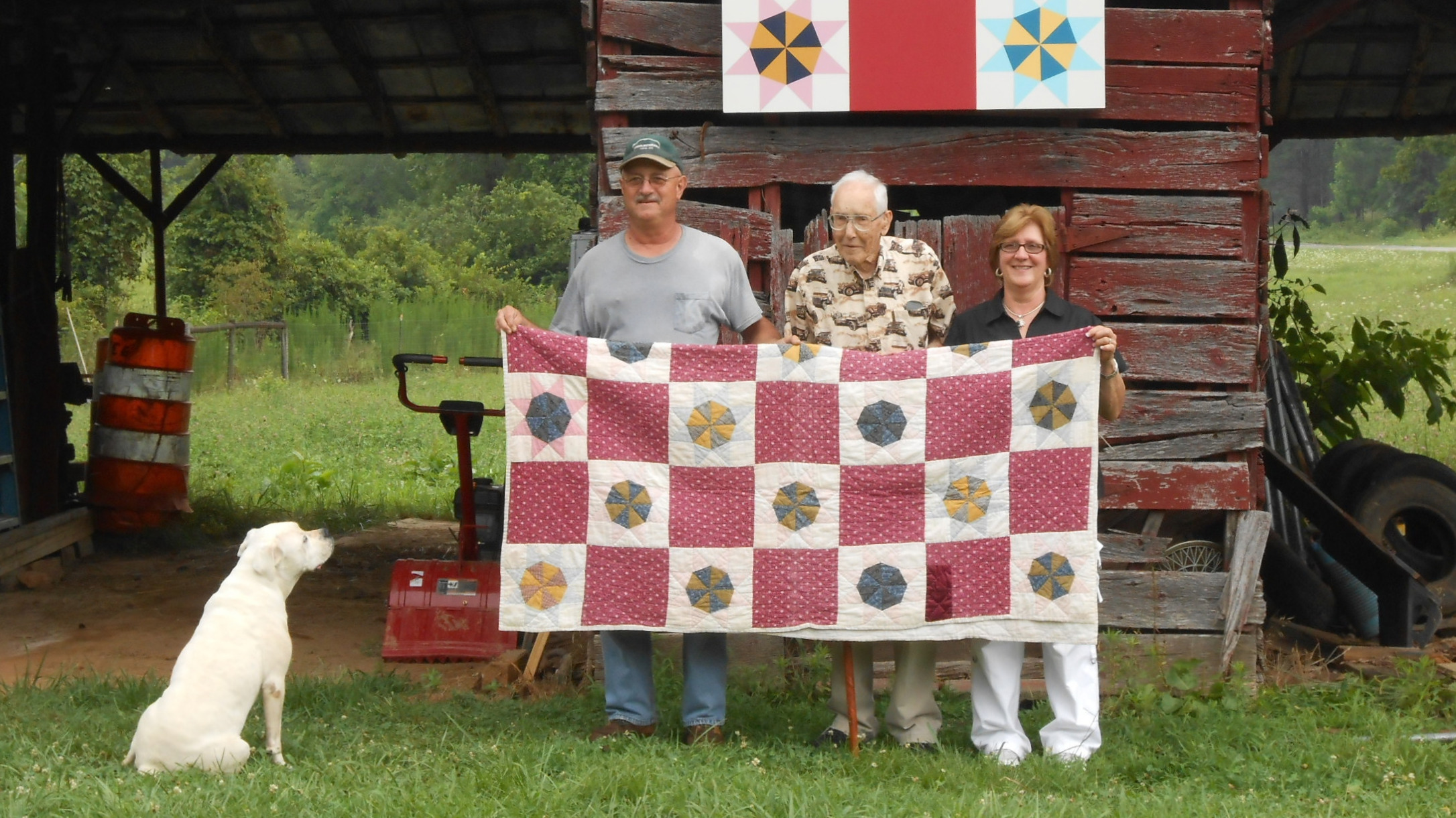
In McDowell County, NC, a panel of eight-pointed stars, set against a red checkerboard, hangs from a weathered corn crib overlooking a 250-acre farm of loblolly pines. For most travelers, the fourth stop along the McDowell Rural Heritage Quilt Trail—“Duncan Stars”—is just a passing splash of color interrupting the endless green of the Blue Ridge Mountains. But for those in the know, these painted wooden squares, patterned after traditional quilts, are layered with local history and remnants of shared memory.
For the Duncans, who bought their farm in 1955, those memories trace back to a family quilt of mysterious origin, once draped at the foot of a rope-cord bed. Well over a decade after its installation, “Duncan Stars” still shines from its post on the family’s century-old corn crib, a landmark once easy to spot on McDowell’s self-guided quilt trails tour. Yet the map to find it, and hundreds of other regional barn quilts, each with its own story, has all but vanished into the thin, mountain air.
Now, a new initiative, spearheaded by ArtsvilleUSA, aims to rekindle the region’s barn quilt tradition before it fades entirely from the landscape.
The History of Barn Quilt Trails in WNC
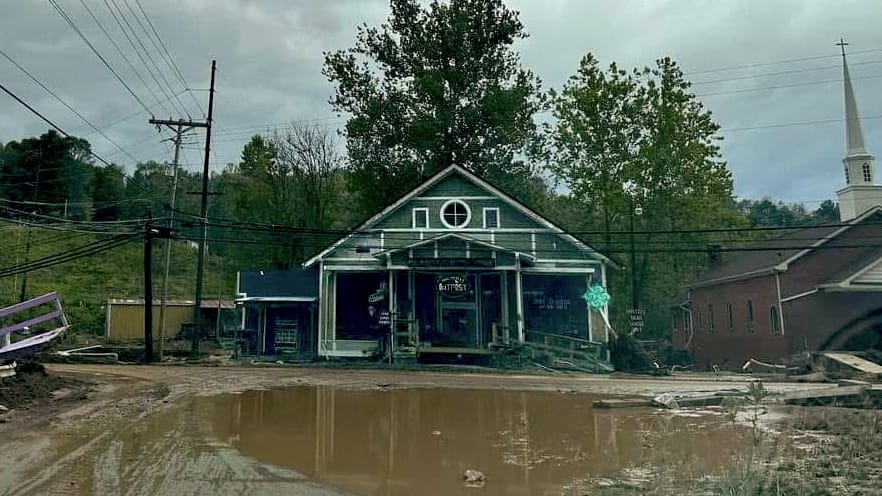
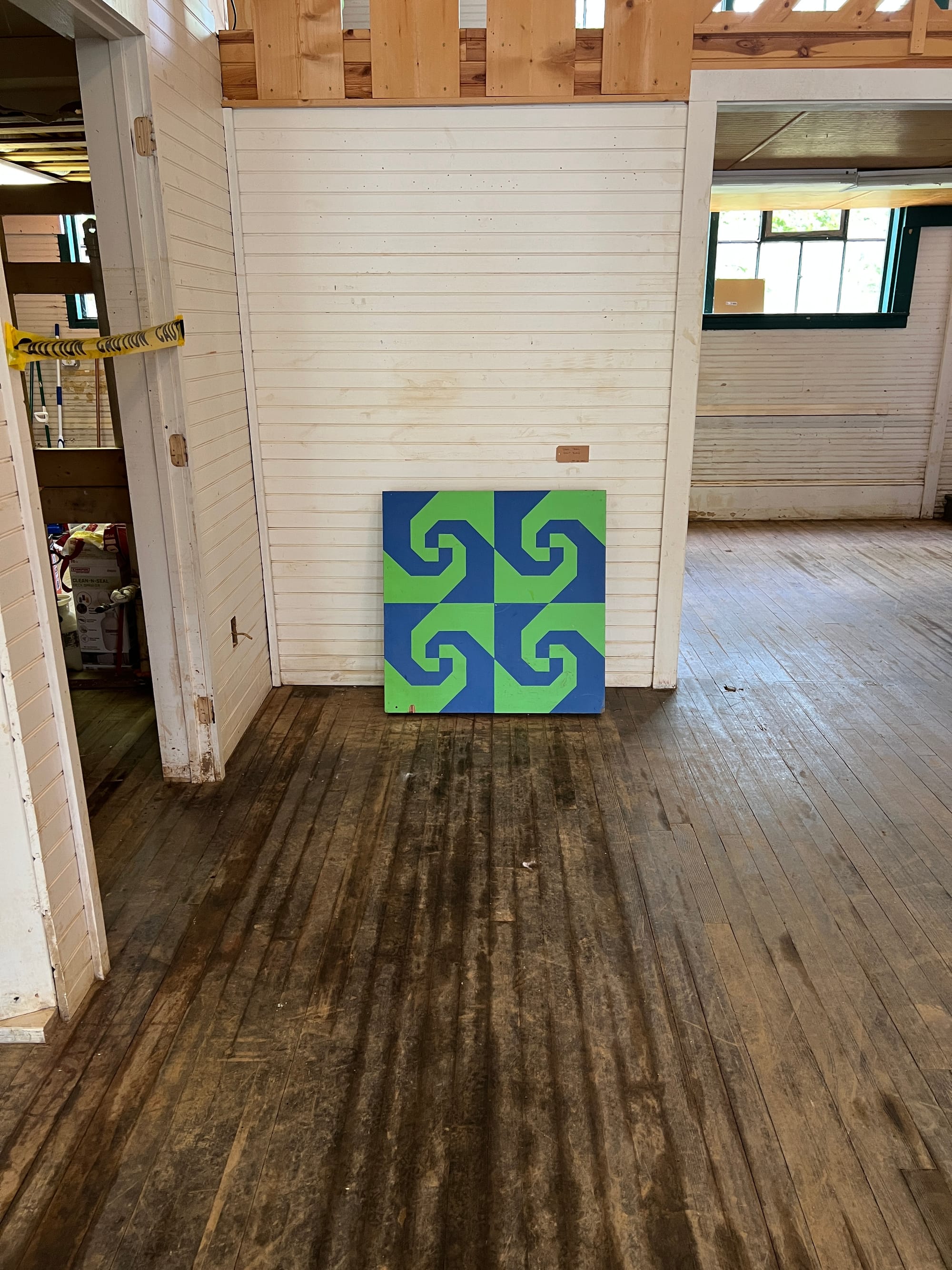
(l-r) OOAK Gallery, now the Historic Micaville building, hours after Hurricane Helene’s floodwaters receded, with its barn quilt on display; detail of the barn quilt square, part of the Quilt Trails of WNC, which OOAK owner Kari Weaver helped champion; photos: Kari Weaver.
Hundreds of barn quilts began popping up all over Yancey and Mitchell counties in the late 2000s, thanks to the vision of local quilter and community arts advocate Barbara Webster. Inspired by Donna Sue Groves of Ohio, who created America’s first barn quilt in honor of her mother and their Appalachian roots, Barbara saw the painted quilt squares as both keepers of cultural memory and a first-of-its-kind economic opportunity for the two counties.
After Barbara took over the barn quilt project from the Toe River Arts Council and launched the Quilt Trails of WNC nonprofit in 2008, the grassroots project quickly spread from rural barns to main street businesses, attracting tourists to towns like Burnsville. “At the core of the project is heritage, and on the side is economic development… we want to preserve the history and heritage of this area by putting up these quilt blocks and also to maybe bring some extra money into the county,” says Barbara in an interview with WKYK. “I realized that quilt trails could do that because once people got there, they were gonna have to eat lunch; they would want to do a little bit of shopping. I started recognizing that it was an economic boon for the county to keep this going,” she tells ArtsvilleUSA.
In 2019, management transitioned to the Haywood County Arts Council, headquartered at Folkmoot Friendship Center in Waynesville, where volunteers still meet each week to handcraft new quilt blocks for locals with stories to tell. Yet the future of these trails remains uncertain. Years of harsh weather, coupled with shaky federal arts funding and the retirement or passing of original stewards, have left most barn quilt trails around WNC in limbo. The devastation brought by Hurricane Helene in particular led to the discontinuation of many rural trails, such as those in Madison and Mitchell counties, with maps removed and some blocks lost or washed away altogether.
“These quilts, the stories behind them, and their importance in Western North Carolina are nearly lost,” says Elise Wilson, executive director of ArtsvilleUSA. “It’s all but gone.”
How the Marks of Our Heritage Program Works: Research, Outreach, and Partnership
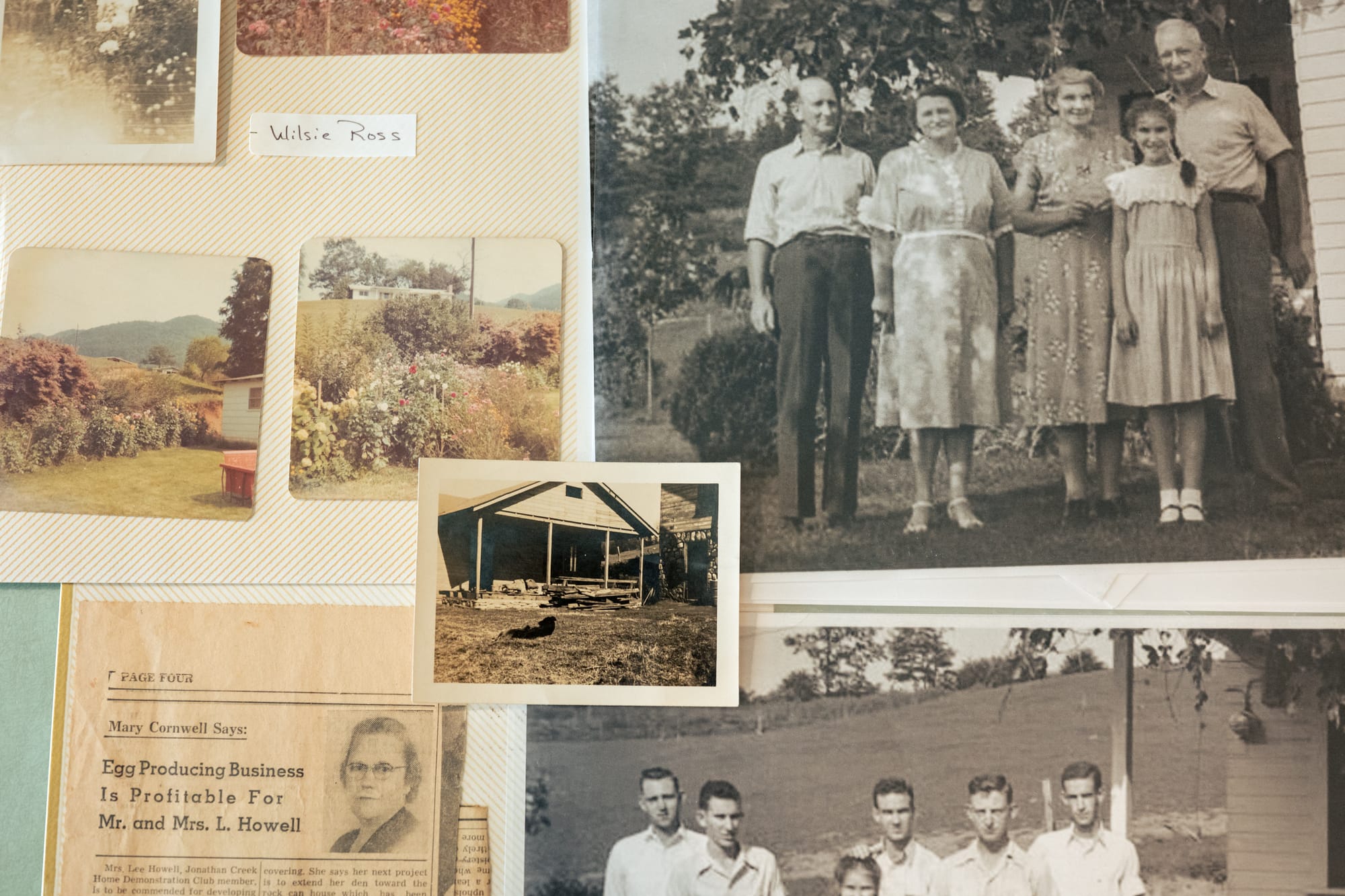
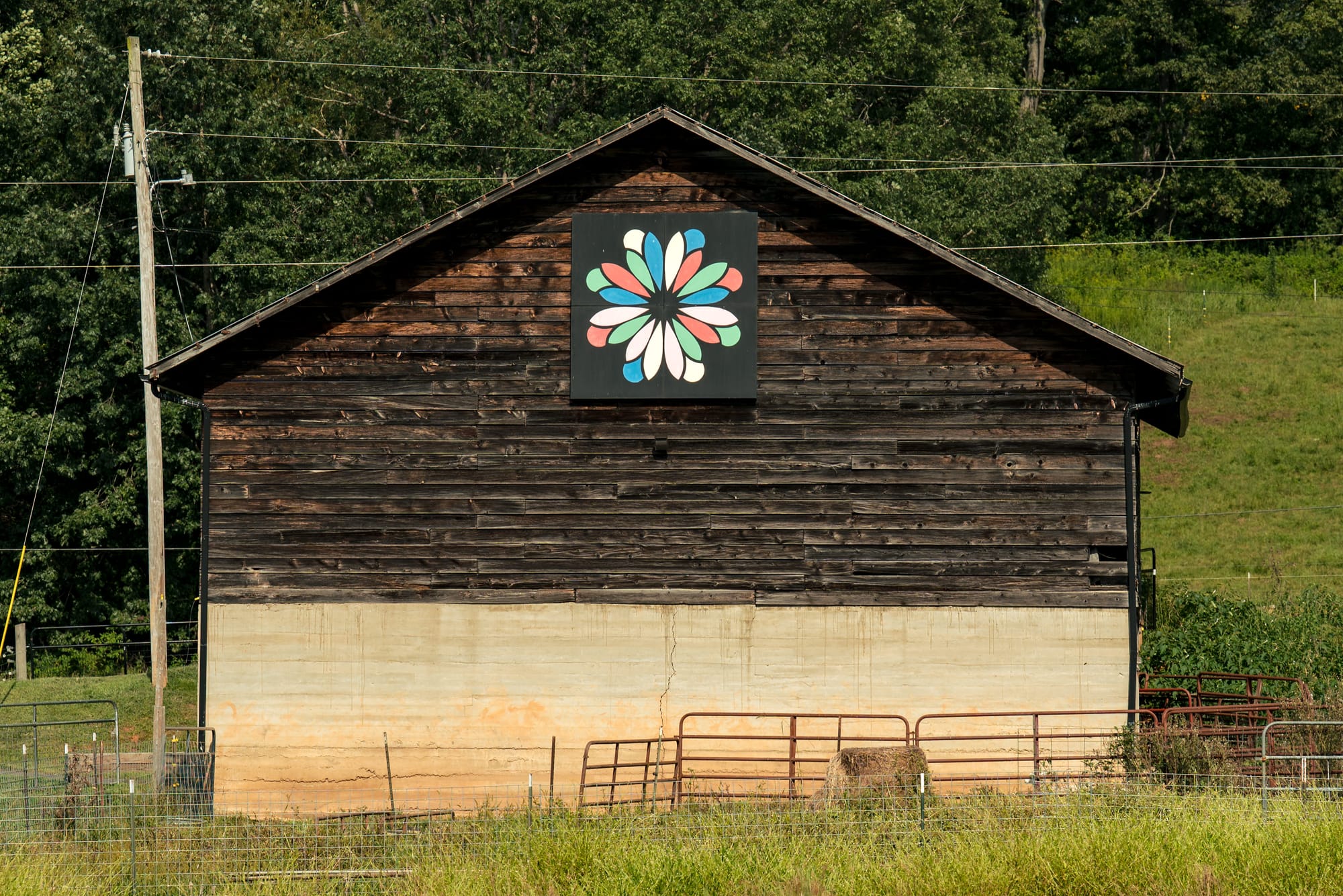
(l-r) Howell family photographs; Howell Farm barn quilt, 'Petals,' one of many blocks now being documented as part of ArtsvilleUSA’s Marks of Our Heritage project; photos: Michael Freas.
To save these stories before they disappear, ArtsvilleUSA has launched the Marks of Our Heritage project, a regional rescue effort focused on documenting and reinvigorating the barn quilt trails of Western North Carolina through historical research, community partnership, and grassroots action. The project’s goal is to create a comprehensive visual and oral history archive of barn quilts past and present, working in close collaboration with local leaders, historians, and artists. “What we are not doing is owning or restarting the quilt trails ourselves,” Elise explains. “The idea is to make it as easy as possible for communities to embrace this hyperlocal story, and give them resources that they wouldn't otherwise have to bring back this ingenious form of rural arts tourism, which is so desperately needed post-Helene.”
She adds, “We're here to honor the people who have always carried this tradition by supporting the next generation of trail stewards. The quilt trails belong to the community and the families that keep these stories alive. Our goal is just to replace the bulb on their spotlight.”
ArtsvilleUSA collaborates with a growing list of regional partners and artists, including Asheville-based photographer Michael Freas, who recently documented the Haywood County Arts Council Barn Quilt Trail, capturing the stories and portraits of local culture bearers like Lillian Howell Rumsey and her husband Sugar Bear Rumsey. His photographs are featured in a new exhibition on the ArtsvilleUSA gallery wall at the Ferguson Family YMCA in Candler, NC, running through the end of October 2026. Asheville photographer Tim Robison and barn quilt artist Tricia Palm of Burnsville Barn Quilts have also contributed original images and barn quilt designs to the show.
In addition to sharing these stories with county-level facilitators, ArtsvilleUSA is committed to making these stories accessible as part of the public record, partnering with DigitalNC and the Quilt Index—an international digital repository of over 100,000 quilts—to ensure Western North Carolina’s blocks are archived for the first time. “These quilts deserve to be treated with dignity, both as art objects and historical records, for future scholars and anyone who loves this region. And I don't want anyone to have to hunt as hard as we have to be able to access all of the incredible stories we've recovered,” Elise adds. “To date, 321 stories no longer available anywhere else online are now in our safekeeping.”
Community Engagement
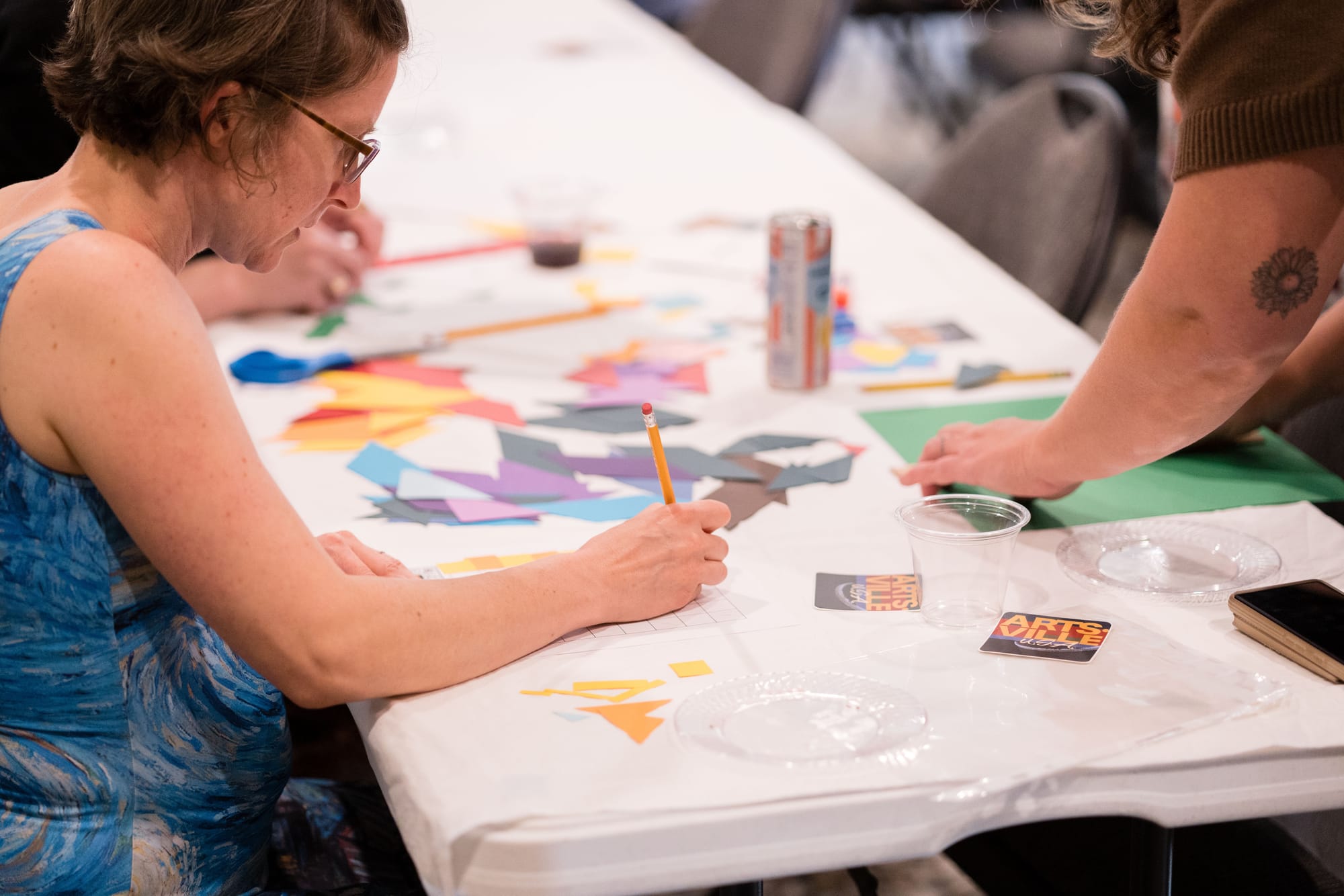
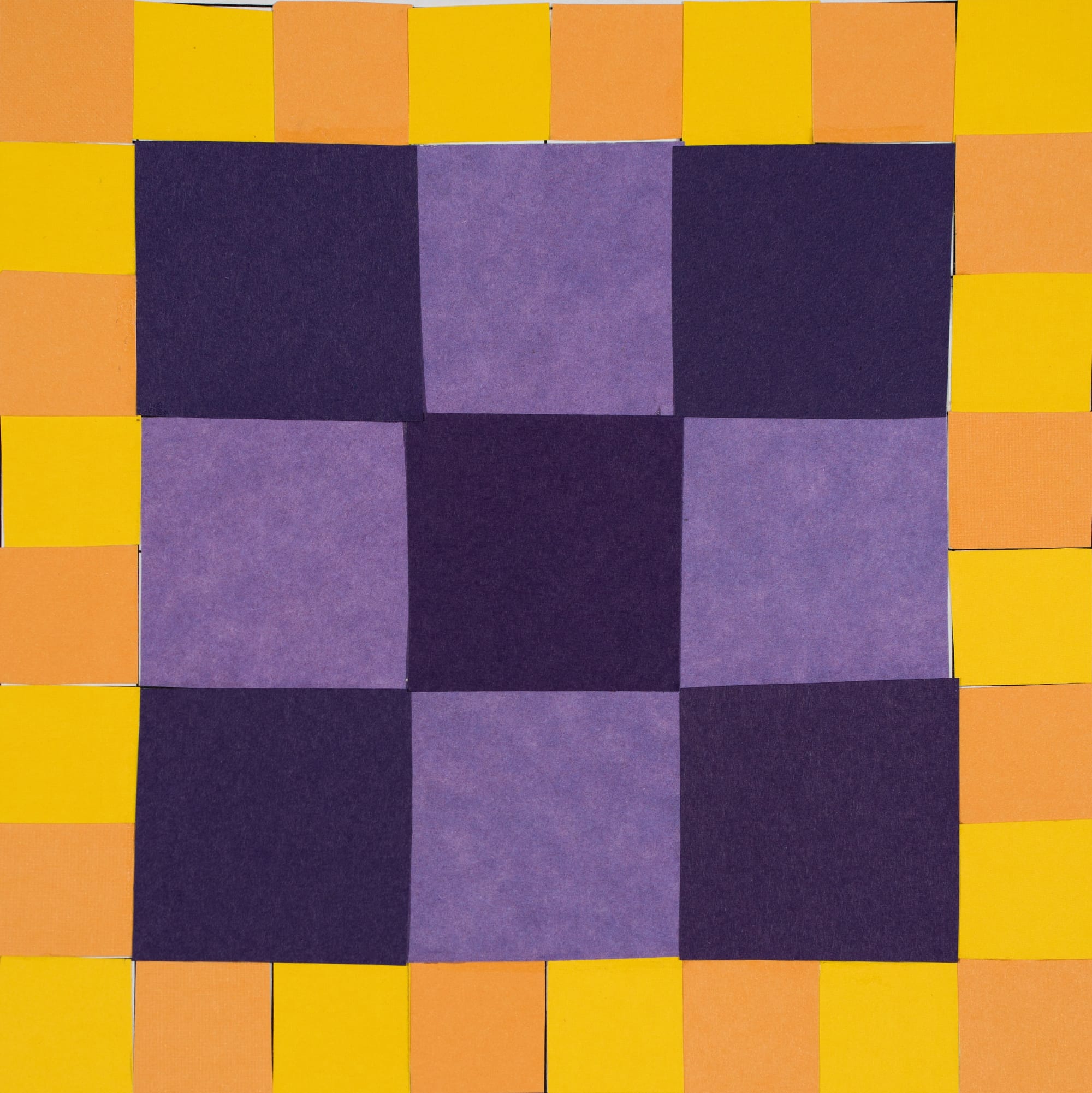
Traditional quilter Ellie Weyer (l) pieces together a paper quilt square (r) during a recent ArtsvilleUSA barn quilt workshop; photos: Max Cooper.
Marks of Our Heritage depends on local participation to grow and sustain the barn quilt archive. “Everyone’s story matters here,” says Elise. “We’re inviting the whole community to help us write the next chapter of Western North Carolina’s barn quilt trails.”
Community members can get involved in a variety of ways: by sponsoring or “adopting” an existing block, donating photographs or family stories, purchasing commemorative quilt block ornaments, or participating in upcoming workshops. All proceeds directly support ongoing fieldwork, archival efforts, and public programming across the region.
An upcoming workshop in summer 2027 at Mars Hill University will teach residents to create their own 8”x8” multimedia quilt square on paper, using supplies from ReMix It, WNC’s first creative reuse center. Led by local quilters, the workshop will guide participants through the process of designing their own quilt square rooted in local tradition and personal history. Participants will keep their original artwork as a memento and may also commission a full-size outdoor version from our partners in Buncombe, Haywood, McDowell, and Yancey counties. All workshop squares will be scanned and reproduced as a spirit flag garland for a fall 2027 exhibition at the NC Arboretum.
These community workshops are designed to be accessible to all, fostering a sense of place, memory, and meaning. Elise notes, “There’s something about quilt patterns that hold memory—something you see as a child, that’s woven into your family’s story. Our hope is to spark that sense of belonging and connection in every participant.”
Sustaining the Legacy of Barn Quilts Trails in WNC
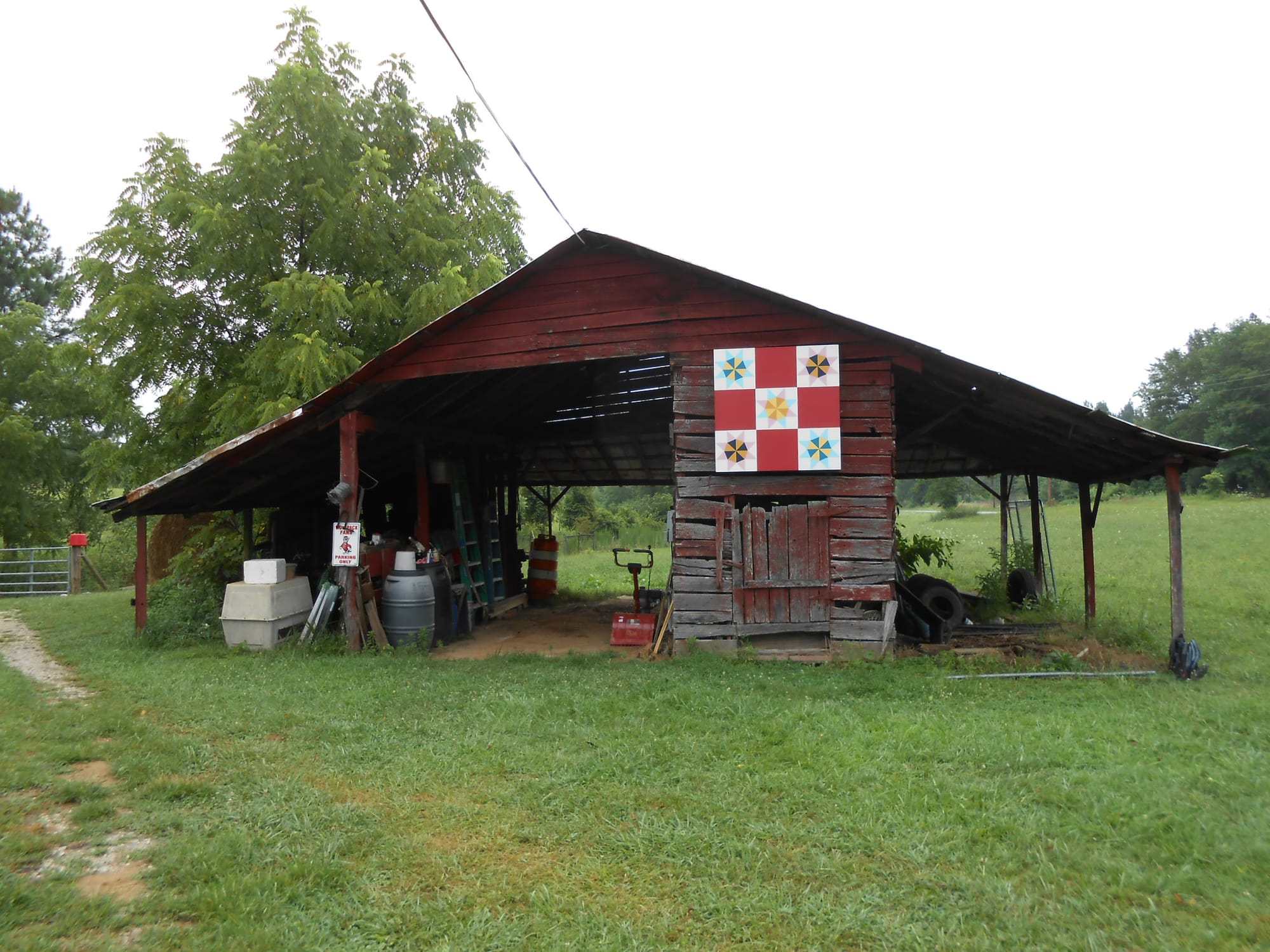
The 'Duncan Stars' barn quilt hangs from its post on the family's century-old corn crib; photo: McDowell County Arts Council.
Elise is quick to note that the future of barn quilt trails depends on the communities who created and cared for them. The Marks of Our Heritage project aims to lay the groundwork for renewed stewardship, offering technical support, digital tools, and public recognition for those willing to take up the mantle. “The quilt trails are long past their peak in Western North Carolina. This does feel like the right moment to save what’s left and support the heritage bearers who keep this tradition alive.”
However, Elise also points out that not every barn quilt is intended for public consumption. “There’s an interesting dichotomy in Appalachia—many families are proud to display their history, but there’s also a resistance to opening your home to strangers. Some barn quilts are meant for the community, while others are simply personal acts of art and memory.”
Respecting the wishes of barn owners is central to the project’s approach. “We use historical quilt trail maps as a guide, but we’re always mindful of privacy and consent,” Elise says. “Just because you see a barn quilt, it doesn’t mean it’s open for visitors. If a home or barn quilt is part of the trail, that indicates something different than just spotting one from the road. We encourage everyone to stay on marked trails and respect private property.”
It’s this blend of public art, private memory, and community stewardship that makes barn quilts like “Duncan Stars” enduring symbols of Appalachian storytelling. And while the map to find it may be in short supply, for now, the story behind the quilt and the family history it holds remain.
All images published with permission of the artist(s) or copyright holder.