Form Vs. Function: Where Do Craft Artists Draw the Line?
We asked five artists from our winter craft exhibition, ‘Liminal Light,’ to weigh in on the age-old balancing act between aesthetics and practicality.

Form and function have always circled each other, sometimes in harmony, sometimes at odds. It’s a debate that rages on: Is it enough for something to be beautiful, or does the art need to earn its keep? How far can you push the aesthetic limits before something stops being useful?
It’s easy enough to see where the line falls when you’re looking at a painting on a wall, but the answer grows murkier with traditional crafts like basket-making or pottery. We asked five artists from our winter craft exhibition, Liminal Light: Winter’s Vigil, to weigh in on the conversation, with each drawing their own boundary between what pleases the eye and what quietly serves a purpose.
Patti Quinn Hill
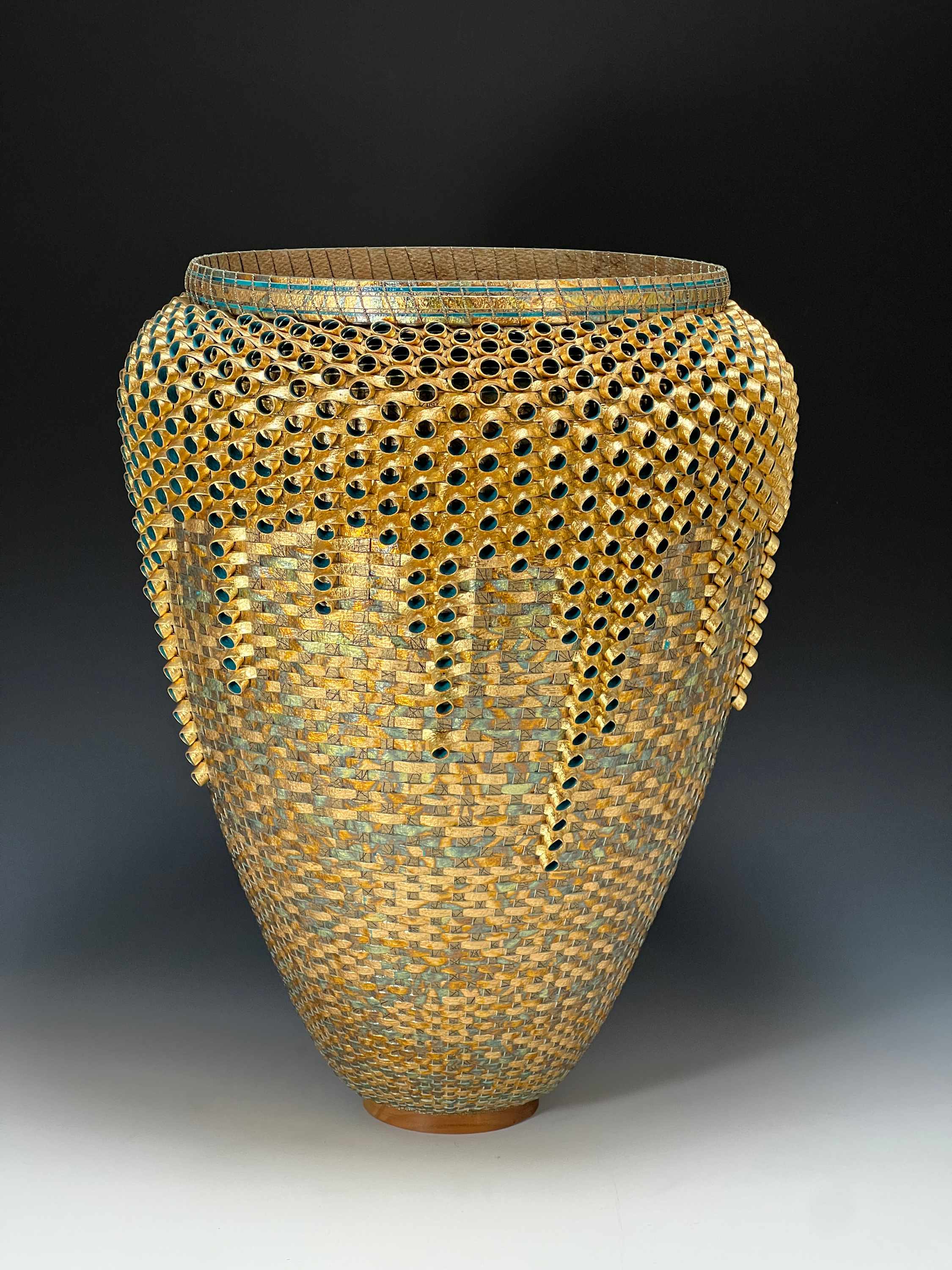
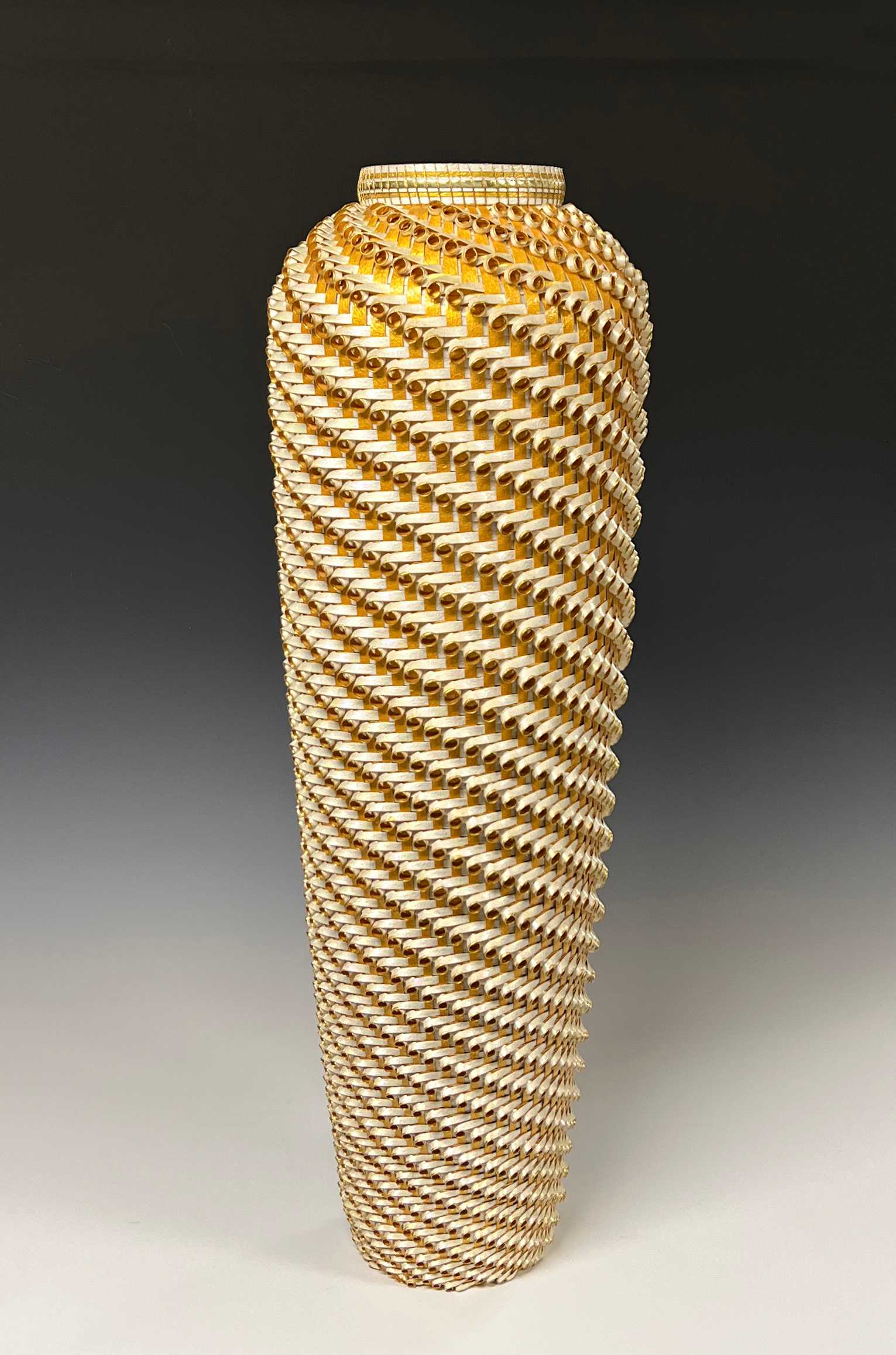
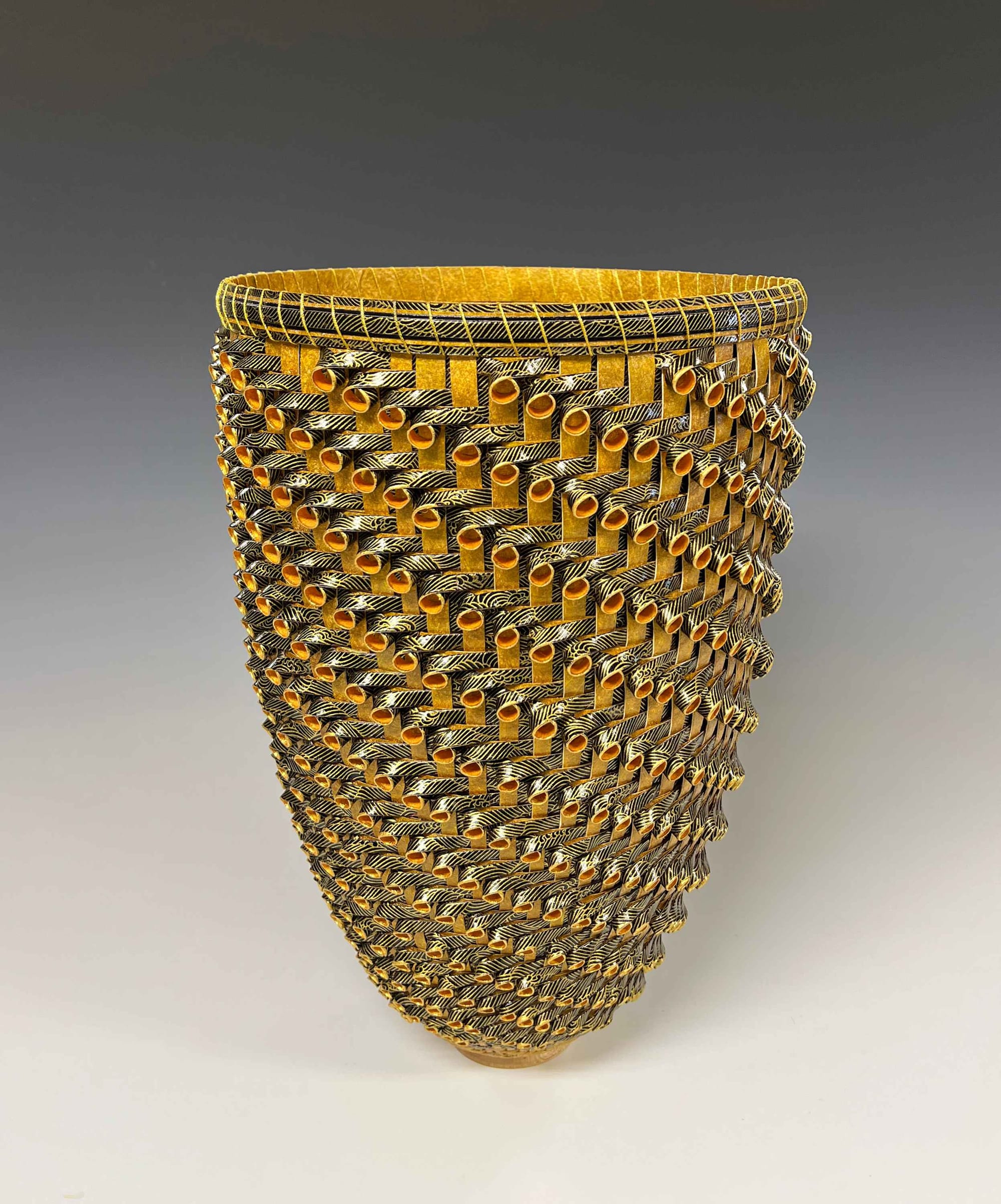
'Cascading Gold'; 'Galadriel Lady of Lorien'; 'Waves of Gold'
What matters most in my work is definitely form. Baskets are usually thought of as having a function, and I would agree with this idea. But not so about my Woven Vessels of Paper. Their only function, I like to say to people when they ask me what the baskets are supposed to hold—I tell them they are made to hold nothing but your interest. Form is very important to me because it is what you notice first when observing a piece of my work. Upon closer inspection, not only the form but also the surface design combinations and the embellishment of the curls added to the piece, starting with smaller curls as the basket grows, then possibly smaller curls as the piece closes at the top. I always want people to notice the attention to detail when indulging in a concentrated study of a piece. Even the edges of the curls are painted by hand, one at a time.
View Patti Quinn Hill’s work in Liminal Light.
Follow Patti Quinn Hill: Website | Blue Spiral 1
Pamella O’Connor
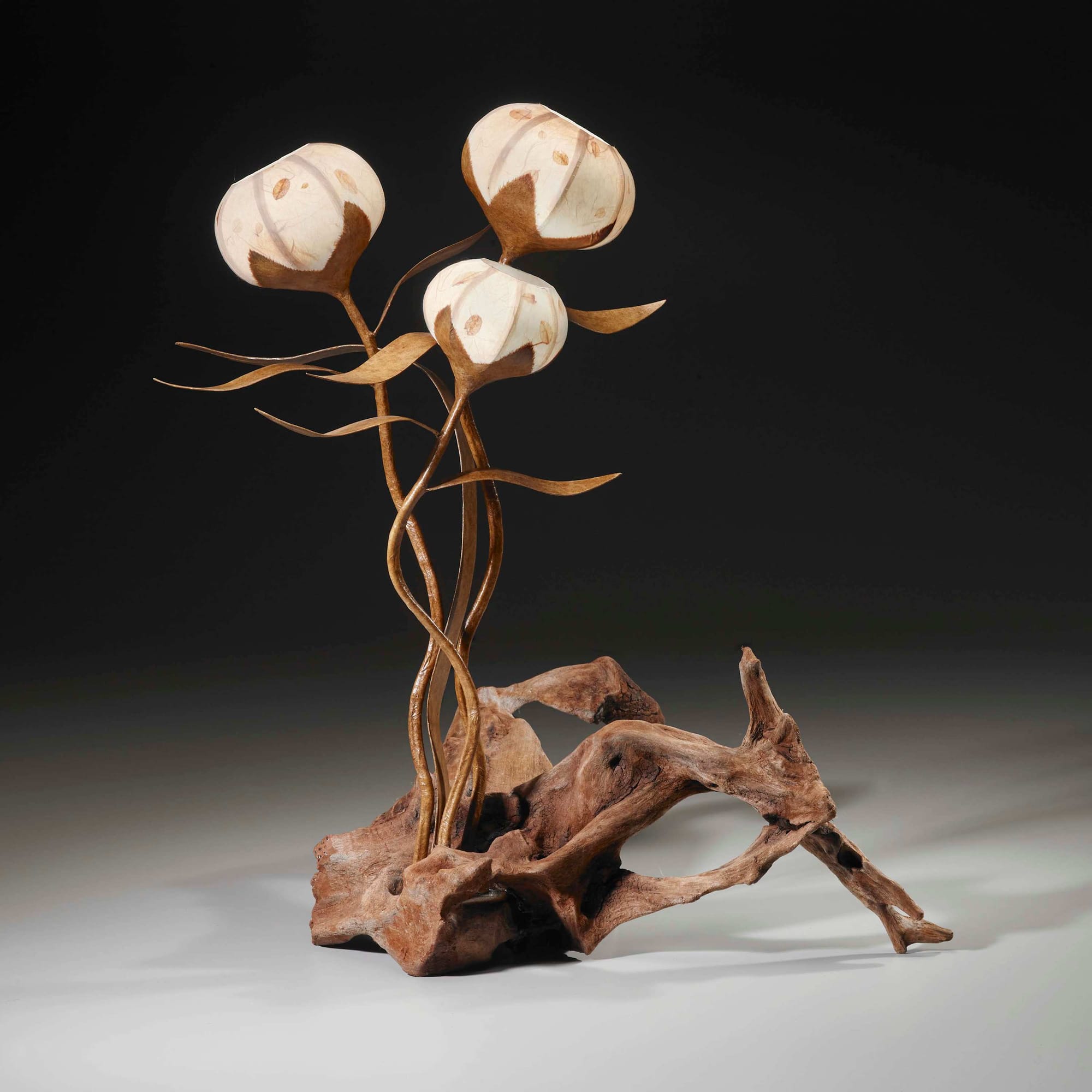
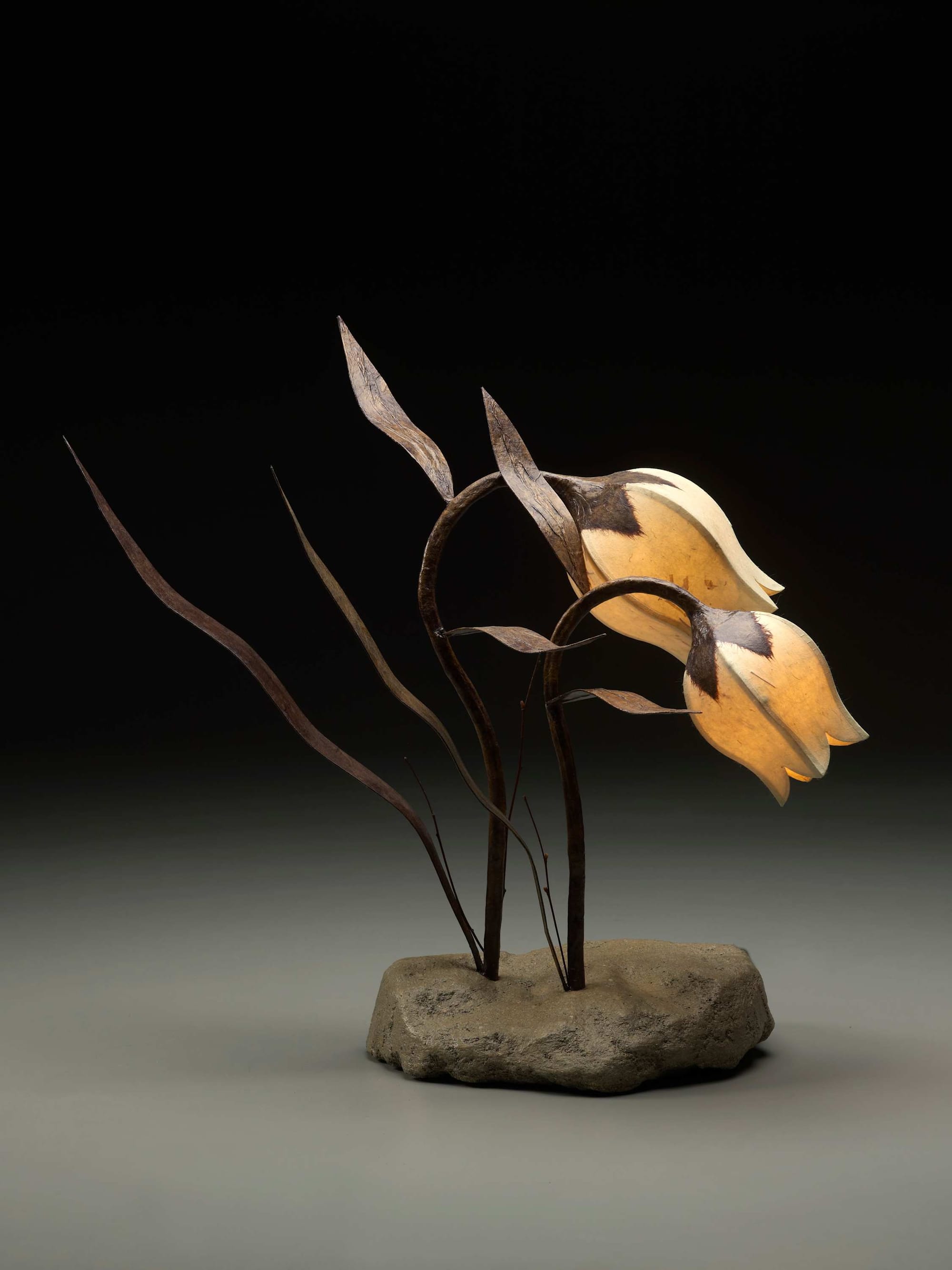
'Driftwood Family'; 'Wind Two'
Form and function are nearly equal partners in my work, with form taking a slight lead. One of the most positive comments ever made about my work came from a professional marketing person who said, “It’s as if your lamps want to talk.” I took great solace in that. I want each piece to have its own story, energy, and expression. But I chose this craft to pursue professionally because I simply love functional art. To create something beautiful that also serves a purpose gives me great pleasure.
View Pamella O’Connor’s work in Liminal Light.
Follow Pamella O’Connor: Website
Erin Keane
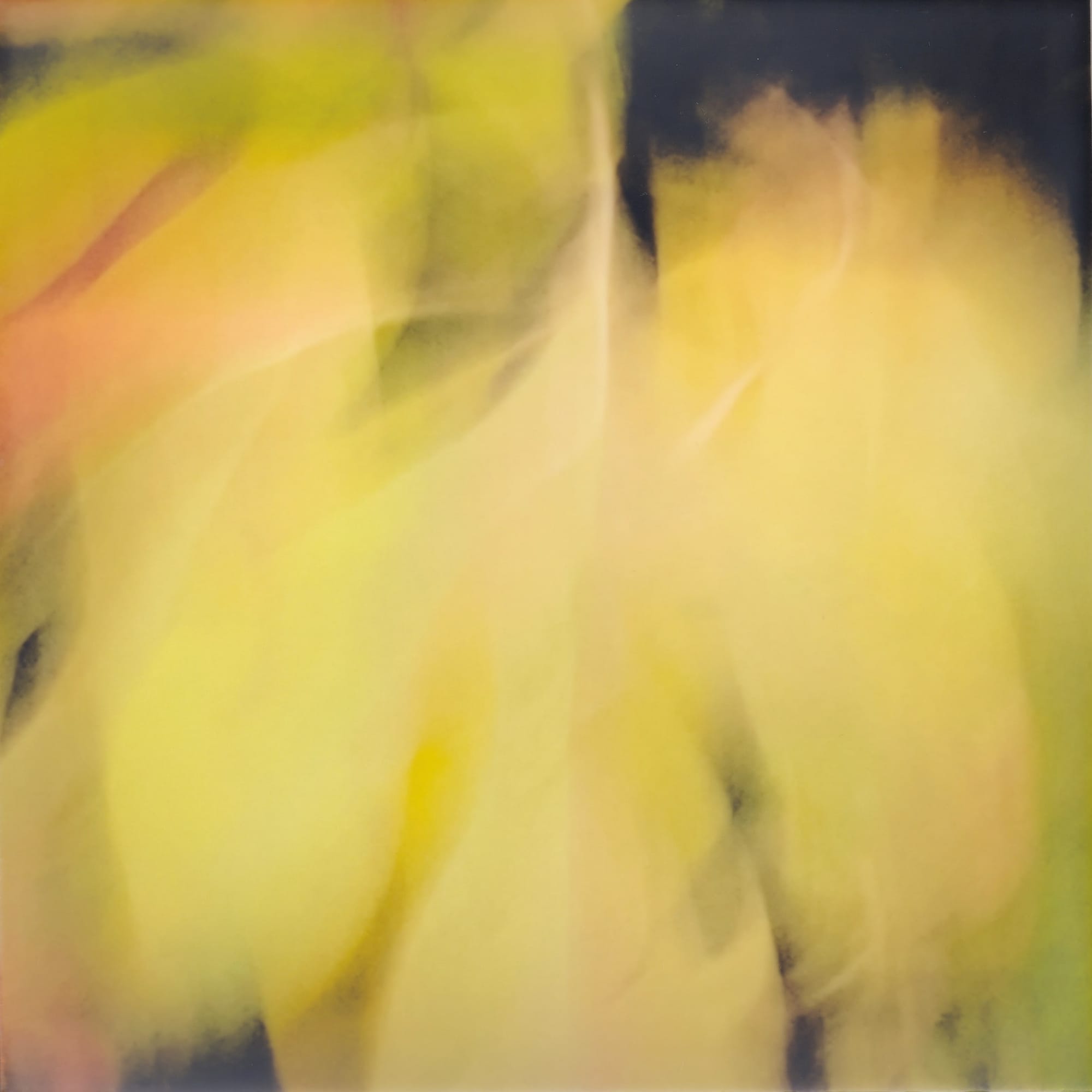
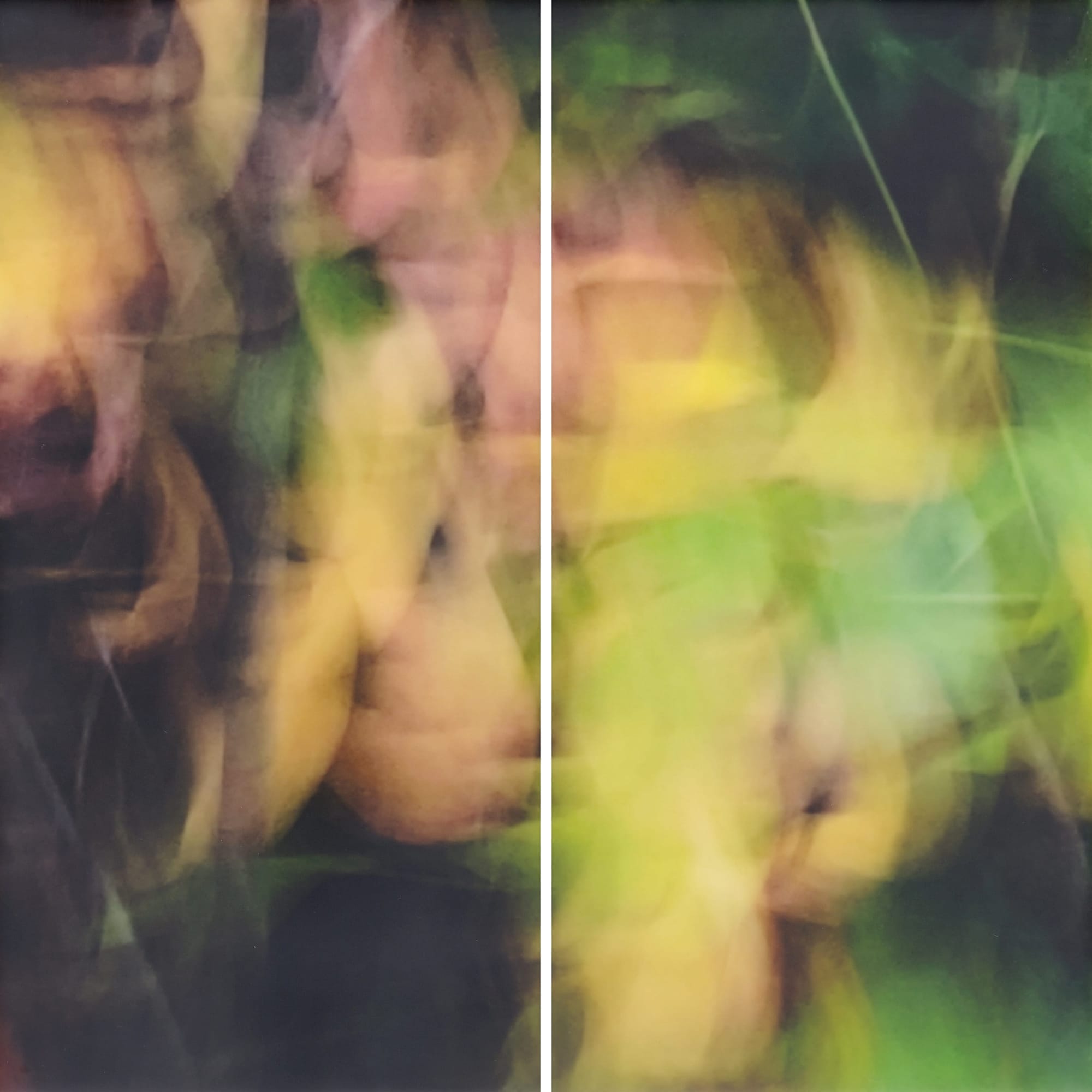
'Luminary'; 'Moonbathing at Dusk'
In my encaustic photography, form and function matter equally at different times in my process.
Form is my first priority. When the muse calls, I take hundreds upon hundreds of photographs, and then narrow down the images, sometimes many and sometimes only one or two or three, until they perfectly capture the essence of what I want to express. Once I’ve chosen my imagery, I will work on the design of a composition for days, weeks, making test print after test print, moving the images around, almost to a point of obsession, until they fit together exactly right and I am ready to create the artwork.
Now, function becomes my priority. I am absolutely meticulous about the creation of my work; I want it to be perfection on your wall, in the aesthetics and the craftsmanship. I use professional archival-quality materials and am deliberate at every step of my process. I have been known to remake an entire artwork (...many artworks...) that didn’t meet my standards the first time around. It is worth it, I believe, and I 100 percent love every piece that I’ve put into the world, and hope you do too.
View Erin Keane’s work in Liminal Light.
Follow Erin Keane: Website | Instagram
Julie Merrill
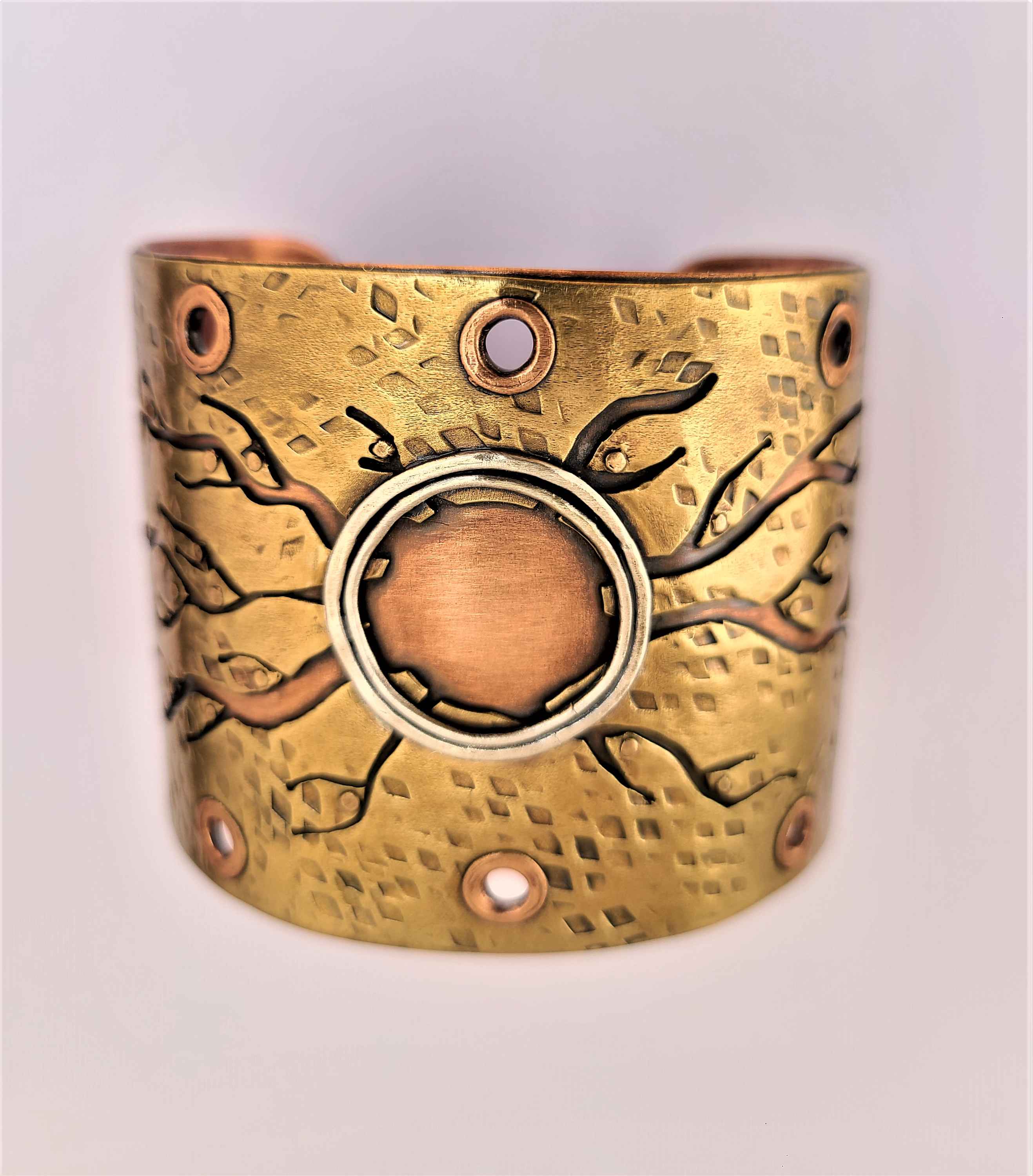
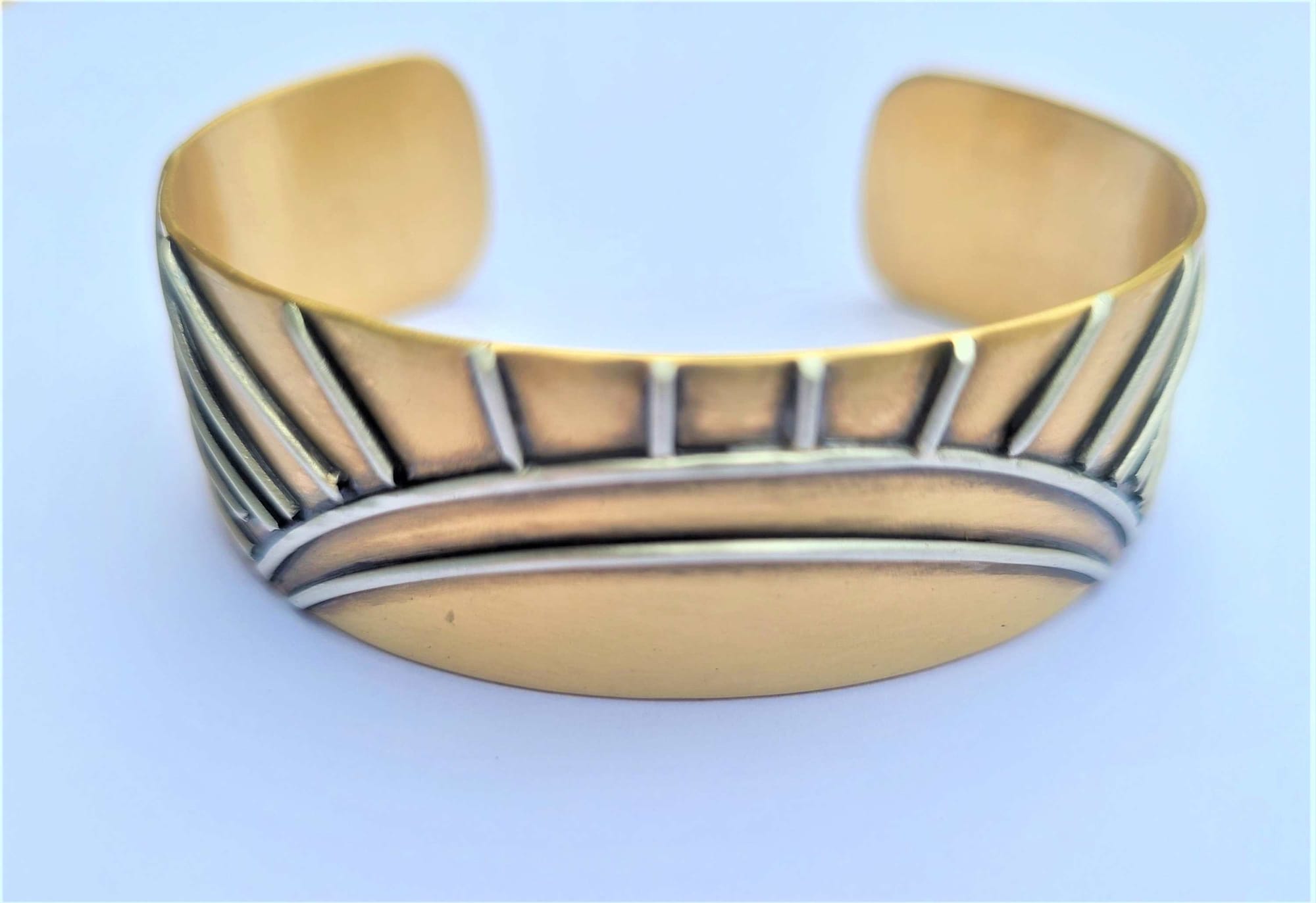
'Roots From the Sky'; 'Sun Cuff'
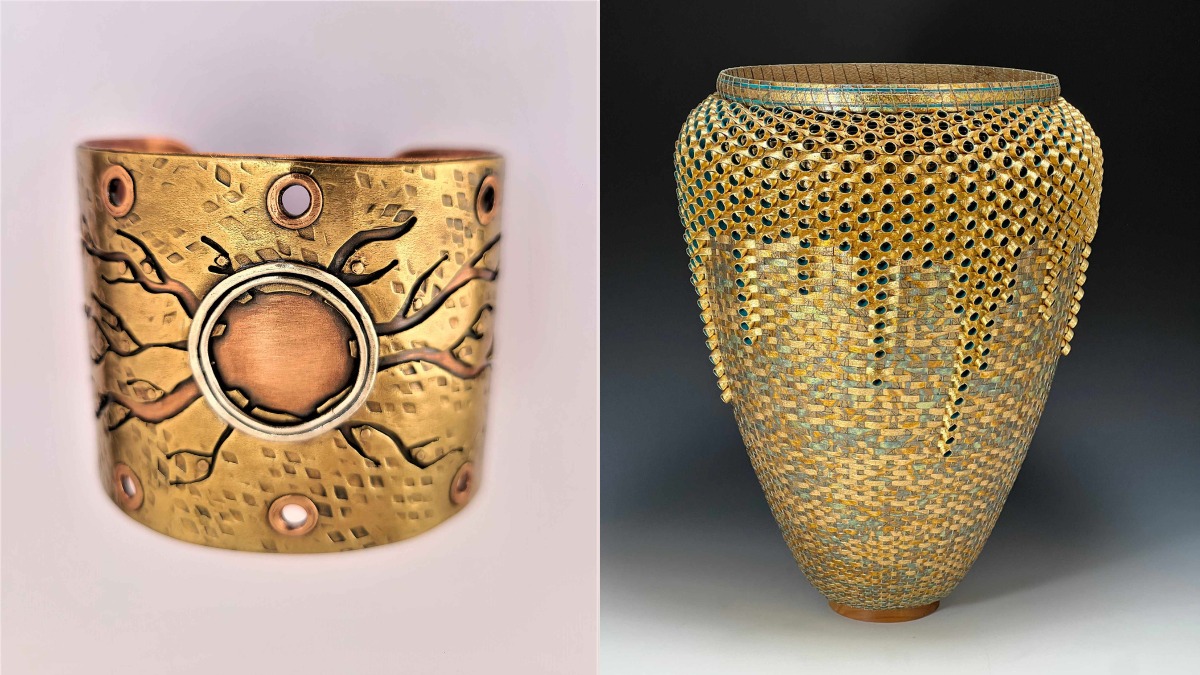
Form speaks to me with a language that often transcends function in my artistic journey. For the wearers of my jewelry, function becomes an intimate, personal narrative; it shifts and evolves with the individual. The essence of form, however, is a pure reflection of my inner vision, an alchemy of metal and material that breathes life into each piece. While I start with an idea, I am perpetually guided by the dance of working with metals and natural elements, recognizing that the creation process is a vibrant, ever-changing dialogue. It is this living dynamic that transforms mere materials into true art.
View Julie Merrill’s work in Liminal Light.
Follow Julie Merrill: Website | Instagram
Gertrude Graham Smith
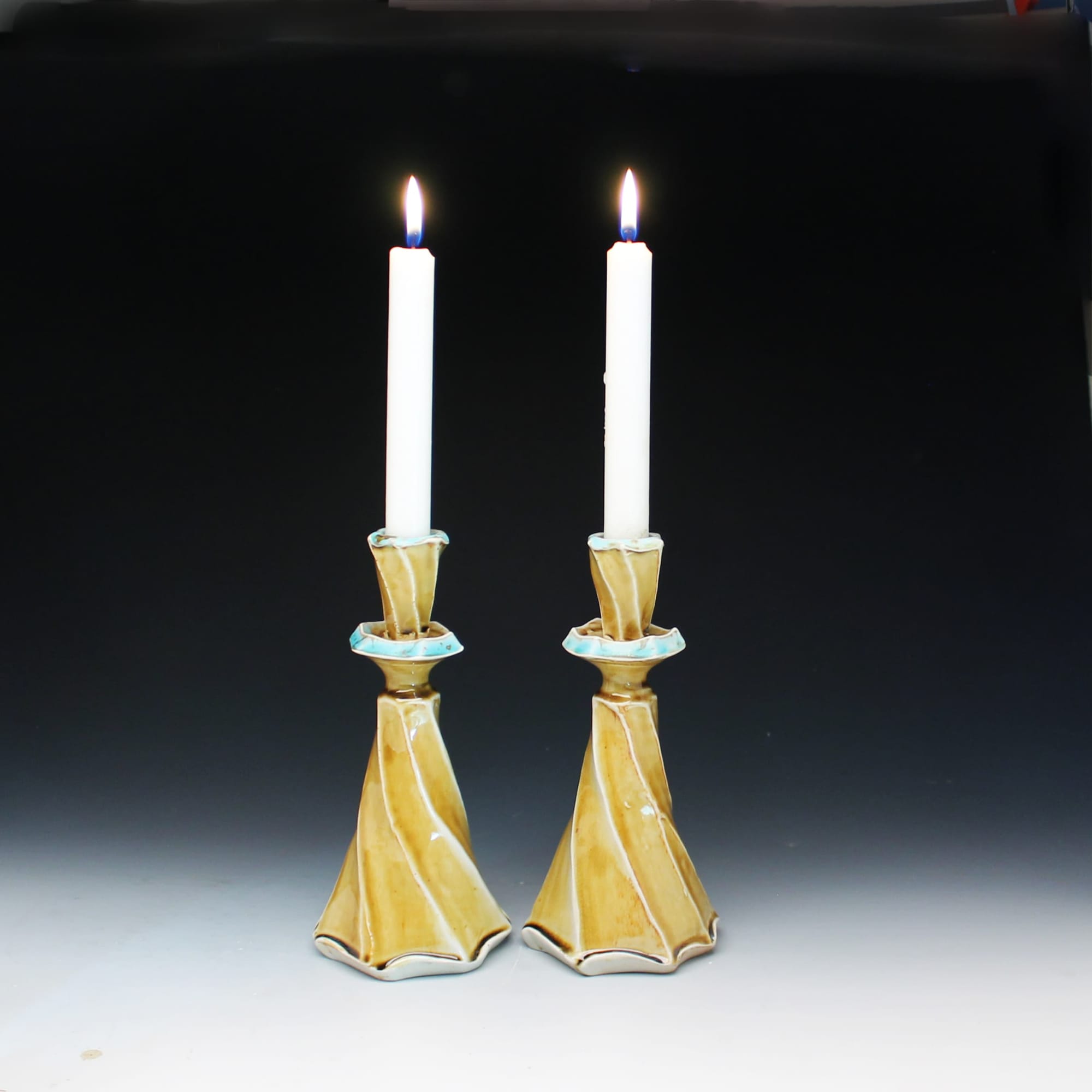
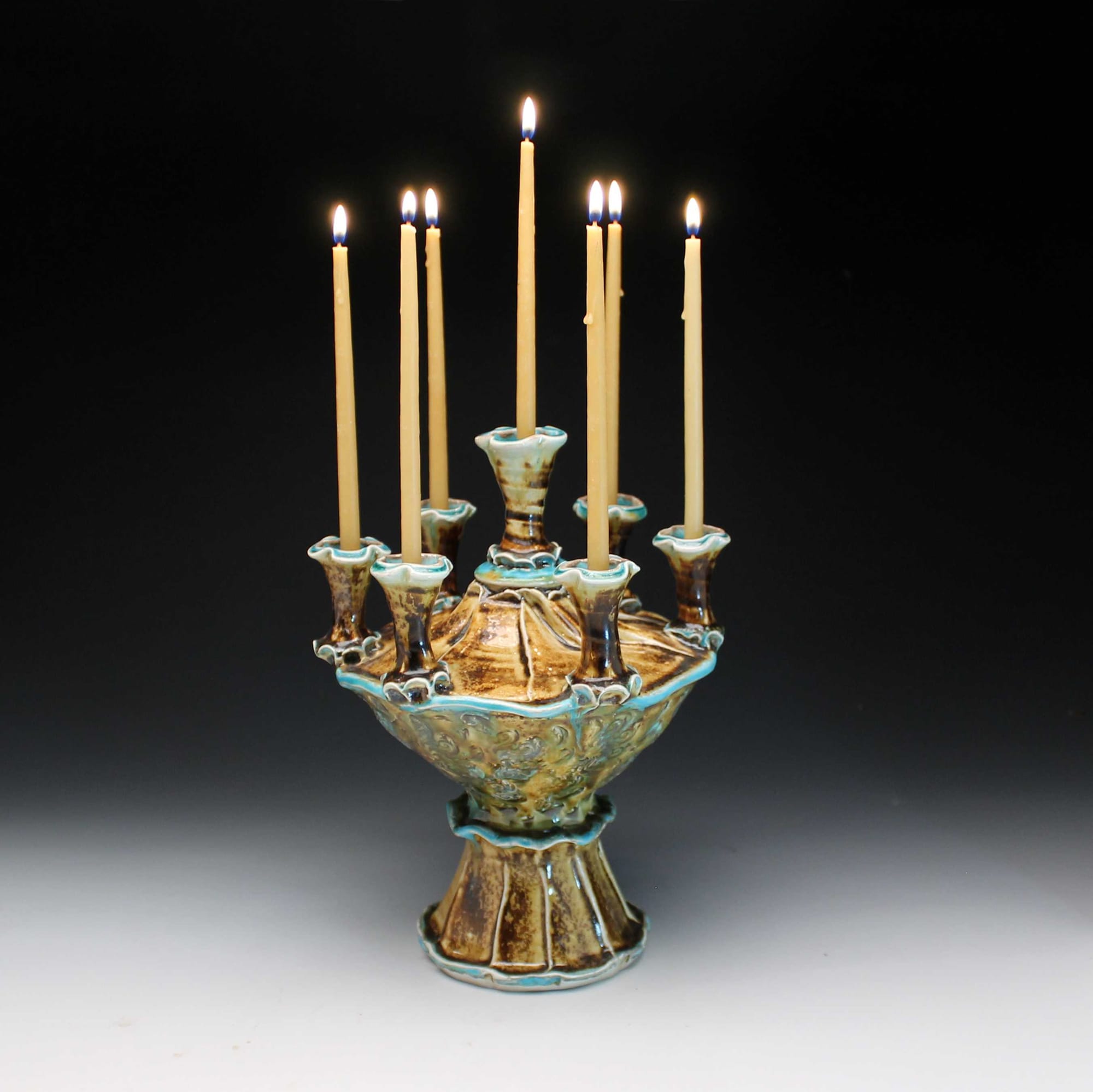
'Dancing Candlesticks'; 'Candelabrum, Amber and Turquoise'
I have a friend who's very smart, a really great artist, and he once said to me, “I just couldn't be confined by the radial symmetry of the [pottery] wheel.”
I think because I love the wheel, and the wheel is traditionally used to make functional work, there's something in that limitation that helps me make good work. If I stepped outside the limitations of function, I’m not sure my work would be as strong. There's only a certain number of forms that'll work as a mug, for instance, or a cup. You're constrained, but for me, that constraint feels like freedom.
View Gertrude Graham Smith’s work in Liminal Light.
Follow Gertrude Graham Smith: Website | Instagram
This feature has been edited for length and content. All images published with permission of the artist(s); featured photo: (l-r) Julie Merrill, Patti Quinn Hill.