Sustainable Craft in WNC: Preserving Tradition, Protecting the Earth
Artists in WNC use local river cane, plentiful clay, and discarded chairs to create sustainable craft, preserve Cherokee traditions, and protect the land.

Western North Carolina’s mountains are thick with green, their slopes tangled with indigenous river cane, bloodroot, miscanthus grass, and invasive kudzu vines. The region is home to over 4,000 plant species, and is among the most biodiverse parts of North America. For the artists who call these mountains home, the challenge lies in keeping centuries-old creative practices alive without taking more than the land can give.
Responsible stewardship of the land’s natural resources is woven into the creative process for WNC makers like Arizona Jane Blankenship and Melanie Risch, who strive to practice sustainable craft. The use of natural, organic materials is integral to many artists’ work, and today’s discerning consumers often expect nothing less. But natural doesn’t always mean sustainable; even organic material can be over-harvested to the point of extinction.
That’s why Arizona and Melanie continually evaluate whether their materials are truly renewable. They question whether their methods support the ecological balance and well-being of the natural environment. That extra effort and intention add value to their handmade crafts in ways that go beyond dollars and cents. The rewards of such stewardship are tangible, making our shared planet a safer, healthier, better place to live—for both current and future generations.
The Alchemy of Trash Transformed into Art
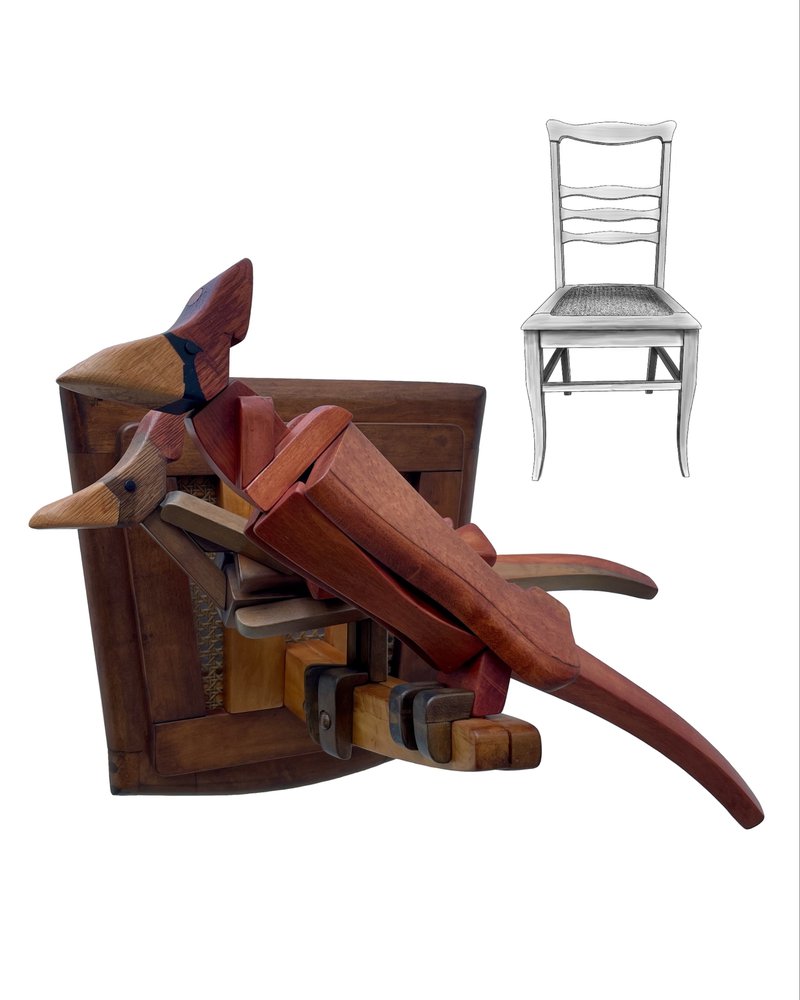
Asheville-based sculptural artist José Pablo Barreda epitomizes this approach. His lifelong love of nature and art dovetails with his commitment to sustainability, as he uses discarded chairs as his sole source material. He’ll rescue abandoned chairs from dumpsters, thrift stores, or wherever they were left on the curb or tossed by the side of the road. Then, he rather magically transforms them into exquisitely lustrous animal sculptures, giving the tree that was once a chair a new lease on life as a work of art.
José, an illustrator by training, sketches the chair before dismantling it. This allows the viewer of the sculpture to recognize its original furniture form, creating a role reversal between artist and audience. While José visualizes the chair reincarnated as an animal, those viewing his finished product enjoy solving the puzzle of how it was once a piece of furniture.
Through his creative process, José has observed that craft is directly linked to human ways of life. “It’s like how language is created and connected to culture as a whole, and why some languages go extinct because people stop speaking them. I hope I’m wrong, but I do feel our relationship with things that are made has gotten more synthetic, where the emphasis now is on consumption. You don’t have to think about where things come from because they’re disposable. Somewhere, something shifted. People started thinking it was better to make a product that has to be replaced, instead of one that lasts a lifetime. But I think art’s a little different, because it has meaning that’s not always monetary.”
Generations of Handicraft
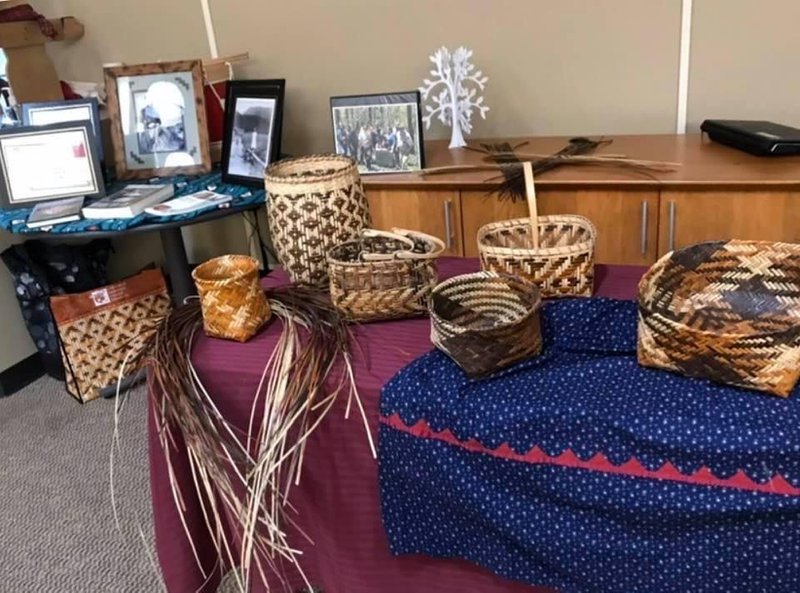
Cherokee basket maker Arizona Jane Blankenship understands that deeper meaning. “My great-grandmother, Arizona, taught weaving at a boarding school—not to sell baskets, but to teach others.” Arizona Swayney Blankenship, a renowned Cherokee basket maker, taught river cane basketry and other Native crafts in the early 1900s. Her namesake, inspired by her legacy, took up the craft to honor her great-grandmother. She learned from elders at the local Qualla Co-op. “They taught me the fundamentals and wisdom of basket making and how to gather rivercane and harvest roots from the butternut tree to make dyes, without harming the tree.” The co-op was later renamed the Qualla Arts and Crafts Mutual, which today showcases the largest collection of authentic arts and crafts made locally by members of the Eastern Band of Cherokee Indians in Cherokee, N.C.
Arizona has, in turn, mentored others and given presentations on traditional Cherokee basket making at her local museum and at Appalachian State University. But she confides that almost all of her teachers have passed away, as have many of the talented basket makers affiliated with Qualla Arts and Crafts Mutual. The potential loss of the river cane plant (Arundinaria gigantea) also represents an existential threat to the craft, especially as the number of people capable of teaching younger generations to make river cane baskets has diminished.
As Arizona explains, “River cane is now really scarce, and it takes about seven years to mature. Before he passed, my partner helped me gather and dye the cane. We would prepare enough to make a few baskets at a time, heating a dye pot with butternut and bloodroot over a woodfire.” Butternut makes a dark black dye, bloodroot a reddish-orange dye, and in the absence of butternut, green-hulled walnuts can be used. “We boiled it in a dye pot over a wood fire that you’d have to watch for at least three days. Since many dyes can only be gathered in spring, you’d keep a freezer full of them. My partner also gathered river cane for the elders and gave it to them. We tried growing a patch across the creek to see if it would thrive, and it’s still growing—just not very well because of our elevation.”
River cane is indigenous to WNC and once flourished along streams and rivers throughout the southern Appalachian mountains. But as land development and construction expanded across the region, so did the use of highly toxic pesticides to control and kill river cane, which was widely perceived as an unwanted, aggressive species.
However, important sustainability initiatives are now in place to protect, preserve, and revitalize river cane in WNC. The Eastern Band of Cherokee Indians (EBCI) established the Revitalization of Traditional Cherokee Artisan Resources (RTCAR) to promote artisanship and traditional care for natural resources. RTCAR is a grantmaking program that assists the tribe in restoring the traditional Cherokee balance between maintaining and using natural resources, like river cane, white oak, and clay. To that end, RTCAR focuses on basket-making materials and associated dye plants, clay for potters, and materials for carvers. The organization works to teach, protect, and promote Cherokee traditional art, resources, and land care for present and future generations. They also fund ongoing research to better understand river cane restoration techniques and benefits.
Teaching Widely While Sourcing Locally
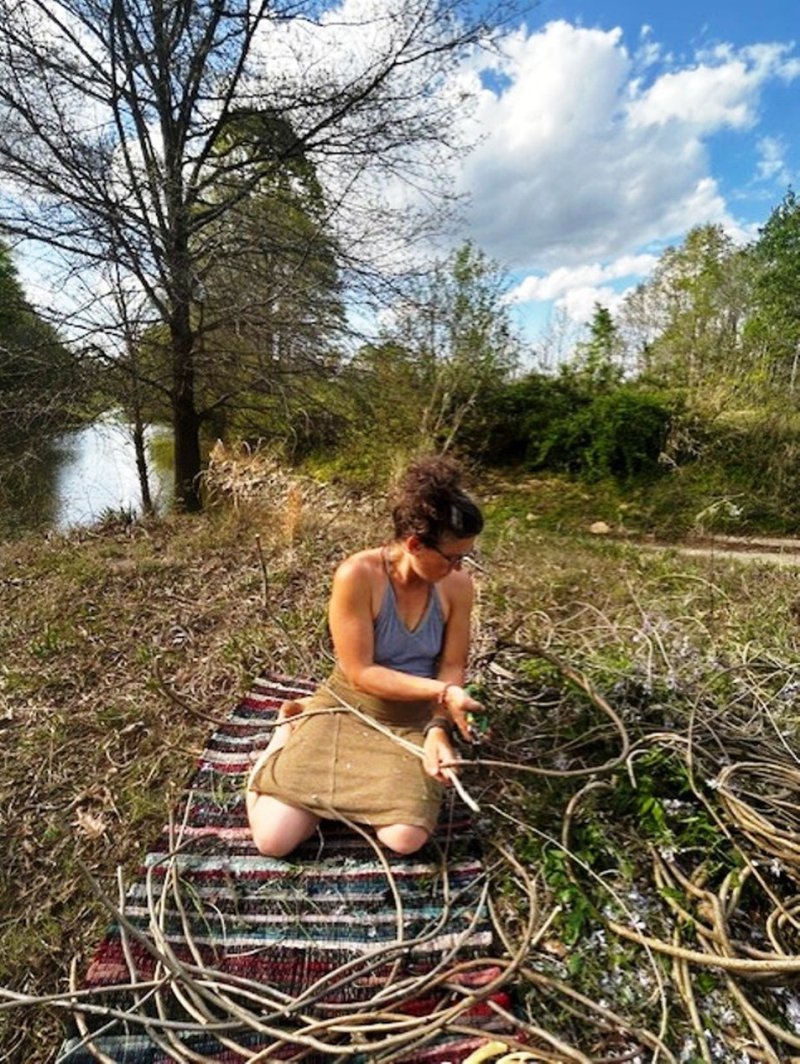
Artist Wendy Davis, who lives in Madison County, acknowledges that sometimes a lack of resources requires changing materials to use those that are more readily available. She weaves baskets from invasive vines like honeysuckle and wisteria. Although these flowering vines have lovely blossoms and a sweet fragrance, they can choke and kill nearby plants and trees. “Indigenous people have found practical uses for even the most invasive species of plants,” Wendy explains. “One of my neighbors has a lot of kudzu that I selectively harvest, and while I’m gathering the vines, I do the extra work to take them off the trees.”
One of her mentors is Nancy Basket, a Cherokee basket maker who forages for kudzu to use in her crafts, including greeting card paper. “Nancy taught me to refer to the vines as pervasive, not invasive, because everything in nature has its purpose,” Wendy says. Wendy, who travels extensively to teach these skills, also credits permaculture and wildcraft skills expert Jeff Gottlieb of Whittier, NC, for first teaching her to make baskets from kudzu. Her friend and colleague, Joe Bruneau, also from Madison County, is another crafter who incorporates pervasive plants into the basketry he teaches at Mars Landing Galleries + Arts Center in Mars Hill, NC.
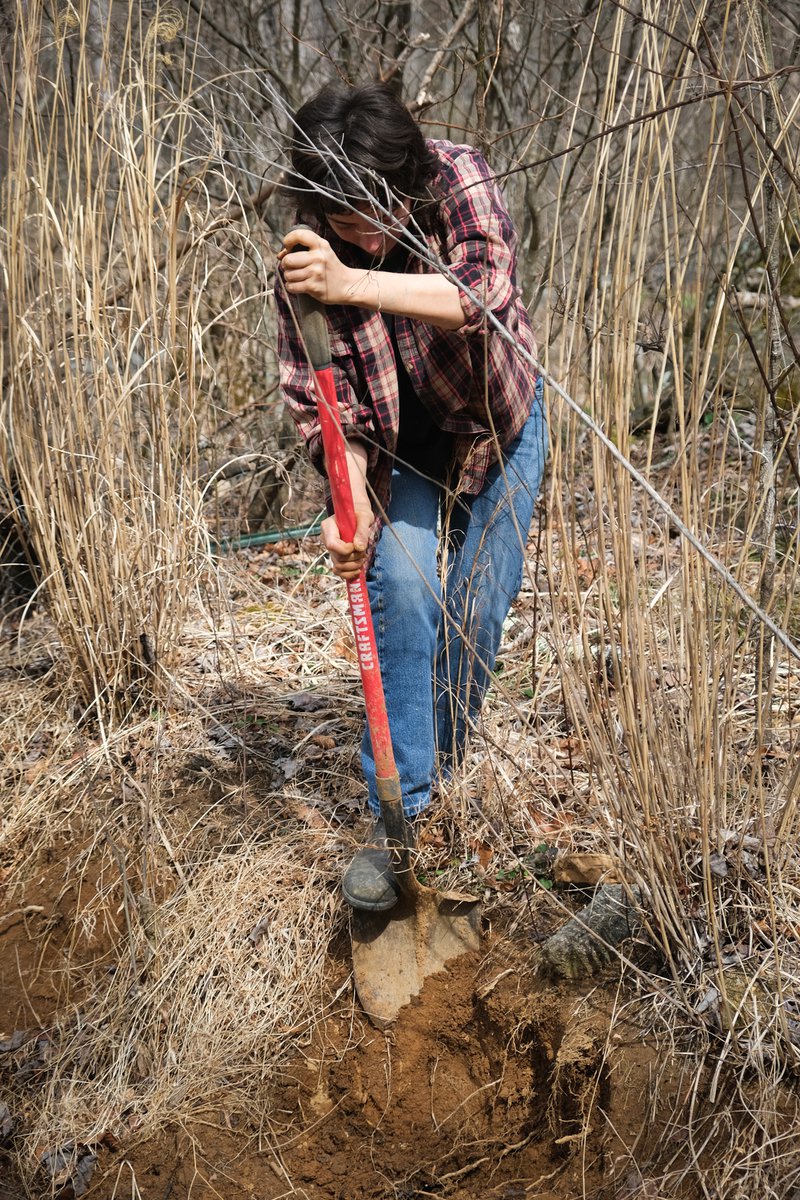
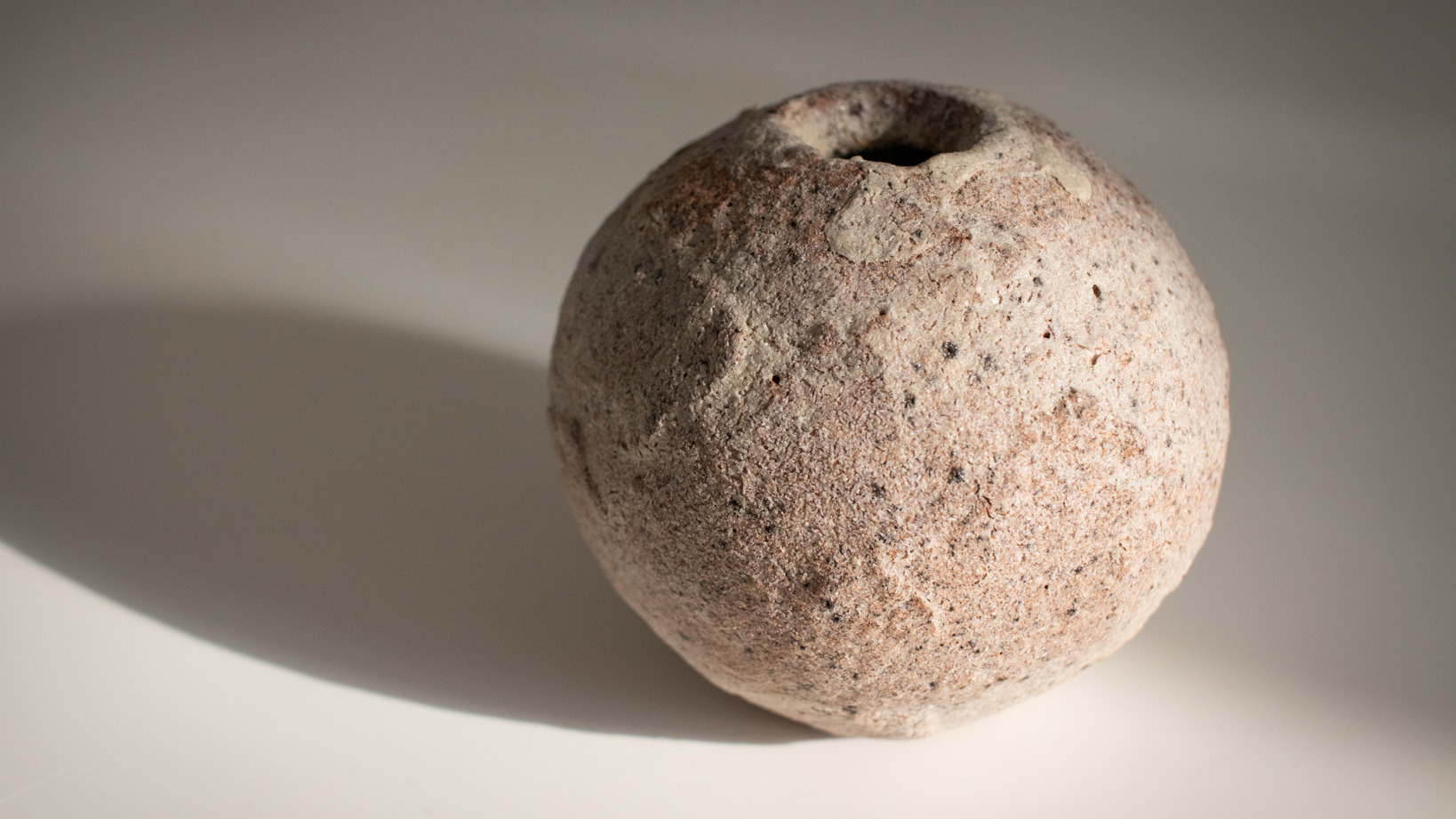
Similarly, Burnsville potter Melanie Risch, who trained at the Penland School of Craft, experiments with using the pervasive weed miscanthus grass to make beautiful ceramic glazes. She describes how miscanthus was introduced to Biltmore Estate in the late 1800s as an ornamental grass, and although it’s not invasive everywhere, it has thrived in WNC.
Melanie built herself a pizza oven using clay she dug on her property, then began testing glazes made from miscanthus ashes from the oven. “By burning miscanthus, I’m removing its seed pods to curb the spread of a grass that doesn’t play nicely and can harm native plants. I’ve made going out and getting it a yearly ritual, and it always grows back with a vengeance.”
Melanie concedes that clay isn’t immediately renewable, as it takes thousands of years to develop. But she points out that it is found in extraordinary abundance in WNC. Digging it locally eliminates the need to ship such heavy material, drastically shrinking its carbon footprint. Melanie often writes about the importance of using local materials on her Substack, sharing insights and stories from her own practice. Melanie recently led an educational project in Marshall, NC, using only clay dug on-site and glazes made from what she managed to find there.
Getting to know these creative artisans reveals what is perhaps the most vital aspect of sustainability in arts and crafts: Without community connectivity and educational efforts to pass knowledge along, generational arts and crafts would become extinct. That’s why Wendy recommends, “Get to know your neighbors, and find ways to do things that are mutually beneficial.”
All images published with permission of the artist(s); featured photo: “Small Orb Vase” by Melanie Risch.