
How to Give Your Closet a Second Life: Inside WAXON Studio
Want a more sustainable closet? Jessica Kaufman of WAXON Studio shows how upcycling and creative dyeing can transform your wardrobe and reduce waste.

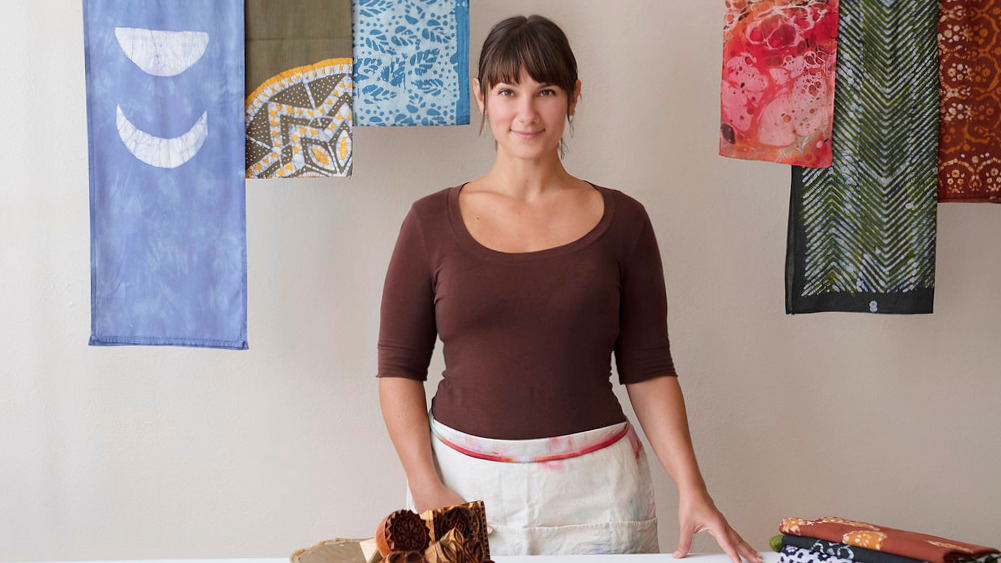
If the phrase “fast fashion” makes the skin under your thrifted t-shirt crawl, you’re not alone. Between headlines about microplastics and an avalanche of textile waste, it’s hard not to wonder: can we actually save the clothes we already have? Is there hope for that well-loved tee, or are we all just stuck in an endless cycle of buy, toss, repeat?
Enter Jessica Kaufman: business owner, fiber enthusiast, and the creative force behind WAXON Studio in West Asheville. With a master's degree in craft education from Prescott College and business coaching from Mountain Biz Works, Jessica distills the decade-old dye studio into an irresistible elevator pitch: "It's like a paint-your-own-pottery studio, but for color on fabric."
Jessica’s fascination with batik—an ancient wax-resist dye method—took her to Gujarat, India, where she learned from a fifth-generation woodblock batik artist. She brought those skills home, transforming WAXON into a studio where fabric dye classes and client commissions focus on bold, stamped designs, eco-friendly techniques, and a commitment to upcycling.
A New Life for Old Clothes: Upcycling With WAXON Studio

The textile industry is among the largest global polluters. Behind the runways, new launches, and trend cycles, the industry churns out mountains of waste, approximately 92 million tonnes a year, most of it dumped far from where the clothes were dreamed up. Fast fashion’s footprint is everywhere: up to a tenth of global CO2, a fifth of the world’s wastewater, and barely a fraction recycled into something new. Jessica wants no part of that cycle.
Instead, the “linen-spotting ninja” scavenges thrift stores, donation bins, and clothing swaps for natural fibers: linen, silk, organic cotton. The mission is simple: save these gems from the landfill, one dye bath at a time.
The philosophy extends to every detail at WAXON Studio, starting with the materials used in the dyeing process. At WAXON, color comes solely from fiber-reactive dyes, which are low-impact, low-toxicity, and safe enough for city drains or even a teething baby. These cold-process dyes are the secret behind every batik, shibori, tie-dye, and ice dye session in the studio.
Jessica is equally selective about every material. The wax used for their batik workshops is beeswax, never paraffin, a petroleum byproduct harmful to our lungs and the environment. She sources her beeswax locally, even as shrinking bee populations push prices higher. The stamps? Those are carved from end-grain wood scraps, salvaged and shaped by a mother-daughter team in the Midwest.
Revive, Reimagine, Redye at WAXON

Getting involved is simple. Dig out those stained, faded, or accidentally pink shirts, and Jessica will "overdye" them into something fresh. Cotton, linen, hemp, bamboo, and even regenerated plant fibers like rayon, viscose, and lyocell are all fair game. Steer clear of synthetics; blends can be partially dyed, but full vibrancy is reserved for plant-based fibers.
Workshops are where things get interesting. Step into WAXON Studio and you’ll find hands-on classes in blockprinting, shibori, ice dyeing, classic tie-dye, and the studio’s specialty, batik. Every class is built for beginners who want to try something new, but there’s always a twist or technique to keep seasoned makers on their toes.
The studio keeps it intimate: just four people for batik, so everyone gets hands-on time with Jessica. Sign up for a batik session at WAXON, and you'll start small—literally. Your canvas is a humble square of cloth, just big enough to create a pattern. First, you try out techniques on a practice piece, then move on to the real project with wood stamps and beeswax. Jessica guides you through every step, handling the challenge of removing the wax (the "wax off,” so to speak).
If Asheville isn’t in your travel plans, WAXON still has you covered. Jessica’s online courses and dye kits bring the studio to your kitchen table, and her blog is a trove of hands-on advice. She’s out in the community too, leading workshops with Local Cloth and John C. Campbell Folk School. Stuck on a project? Book a one-on-one with Jessica and get unstuck, no matter where you are.
Simple Swaps for a More Sustainable Wardrobe

Even if you never set foot in a workshop, you can still shrink your fashion footprint. Here are a few easy ways to start:
- DO check your tags: If you spot plant-based fibers like rayon, bamboo, or lyocell, you’re on the right track. Take a second look at where it was made, too. The closer to home, the lighter the carbon load, since shipping racks up a surprising chunk of a garment’s footprint.
- DON'T overhaul your closet: Start small and look for opportunities to thrift or upcycle before buying new.
- DO learn your fibers: “The better you get at matching what your eyes see and your fingers feel to what it says on the tag, the more you'll be able to identify [natural fibers],” says Jessica.
- DON’T toss: Stains, faded colors, even those questionable mall finds can get a second act with the right dye and a little patience.
- DO support smart studios: Spaces like WAXON are designed to avoid mindless consumerism, favoring appointments over an "open for open's sake" mentality.
Jessica’s advice? “Keep it simple. There are so many things you can do with fiber-reactive dye and upcycled natural fibers.” What she really wants is for anyone leaving WAXON to feel lighter, happier, and maybe inspired to make something on their own, a feeling she chases in the studio every day: "I feel so happy when I'm doing crafts, when I'm making things. It’s all I want to do."
Follow WAXON Studio
Website | Instagram | Facebook | Newsletter
All images published with permission of Jessica Kaufman, WAXON Studio, and Elise Wilson; featured image: WAXON Studio.