Breaking Into The Big Crafty: Insider Tips From the Founders
As The Big Crafty turns 17, founders Brandy Bourne and Justin Rabuck reveal what artists need to know to earn a spot at Asheville’s favorite art festival.
Q+Art is an artist interview column dedicated to supporting the art and artists of Western North Carolina. This month, we speak with Brandy Bourne and Justin Rabuck, co-founders of The Big Crafty, one of WNC’s largest arts and crafts festivals.
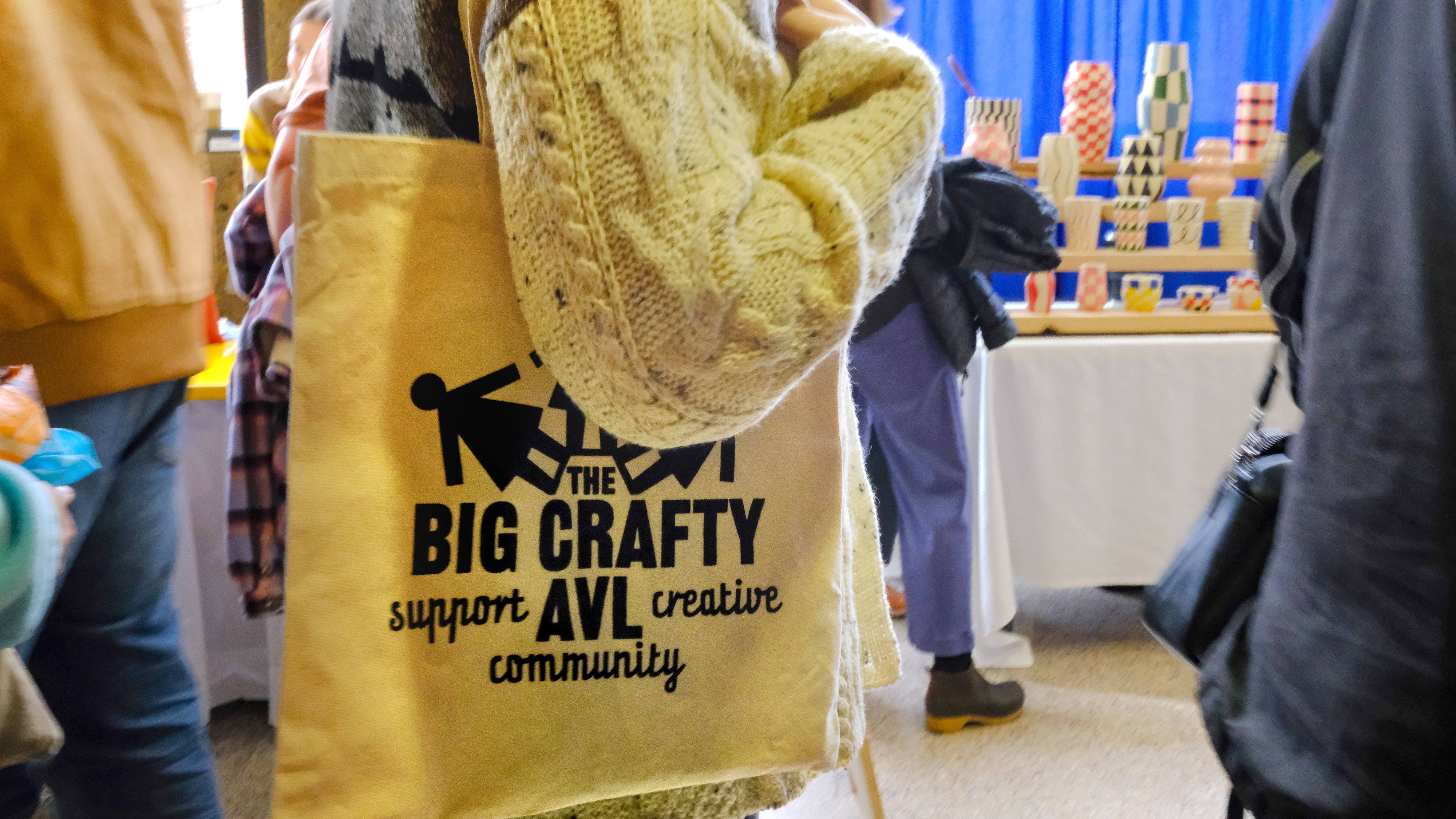
When Brandy Bourne and Justin Rabuck held the first Big Crafty in 2008, they thought it would be a one-time thing—a quirky gathering for indie artists who didn’t have a foothold in Asheville’s shops or galleries. But what began as a creative experiment quickly turned into something much bigger: a packed house, a line out the door, and a community that demanded more. The response was so enthusiastic that the Asheville Art Museum offered to host the next event, and before long, The Big Crafty had outgrown even the museum, moving to its current home at Harrah’s Cherokee Center.
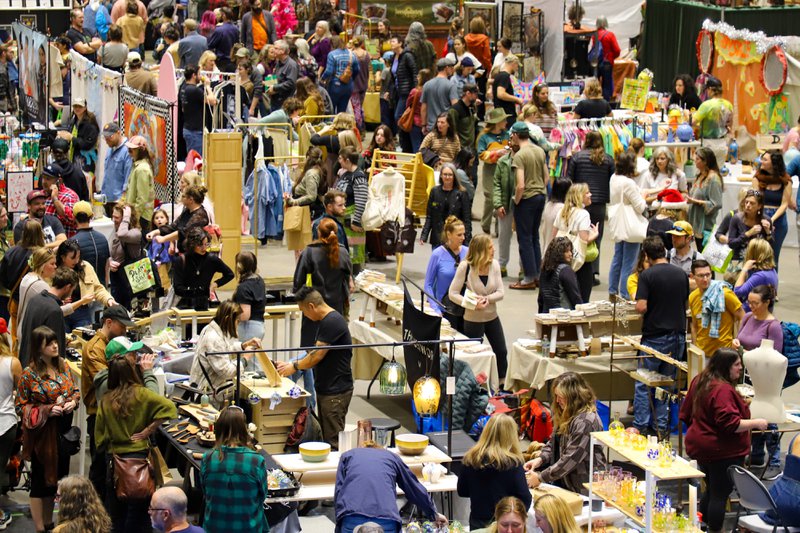
Now celebrating its 17th annual event, The Big Crafty is one of Western North Carolina’s largest arts and crafts festivals, generating $17 million in artist sales from related events and drawing thousands of people each year.
In Today's Q+Art Interview…
Brandy and Justin recount The Big Crafty’s unlikely beginnings, its growth into a beloved community tradition, and offer tips for artists seeking to submit successful applications.
Why and how did you start The Big Crafty, and how has it grown?
Brandy Bourne (BB): We had been involved in Asheville’s art communities in various ways since the 90s, and in 2008, we noticed that new artists were finding community online rather than locally. We had reached out to a few people whose work we admired, asking where their work was available locally, and discovered that they didn’t really have a local presence. On a lark, we decided to host an event that we described as a sort of “debutante ball” of backyard and basement artists.
We booked the Grey Eagle and coordinated 25 artists, fully expecting it to be a one-off event. But we were astounded by the response. There were lines out the door, wall-to-wall attendees, and for days afterward, we heard from artists who wanted to be part of the next one.
So our one-off event became the ongoing community that it is today. At some point, someone said it felt like a “creative community family reunion,” and that stuck and became a guiding thought. Like our initial concept, the point is to highlight and celebrate emerging art and artists and to maintain a creative community.
How have The Big Crafty and its offshoots—Big Love Fest, The Big Day, and brick-and-mortar art shops Horse + Hero and CODA at Citizen Vinyl in Asheville and HollerHouse in Bristol, TN/VA—shaped the local scene?
Jason Rabuck (JR): We’ve always seen these projects as different expressions of the same impulse: creating space for artists, creativity, and community to meet. Looking at them as a group, they’ve all been collaborations sparked by someone we connected with through The Big Crafty. It has all been part of the connectivity of The Big Crafty, and we hear from artists all the time about how connections made through the event have sparked creative collaborations for them, as well. We love knowing that the life of the event extends so far beyond the event itself.
What sentiment or community need did The Big Crafty tap into that made it explode in popularity?
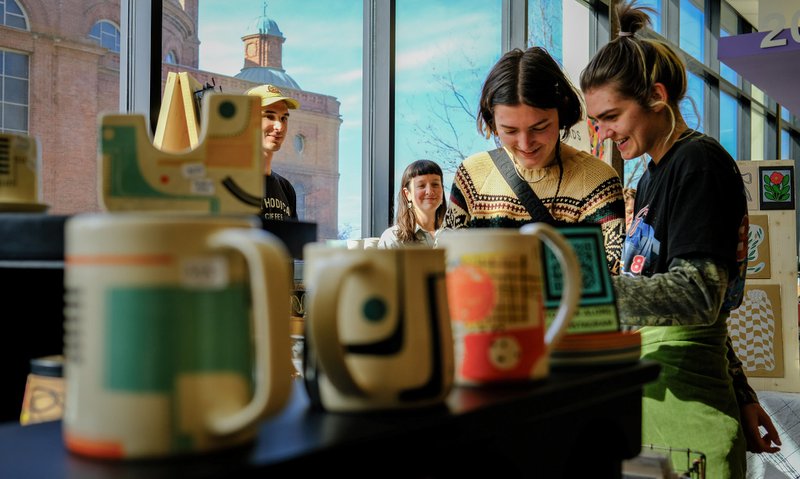
BB: There is a long history of appreciation for creative work, for the handmade, and for community itself. I think that has been at the root of the community that’s formed around the event. People wanted to know who made the things they were bringing into their homes and giving to the people they love. They wanted to shop for independent art, and they also wanted the experience of gathering. We also had a community of artists here with deep roots, and we hope we have created a joyful way for new artists to be welcomed into that community.
JR: I think people are also hungry for work that is made with care, personality, humor, and meaning. We describe our events as “hand to heart” for that reason.
Who judges applications, and what are they looking for?
JR: Applications are reviewed with a lot of care by a small group of organizers and people whose perspective we trust and respect. We intentionally keep that group private because Asheville is a close-knit creative community, and we want reviewers to be able to respond honestly to the work without outside pressure. We look at each artist’s work, presentation, originality, and how they might fit into the overall mix of the event.
What we’re looking for most is a strong point of view, and that can mean beautifully refined work, or work that feels fresh, funny, or experimental. Our ideal artists have a unique perspective, a community-minded production process, and a lot of heart. We want a mix that feels both elevated and welcoming with high art, folk art, design, humor, beauty, utility, and experimentation.
What tips do you have for artists to make their applications stand out?
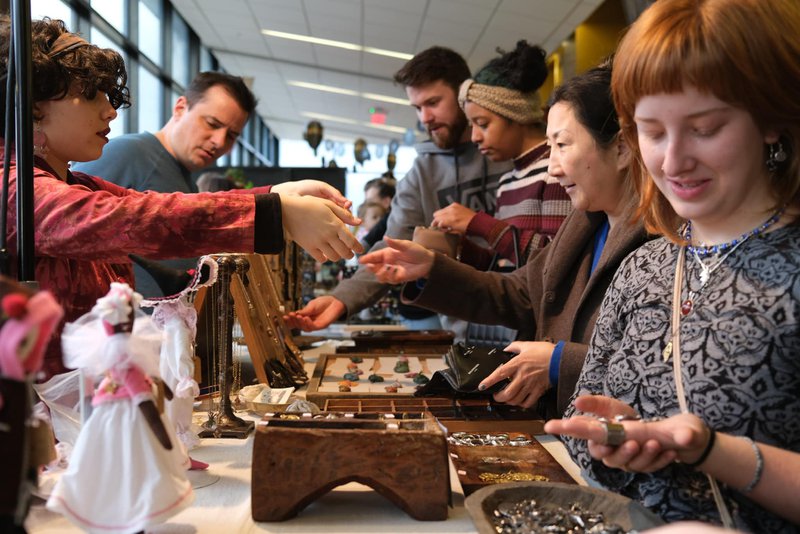
JR: The best advice is to be specific. Show us what makes your work yours. Even if you’re just starting out but have a few really original pieces, those are often our favorite applications. We are most interested in finding new, distinct voices or folks who have been around for a while but are embarking on a new creative path. We love highlighting those artists and providing a launchpad for their work. Good photos matter so much. They don’t have to be overly polished or expensive, but they should be clear and well-lit.
How do you envision the future of The Big Crafty and Asheville’s creative community?
JR: For Asheville’s creative community, we hope the event keeps individual creatives and the community as a whole visible. Artists need affordable space, opportunities to sell work, ways to connect, and a community that understands artists as essential to the identity and vitality of this place. We hope The Big Crafty helps move those things forward.
BB: We’re so proud of the connections made between artists and the community through all the years and all of the things that have grown out of that. Every year, artists let us know that The Big Crafty is what drew them to Asheville. They let us know about new studios they have set up with Big Crafty friends, and new opportunities that have come about. We look forward to continuing to forge those connections ever stronger and deeper over time.
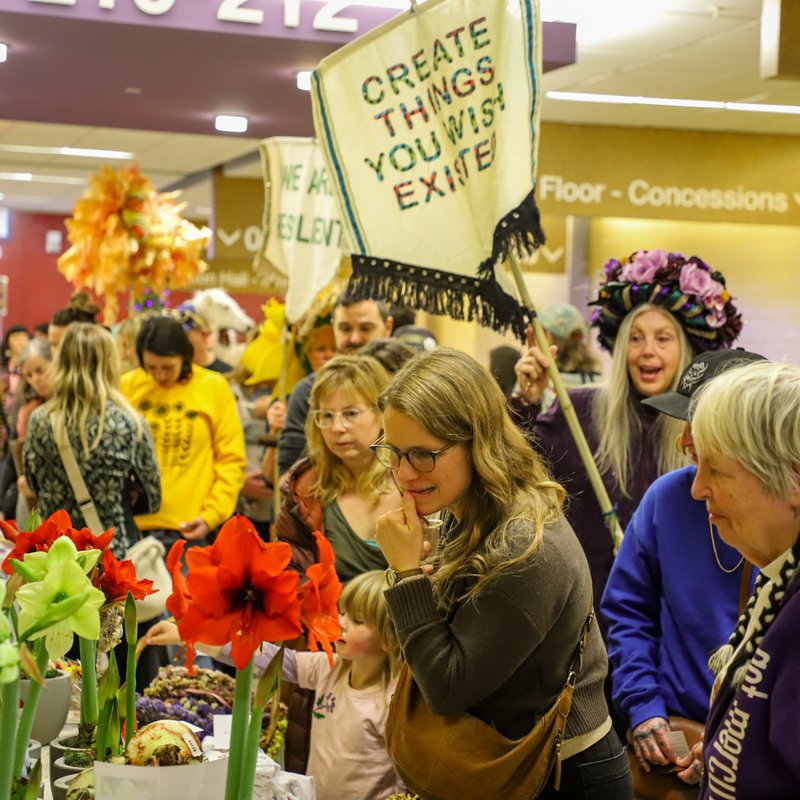
The Big Crafty runs July 11 and 12 at Harrah’s Cherokee Center, downtown Asheville, noon to 6 p.m. Saturday is a $10 preview day; Sunday is a free community day. For details, visit thebigcrafty.com.
This interview has been edited for length and clarity. All images published with permission of the Big Crafty.