Molten Made Forges a New Path in Asheville
Slated to open this fall in the RAD, Molten Made—led by local sculptors Julie Slattery and Paul Watson—is set to become Asheville’s first fine art foundry.

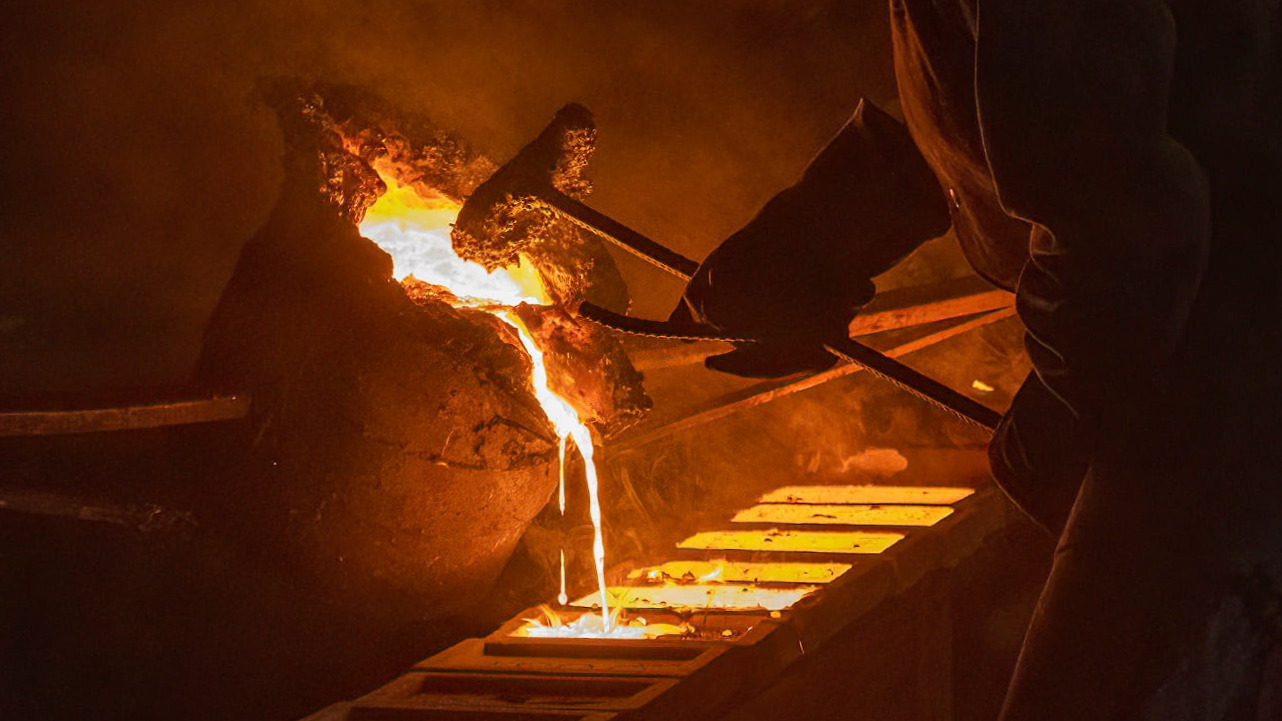
In Asheville, sculptures begin their lives in sunlit studios and crowded workshops. But when it comes time to cast them, they’re boxed up and shipped away, finished in foundries miles from where they were conceived. Without a local foundry, the city’s sculptors have had to work within limits, both practical and creative.
Julie Slattery and Paul Watson are about to change that. The two are hard at work creating Asheville’s first fine art foundry, Molten Made, set to open to the public this fall in the River Arts District (RAD). They first met at an iron casting workshop at the Sculpture Trails Outdoor Museum in Solsberry, Indiana, where Paul was a resident artist and tour guide. It was a match made in metal casting heaven: Julie soon began volunteering at the museum, and before long, they were living together in a one-room cabin in the middle of the sculpture park.
Julie graduated from Alfred University, and Paul from the Massachusetts College of Art and Design; both earned BFAs with concentrations in sculpture. Their academic backgrounds and artistic passions not only aligned, but their skills also complemented each other. Julie’s portfolio includes bold jewelry, figurative sculptures—some of which are currently featured in ArtsvilleUSA’s Open // Air exhibition—and interpretations of everyday objects, like pretzels cast in bronze. Paul’s forte is casting: creating molds from three-dimensional artworks in various materials, then pouring molten metal to form solid pieces. Julie also excels as a “metal chaser,” the final step in fabrication that removes imperfections, grinds down and smooths welding seams, and polishes the finished piece to the artist’s liking. “That’s the job everybody hates the most,” she says, “but I think it’s fun.”
 Morgan Laurens
Sharing the Love
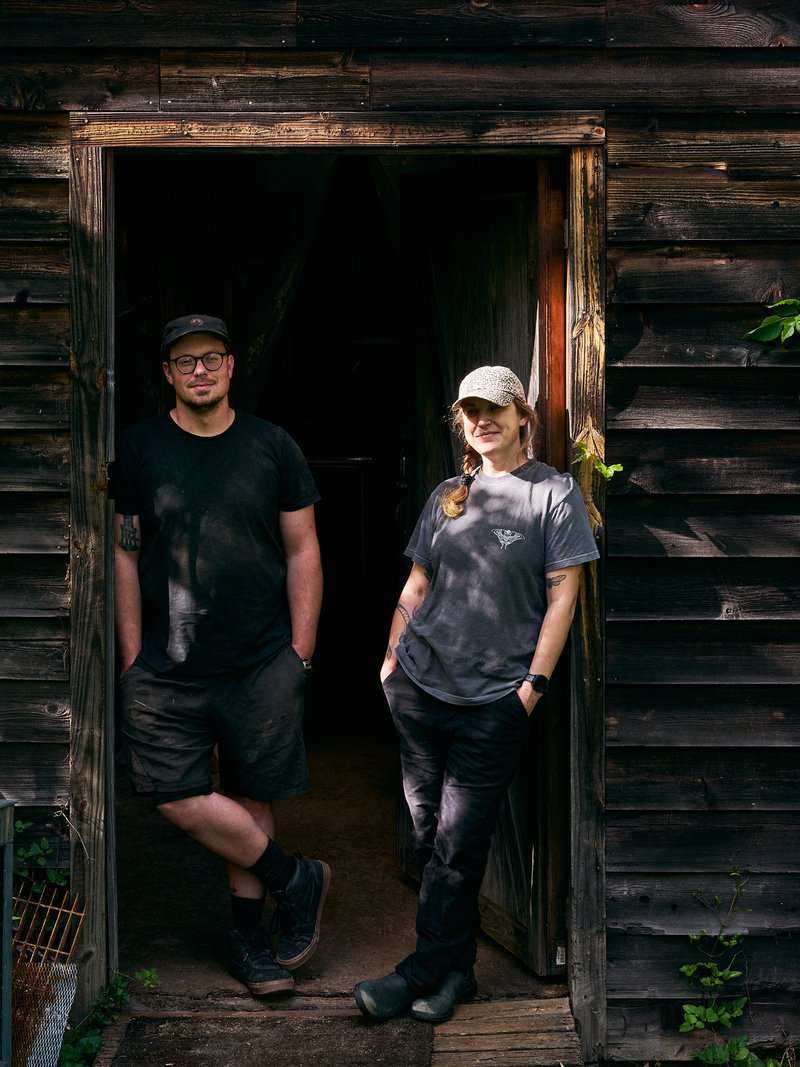
Julie Slattery and Paul Watson’s shared passion for metal casting blossomed into a loving personal partnership, and, ultimately, a dream of starting their own fine art foundry. That dream came sharply into focus when they moved to Asheville and were surprised to learn that such an established arts destination lacked a fine art foundry. Fine art sculptor, painter, and international art teacher Angela Cunningham has felt the impact of this gap firsthand. “As of now, getting a sculpture cast in bronze requires traveling to a foundry outside of our region, often out of state. That adds significant expense to an already costly process, making many projects financially challenging.”
Because of these limitations, Angela often works with materials other than bronze. The lack of a local fine art foundry influences not only material choices, but also the scale of her work. Large-scale sculpture typically requires specialized equipment, ample workspace, and a skilled crew—all resources a foundry provides. She notes, “Without access to those resources, and without a community of foundry workers and sculptors available to assist with the physical labor, I am often restricted in the size and complexity of the projects I can realistically pursue.”
Fantasizing, Strategizing, and Improvising
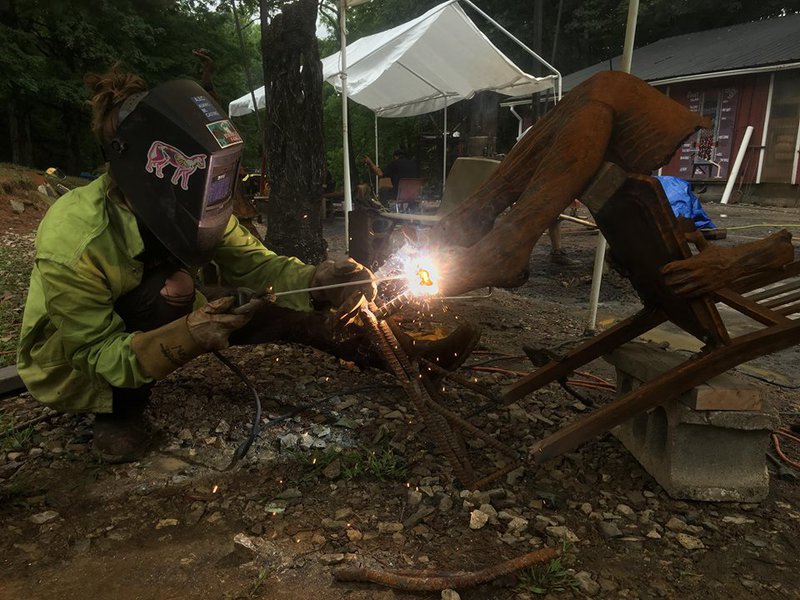
This critical need further fueled Julie and Paul’s determination to create the accessible, community-connected foundry they envisioned. Unfortunately, fate had other plans. They arrived in Asheville in February 2020, and less than a month later, the COVID-19 pandemic was declared. Lockdowns and social isolation made it impossible for them to become fully acquainted with the local art community.
Despite the headwinds, they persevered. In early 2024—a year after the official end of the pandemic—they opened a small studio at Riverview Station in the RAD. Proudly opening their doors to the public, they began showcasing their work and connecting with other artists and craftspeople. Julie adds, “That was an important stepping stone toward opening Molten Made.”
But once again, powers beyond their control intervened to turn one of their dreams into a nightmare.
Just five months after moving into their new studio, Hurricane Helene hit with a vengeance, devastating the RAD and destroying their space. As the foundry’s website explains, “Losing the space we had worked so hard to create was heartbreaking. For a moment, it felt like the dream had been taken away just as it was beginning. But the fire that started Molten Made never went out.”
Location, Location, Location
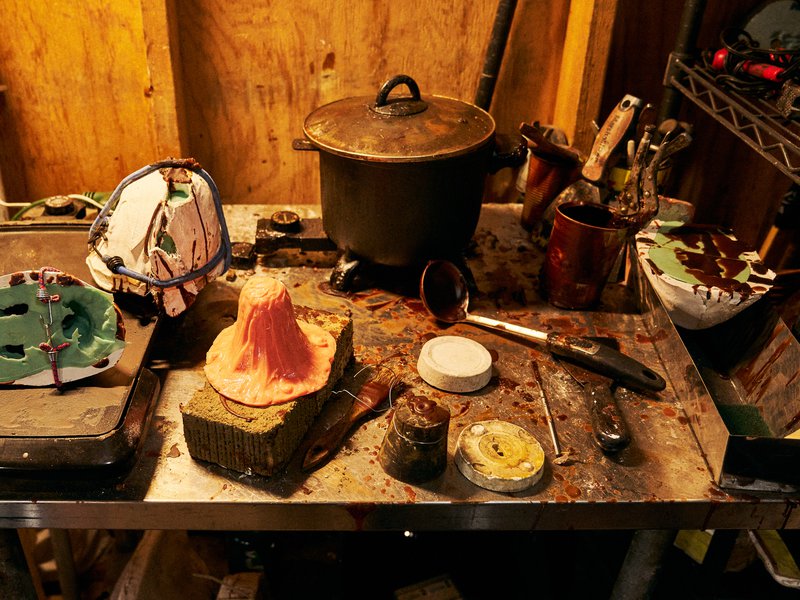
Last year, the couple built a small shed to operate a makeshift foundry powered by propane tanks—the kind used for backyard grills. They recently invited Angela to participate in a metal pour, and she was stoked. “I’m really excited for the opportunity to meet other passionate sculptors, learn more about their methods, and experience the collaborative spirit that a foundry environment can create.” As Julie says, “The biggest factor is having all the tools and materials in one place, and we have everything.”
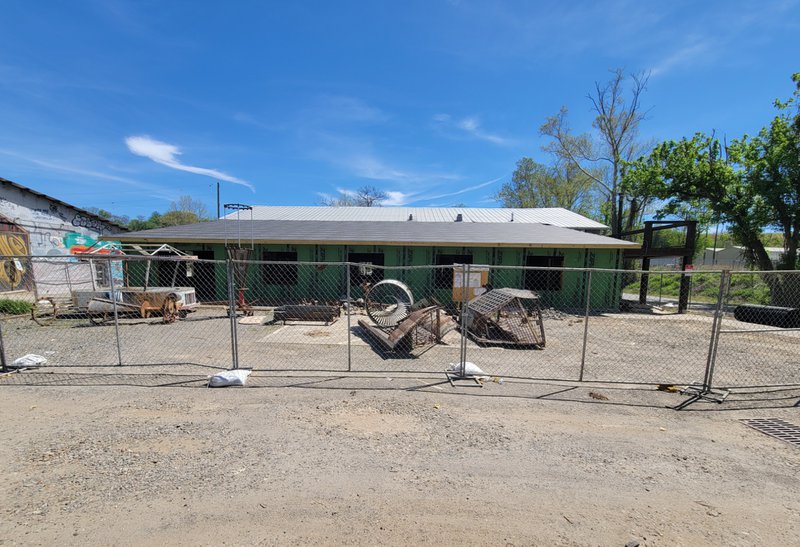
As Julie and Paul searched for a suitable location, they realized that some landlords weren’t keen to host a foundry on their property. That changed when they met Eddie Dewey, who shared their excitement. Now, they are preparing to open Molten Made within Foundation Studios, a sprawling complex in the RAD known for its graffiti-covered and mural-adorned buildings. Eddie, one of Foundation Studios’ founding partners, embraced the groundbreaking idea of making it home to Asheville’s first fine art foundry.
Plans for the Foundry
Paul explains, “We each have 10-plus years of experience working in foundries, and Julie’s been receiving business coaching at Mountain BizWorks, so she’s figuring out those logistics. I’m focused on the foundry’s infrastructure, making molds and tools and building furnaces.”
They have also worked at many foundries that didn’t succeed, which taught them what not to do and the importance of surrounding themselves with knowledgeable support while taking full advantage of community resources.
Molten Made will occupy approximately 1,800 square feet and include the foundry—with furnaces for melting aluminum and bronze—along with a gallery and classroom. Iron requires a separate furnace, which they hope to add after opening to offer iron pours for special events. People can simply drop off items for Molten Made to cast or participate hands-on to learn the entire process themselves. “It just depends on the level they want to be involved,” says Paul.
The foundry will cast pieces from virtually any medium, including, but not limited to, plaster, clay, ceramic, and linoleum. Julie explains, “It can be a paper pulp sculpture, something made of plastic, a cow skull—we like to see what people come up with to do with the process. Most people think foundry casting is out of reach, but we want it to be accessible to everyone.”
Nurturing Community
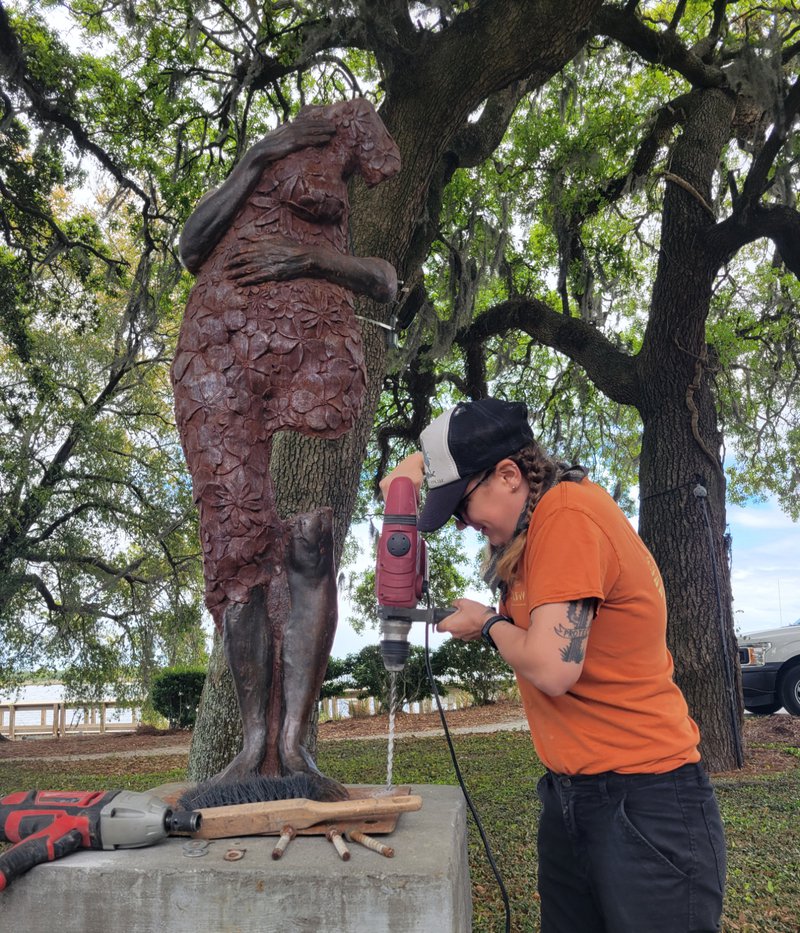
To that end, they’ll offer beginner classes, sessions tailored for children, and advanced training for those with some foundry experience seeking greater proficiency. They hope to secure grants and scholarships to make their services affordable for those in need. Sustainability is also important to them—they have innovative ideas, such as operating a furnace fueled by waste fry oil from local restaurants, which would otherwise be costly to dispose of.
Paul reiterates, “We want to be part of the community and foster community. We both fell in love with foundry work and know the impact it can have on folks, and it’s amazing to see what we can do with it—and to share it with the public on a large scale.” Angela agrees, noting that as a sculptor, having access to knowledgeable foundry professionals and a community of like-minded artists is invaluable. “These relationships lead to shared knowledge, technical growth, and new creative possibilities. I think that combination of production, education, and community-building has tremendous potential. A foundry isn’t just a place to make artwork—it’s a place where artists connect, learn from one another, and develop skills that might otherwise be difficult to access locally or on one’s own.”
Promoting Public Access to Art
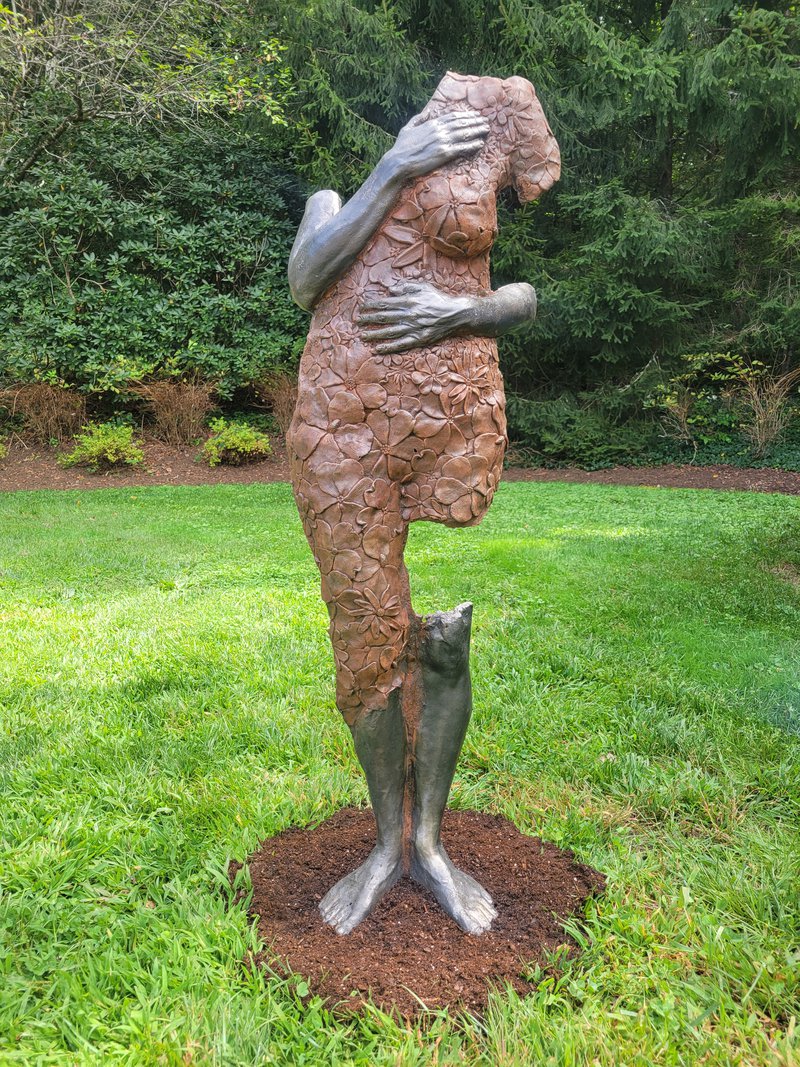
Julie concludes, “It’s so important to find your medium, and we are really excited to share our passion.” She’ll be exhibiting some of her life-size figurative sculptures in Open // Air, a virtual art show hosted by ArtsvilleUSA this summer. The exhibition presents sculptures and site-specific installations in the natural landscapes of WNC hiking trails, parks, and gardens. Viewers can log on from anywhere to explore the exhibit, see the places that inspire local artists, and then visit these beautiful locations in person.
Angela believes Molten Made has the potential to attract more artists to the area, draw collectors and clients interested in sculpture and metalwork, and create opportunities for larger-scale public art projects. “It could even help pave the way for future commissions that bring more bronze and metal sculpture into public spaces throughout our own city,” she says. Julie adds, “Asheville is known for its art scene—it’s one of the biggest draws to the area. Public art is that much more important; it is for everyone, not just the folks coming specifically for art, but for everyone just walking around and enjoying our city. With Molten Made, we want to bring more sculpture to public spaces. A foundry is where that happens.”
Molten Made will be located at 47 Foundy Street, Asheville, NC, and is scheduled to officially open in fall 2026. To learn more, visit @moltenmadeavl on Instagram or www.moltenmadeavl.com. Sign up for emails on the website for progress updates and to be the first to know when Molten Made offers workshops.
All Images published with permission of Julie Slattery and Paul Watson; featured photo: Julie Slattery.