‘I Don’t Know if the World Needs More Vases’: The Unconventional Life and Art of Glassblower Robert Burch
Jackson County glass artist Robert Burch talks tiny houses, sustainability, and why authenticity sometimes matters more than technical perfection.

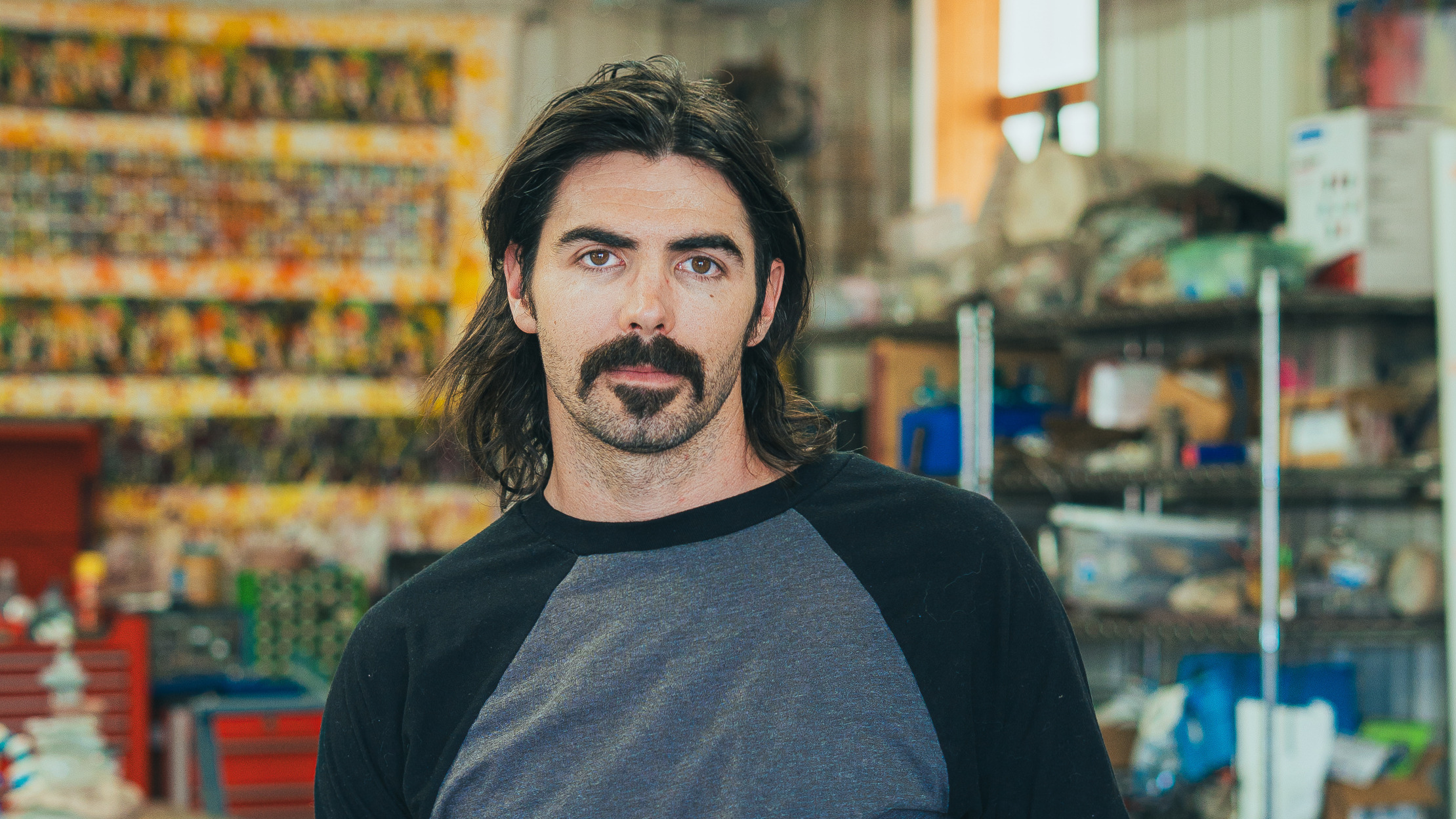
Q+Art is an artist interview column dedicated to supporting the art and artists of Western North Carolina. This month, we speak with Jackson County glass artist Robert Burch, whose work appears in our virtual summer exhibition, Open // Air.
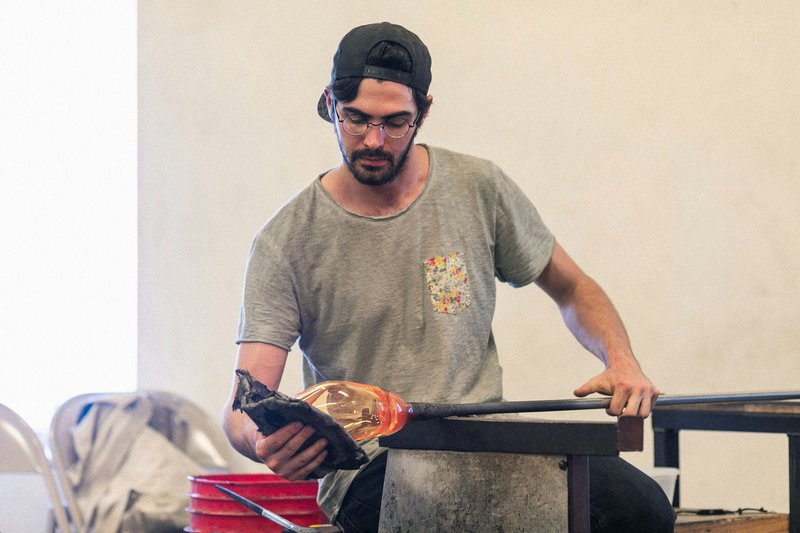
Glass artist Robert Burch once poured molten glass straight onto a hot shop table, just to see if he could skateboard across the long, polished sheet. The shop owners were not amused. Telling the story now, Robert shrugs with a bemusement worthy of Mona Lisa’s. "It was just an idea."
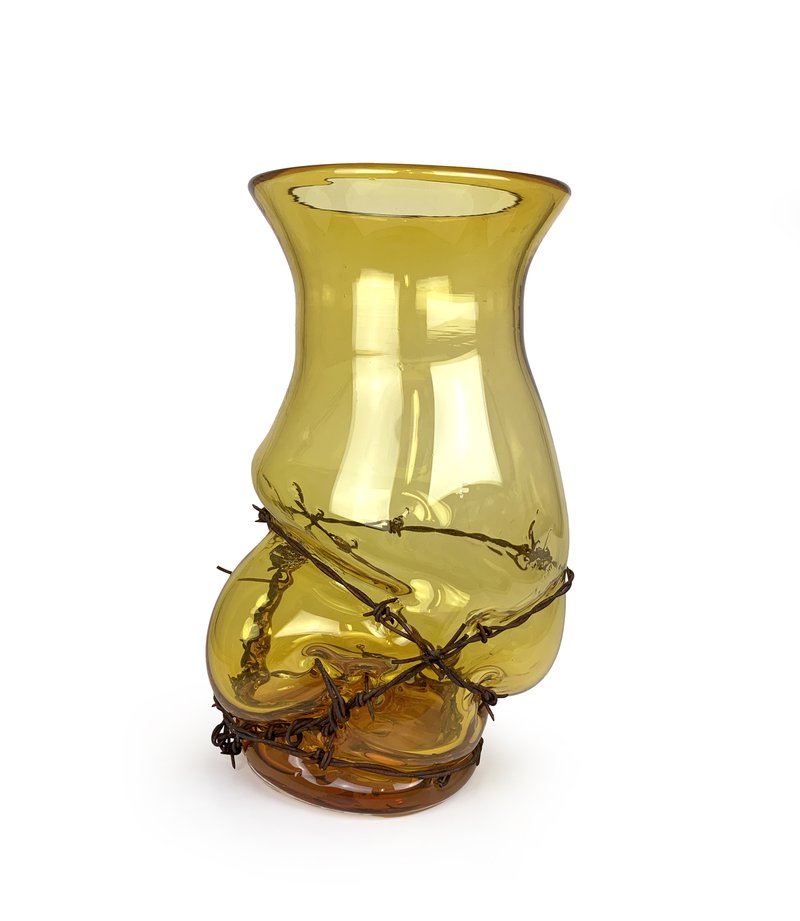
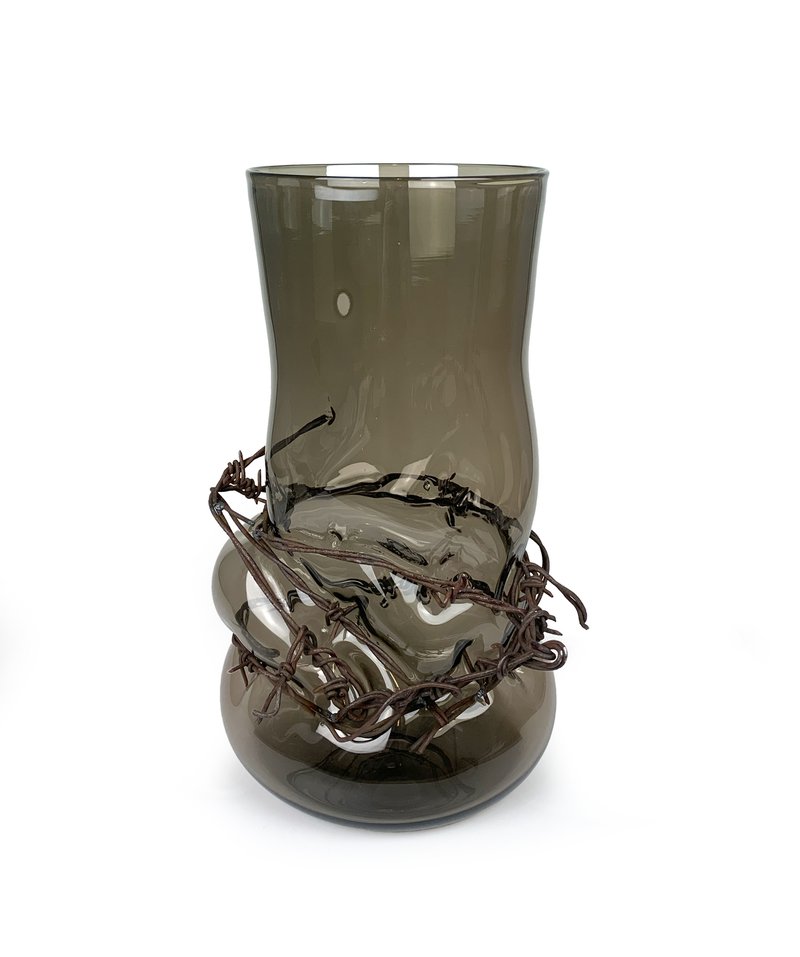
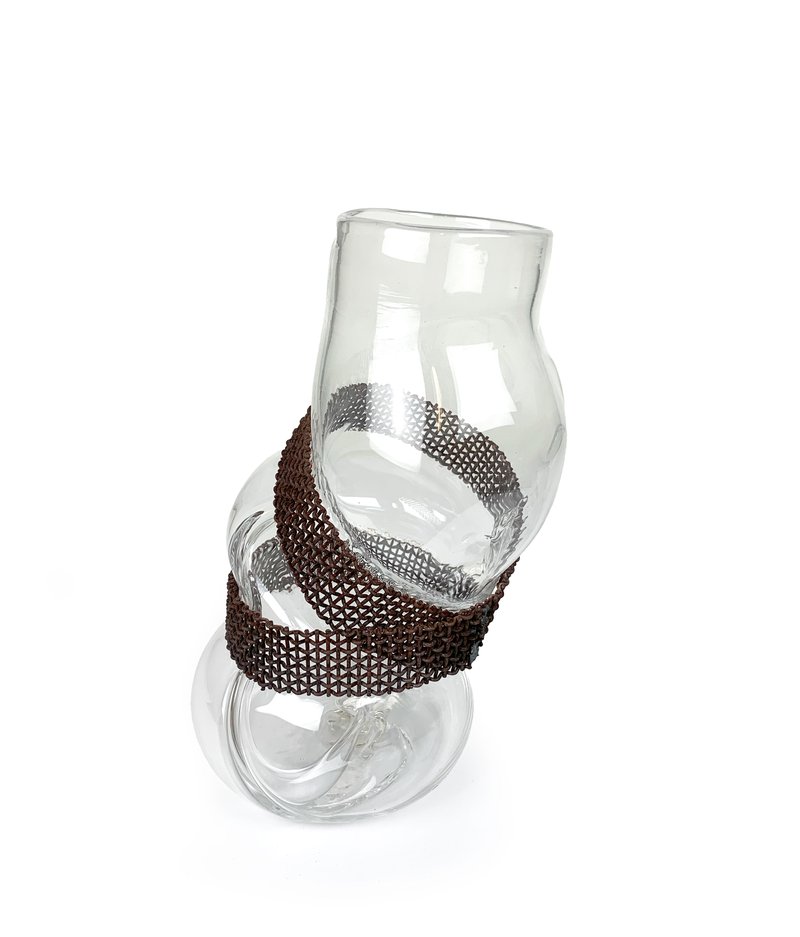
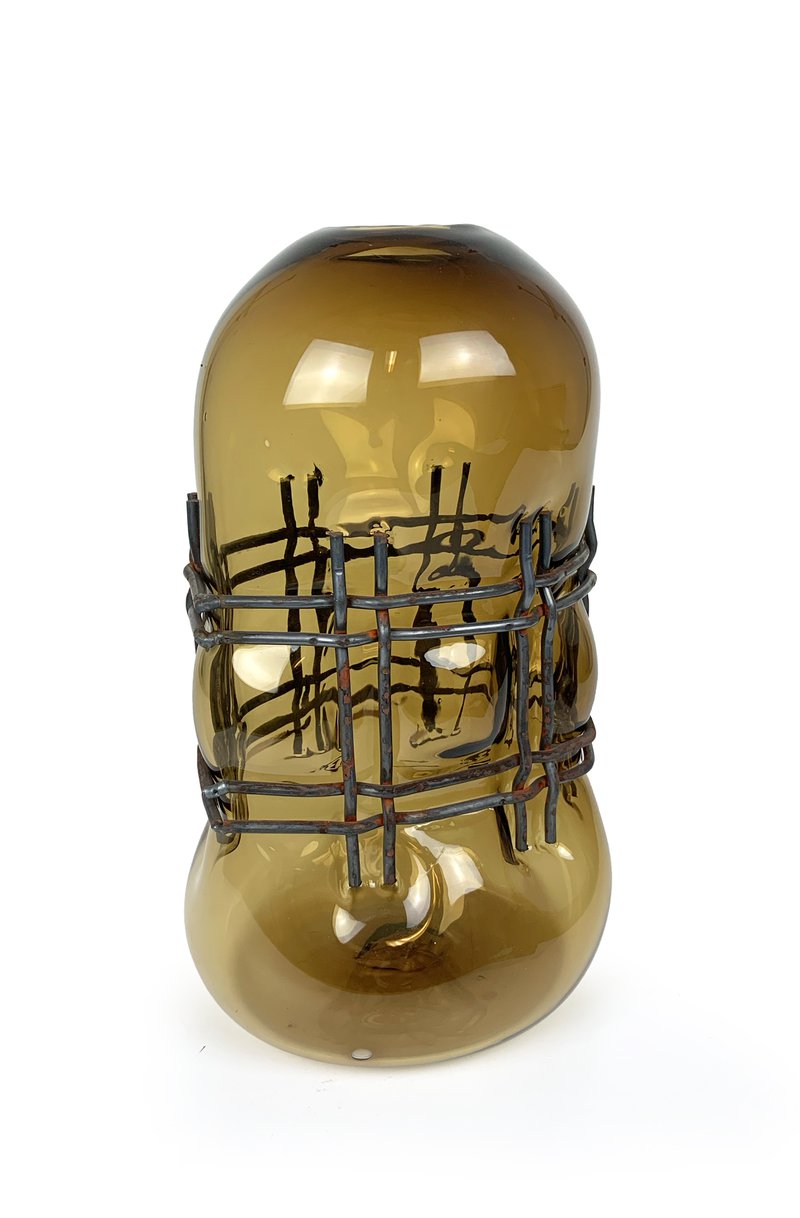
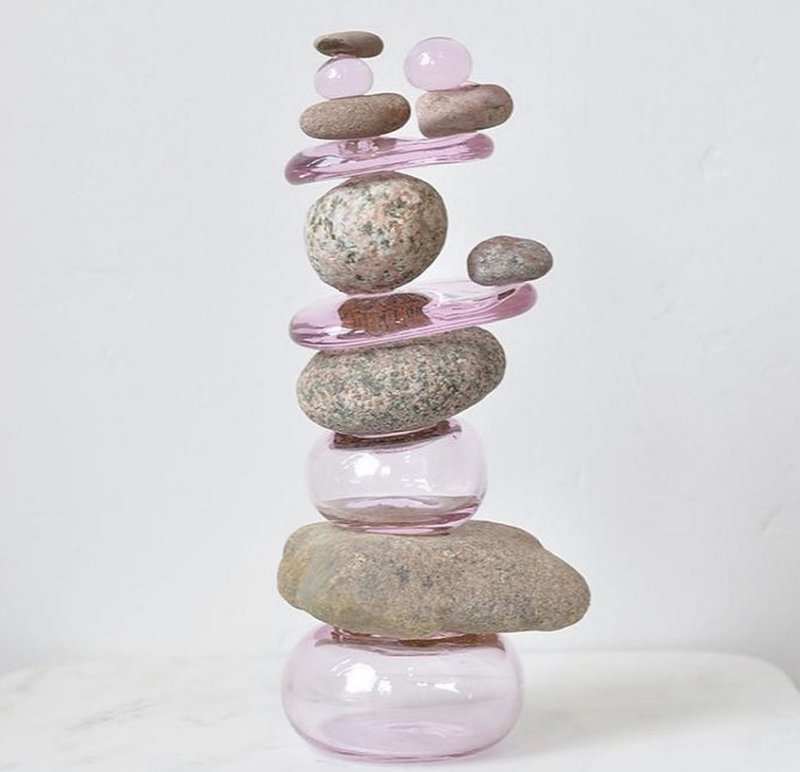
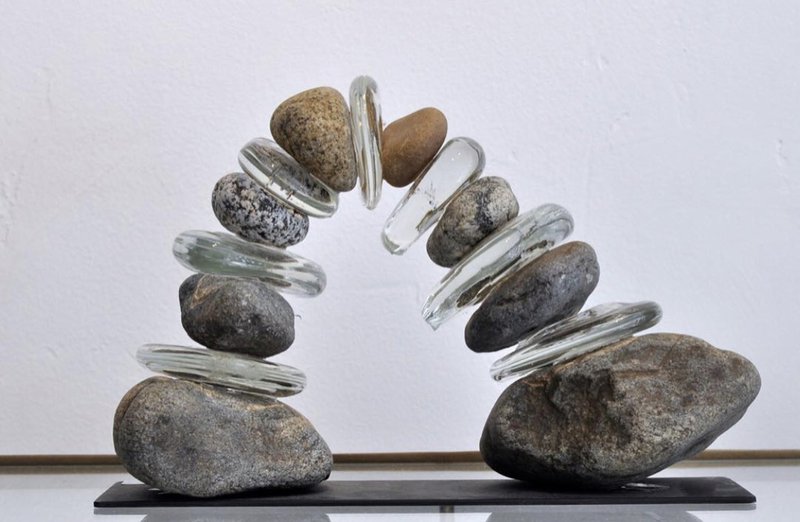
For Robert, “just an idea” tends to be the catalyst for work that’s unruly, sometimes risky, and often experimental: climbing ropes fused into figure-eights; a light fixture welded from barbed wire scavenged in the American West; and endless stacks of natural stone and blown glass, echoing the cairns he finds along mountain trails. This summer, three of these cairns are featured in Open // Air, ArtsvilleUSA’s virtual summer outdoor exhibition, now on view.
Nomadic by nature—"I’d live under a tree if they paid me," he quips—Robert has learned to build a home base wherever he lands. Born and raised in Colorado, he built his first tiny house at 25, cobbling it together for just $3,000 in response to sky-high rent. Hoping a bit of permanence might slow things down, he later built a larger cabin in Sylva, North Carolina, towing his tiny house from Colorado and living in it off and on, DIY-style. Today, Robert splits his time between family in Colorado, freelance gigs across the country, and his home base in Jackson County, North Carolina.
Since moving to Appalachia, he’s worked for renowned sculptors, appeared (reluctantly) on reality TV, and strives to keep his carbon footprint low. He blows glass at the Jackson County Green Energy Park, the only studio in the U.S. that runs off methane captured from a nearby landfill, an ingenious setup that lets him fire up glassblowing ovens without relying on conventional gas. He carries that spirit of sustainability into his other fabrication work as well, sourcing materials from scrap bins, welding with solar-powered equipment, and occasionally cold-working metal pieces using rainwater. Robert’s work is currently on view in the exhibition Reflections at Blue Spiral 1 through August, 26, 2026.
In Today’s Q+Art Interview…
Robert Burch discusses how he built his tiny house and towed it to Appalachia, his appearance on season four of the Netflix glassblowing reality show Blown Away, and why the world doesn’t need more perfectly made vases.
How did you get started in glassblowing?
Robert Burch: I went to an artsy high school in Colorado, and they had a glass shop. I didn't think it was really going to stick; I was not good at it naturally. Then, I was more into photography. You quickly realize there are a lot of photographers out there. If you approach a gallery with glass, you're just by the medium, a little bit more niche. I kept finding more gallery success through the glass, but I think it's okay, because there's no hierarchy in mediums.
What inspired you to build your own tiny house?
RB: I couldn't really afford where I was living in Colorado, so I built that and lived in it on and off for years. Then I towed it to Appalachia, and I was living in that wide-built. It was maybe the best thing I've ever done.
How did your appearance on Season Four of Netflix reality show Blown Away come about, and what was your experience like behind the scenes?
RB: They approached me over and over again, and then every year they didn't pick me. By the fourth year, I was pretty fired up. I came in pretty hot in the interview, and I was like, I'm just gonna bomb this right now. And then they're like, no, he's ready. They kind of typecast me as a villain. They do a lot of editing magic… there's just a lot of behind-the-scenes stuff that looks like one thing; you have to wear the same outfit every interview, so they can just take answers from different interviews and plot them in. I'm glad I got my crack at it, but I didn't think it was going to change my life in a profound way.
How do your experiences with skateboarding, rock climbing, and other outdoor activities influence your creative process and the kind of work you make?
RB: A lot of good creatives come out of skateboarding. It's the whole DIY aspect of it. I'm aware that those cultures can be masculine and kind of annoying. But to combine glass, painting, or softer designs with some really out-there adrenaline stuff—I haven't seen a really cool combination of both. Skateboarding does a better job of incorporating artsy, creative stuff with some super gnarly tricks, but not so much snowboarding or climbing as far as I've seen. So I'm just trying to find that open niche between the stuff I like to do that's kind of bro-ey, but also doing art to reference it.
How do you find the balance between technical mastery and making work that feels genuine and personal?
RB: I think these days the artist is the art. You can be making really, really bad glass, but if you're really good at marketing yourself, it's not necessarily that important. There are certain designs I deliberately make off-center and kind of wonky. If you get too good, it looks like it belongs in Goodwill. I don't know if the world needs more vases, you know. But people do appreciate the human hand. It's almost a full-circle thing. You should develop the skills to get really good at doing something completely symmetrical and perfect. But then, if you stay in that zone, all of a sudden, your work just looks like it's from IKEA or Target.
Why are rock stacks such a recurring theme in your work, and what do they symbolize for you?
RB: Glassblowers like to make a lot of rules for each other and expectations about what has to happen. The rock stacks are so simple to make, but people like them. And also, it speaks to my personal history outdoors, in the mountains, where you just look around and see rock stacks. Like, is this a symbol that I can recreate comfortably? I want to show that I’m actually living the lifestyle of the work that I’m making.
Robert Burch: Website | Instagram
This interview has been edited for length and clarity. All photos published with permission of Robert Burch.