Out of Her Head: Bridget Fox’s Cabinet of Brains and Other Curiosities
Mudventions founder Bridget Fox transforms clay into hand-glazed brains, touch-reactive lamps, and one-of-a-kind oddities inspired by the natural world.

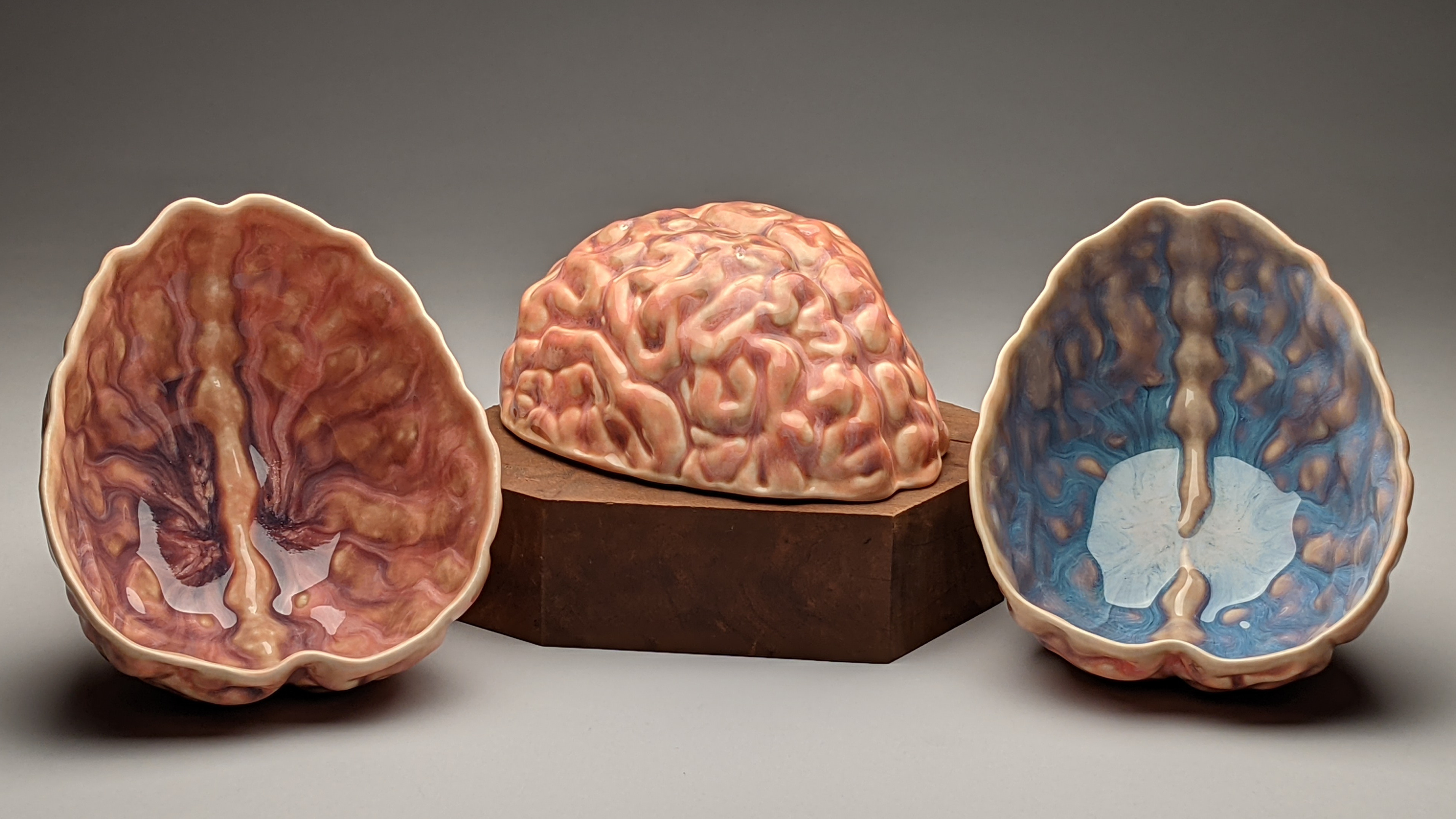
“I get bored easily,” admits Bridget Fox, a confession that echoes through every ceramic oddity at her Celo, North Carolina, shop and studio, Mudventions. Step inside the Yancey County gallery and you’ll find a cabinet of natural curiosities: touch-reactive lamps that mimic bioluminescence, whimsical rattles inspired by seed pods, and her most popular attraction: a small army of hand-glazed ceramic brains.
These brains, whether halved, hollowed, or fused into functional urns, have found homes with neurologists, psychologists, and horror enthusiasts—but Bridget seems most delighted by their ability to amuse, startle, or just plain provoke, no matter who wanders in to browse. “People either love them or they don’t like them at all.” The brains, she says, are both her easiest and most maddening creation: uniform in shape, but requiring a devilish bit of slip-cast magic to pull off. Their popularity has made her well acquainted with the plaster bucket.
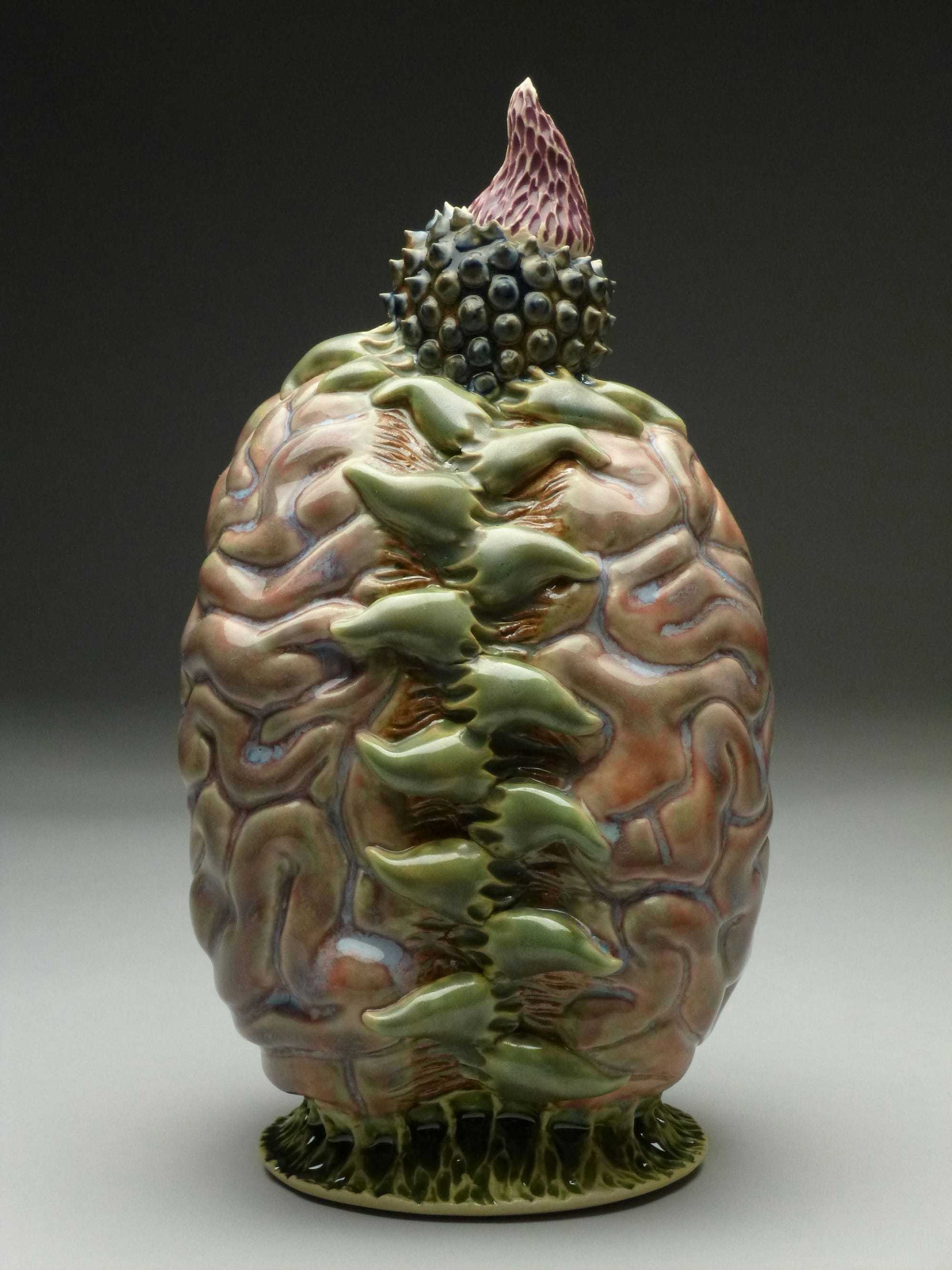
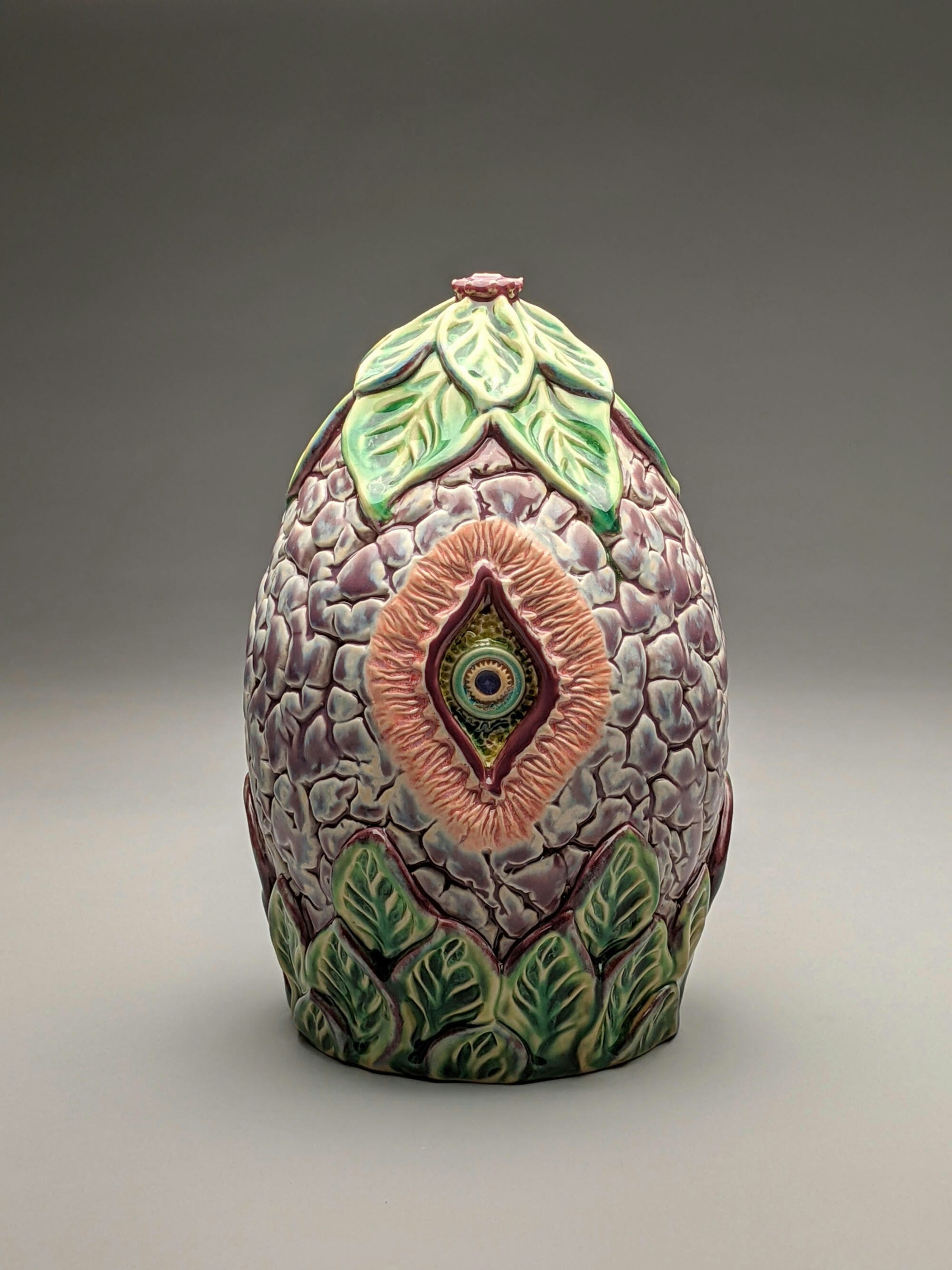
'Meeting of the Minds Urn' and 'Cosmic Eye Pod Urn' are both featured in the ArtsvilleUSA exhibition 'Body of Work.'
Bridget’s visual language is wired to her other obsessions: botany, mycology, and a deep fascination with the secret architectures of aquatic life. Her swirling biomorphic forms draw inspiration from German naturalist Ernst Haeckel, whose intricate 19th-century illustrations of radiolaria and jellyfish opened up “a whole other world” for her. Behind the scenes, Bridget’s husband lends his electrician’s expertise to animate what she calls "Ceramadelics"—glowing, touch-reactive pieces, inspired by bioluminescent creatures like fungi, deep-sea plankton, and the blue ghost fireflies in her backyard.
This fall, a bit of Mudventions ingenuity made its way into Body of Work, a virtual ArtsvilleUSA exhibition exploring the age-old concept of memento mori. Among Bridget’s contributions was “Meeting of the Minds,” a functional urn made from two ceramic brains. As Bridget tells it, its origin goes like this: “Two brains collided, their neural networks mingled, synapses sparked, and POOF… out popped the brain genie” to “keep all your dark secrets safe.”
 Morgan Laurens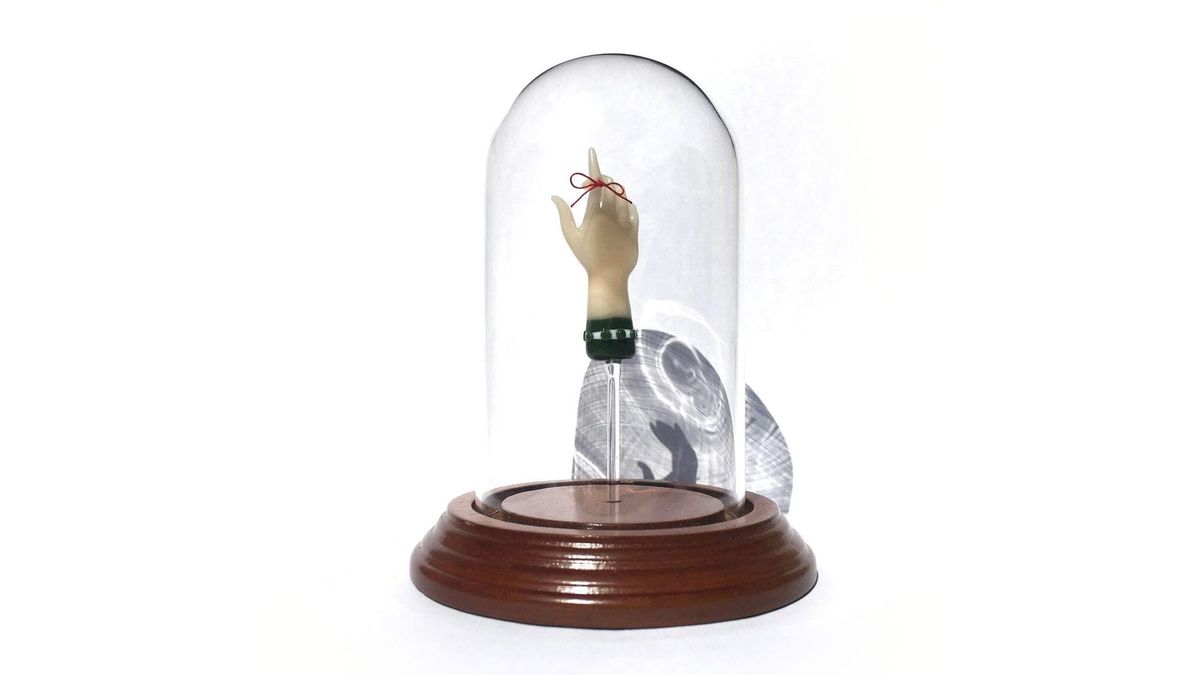
In Today’s Q+Art Interview…
Bridget Fox discusses how her background in painting shapes her glazing techniques, how she keeps her brain—both literal and ceramic—firing on all cylinders, and why every kiln firing still feels like Christmas morning.
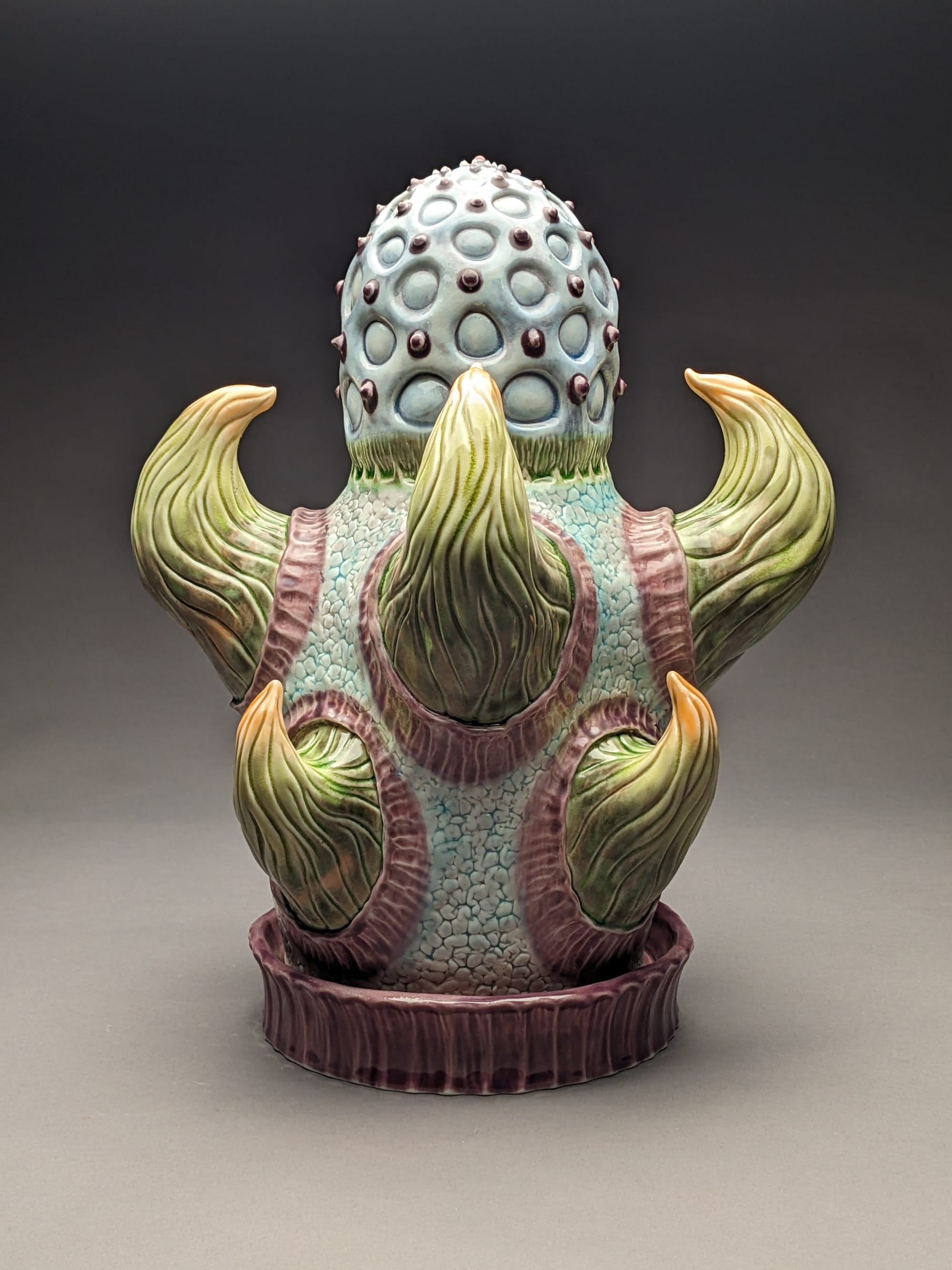
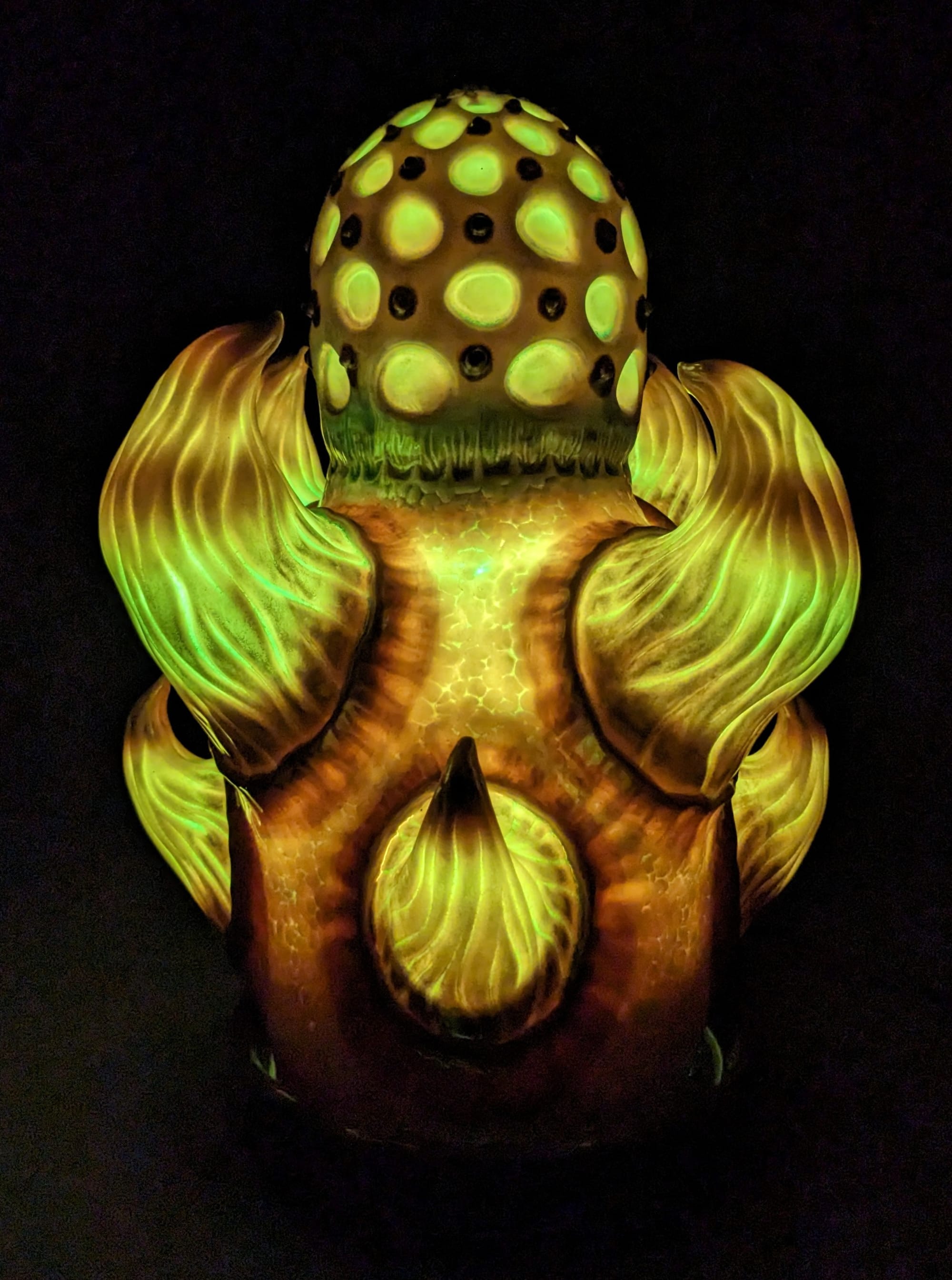
'The Horny One' Ceramadelics light sculpture
Where does the name ‘Mudventions’ come from?
Bridget Fox: I was thinking of a name for my business right after I finished school, when I was trying to figure out what I was going to do and how I was going to continue doing clay when I didn't have access to the whole university studio. At first, I thought “Mud Works.” Then I thought of the rattles I'd been making, the pods—they're like inventions out of my head, out of my imagination.
So I was like, “Why don't I just put ‘mud-ventions’ together instead of 'inventions'?” Because they're these crazy things I come up with. People are always like, "Where is this coming from?" Even with the brains, that's the question I always get asked.
It feels as though you are inventing these things and combining different realms? What are your biggest influences?
BF: Nature is my biggest influence. I've always been interested in nature and really into it. In college, I took a botany class and got even more into it.
I also discovered Ernst Haeckel, an all-around amazing person back in the 1800s, around Darwin’s time. He was a zoologist, a naturalist, a philosopher, a marine biologist. He was like an artist, a professor, everything. And he was an incredible illustrator. He's known for drawing radiolaria, which are one-celled marine organisms that you would only see under a microscope.
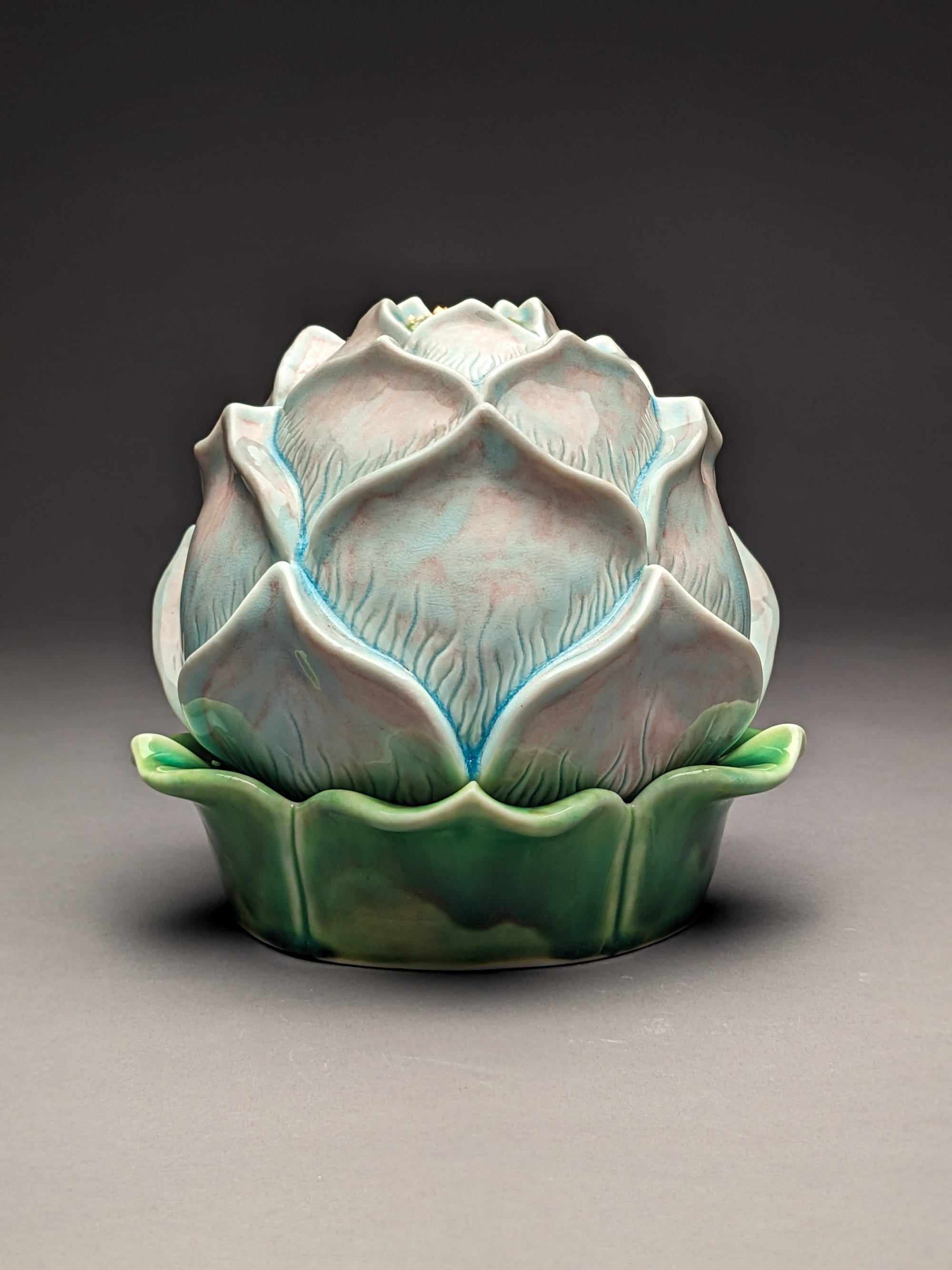
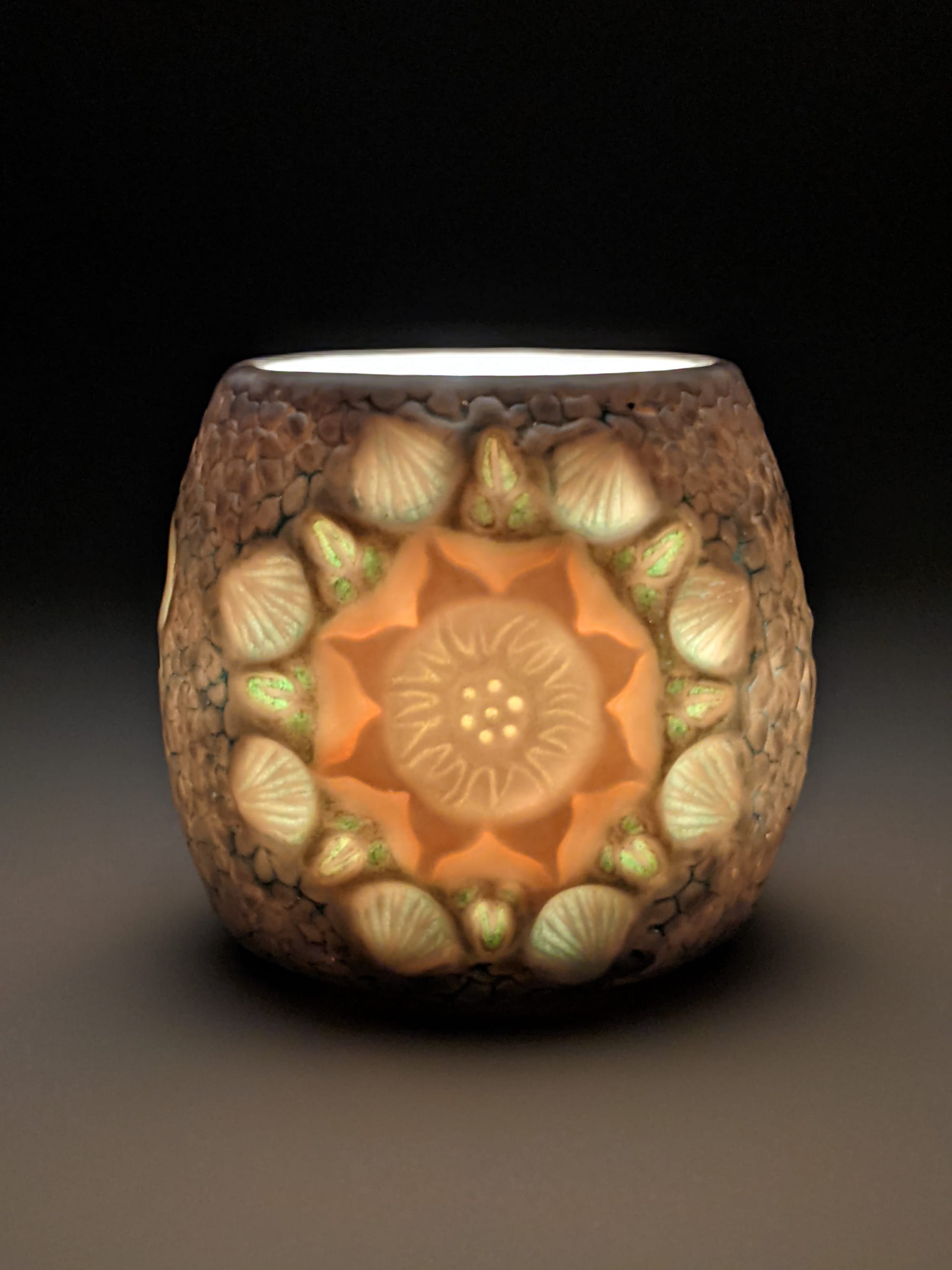
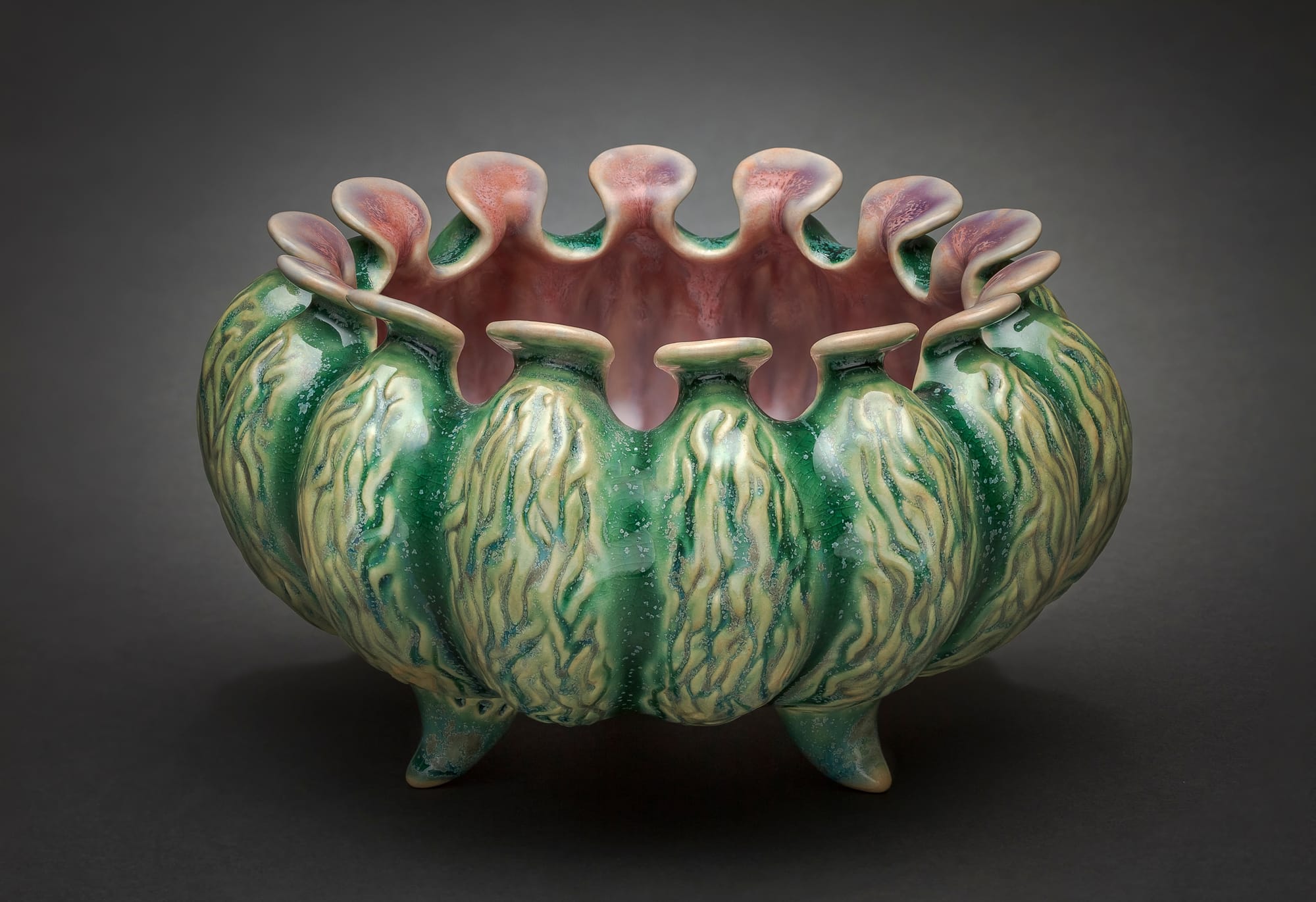
'Lotus Pod' Ceramadelics light sculpture; 'Lotus Sun Luminary'; 'Lippy Cucurbita Bowl'
You started off as a painter before branching out into ceramics. How does that experience influence your glazing choices and techniques?
BF: I took a color theory class in college, and it taught me a lot about color. When you're painting, you’re blending and layering, so with glazing, I do a lot of layering. I'll put two glazes together to get more variation in the color, or specifically search out glazes that have a variation that isn't just one solid color. I use solid colors too; it's a sort of mix of layering certain glazes and using single ones.
Are there specific colors or palettes you're attracted to?
BF: I love green and purple—my Mermaid Collection is a blue-green-purple palette. I'm also trying to bring in more earth tones to balance it out, mainly with the rattles. I just like it all—I'm probably too rainbow. I also think the glazing process is so cool because you don't really know what’s going to happen. You have an idea, but every kiln firing is always like, ooh, Christmas—like, what happened? Your application technique has so much to do with it. No two kiln firings are going to be the same.
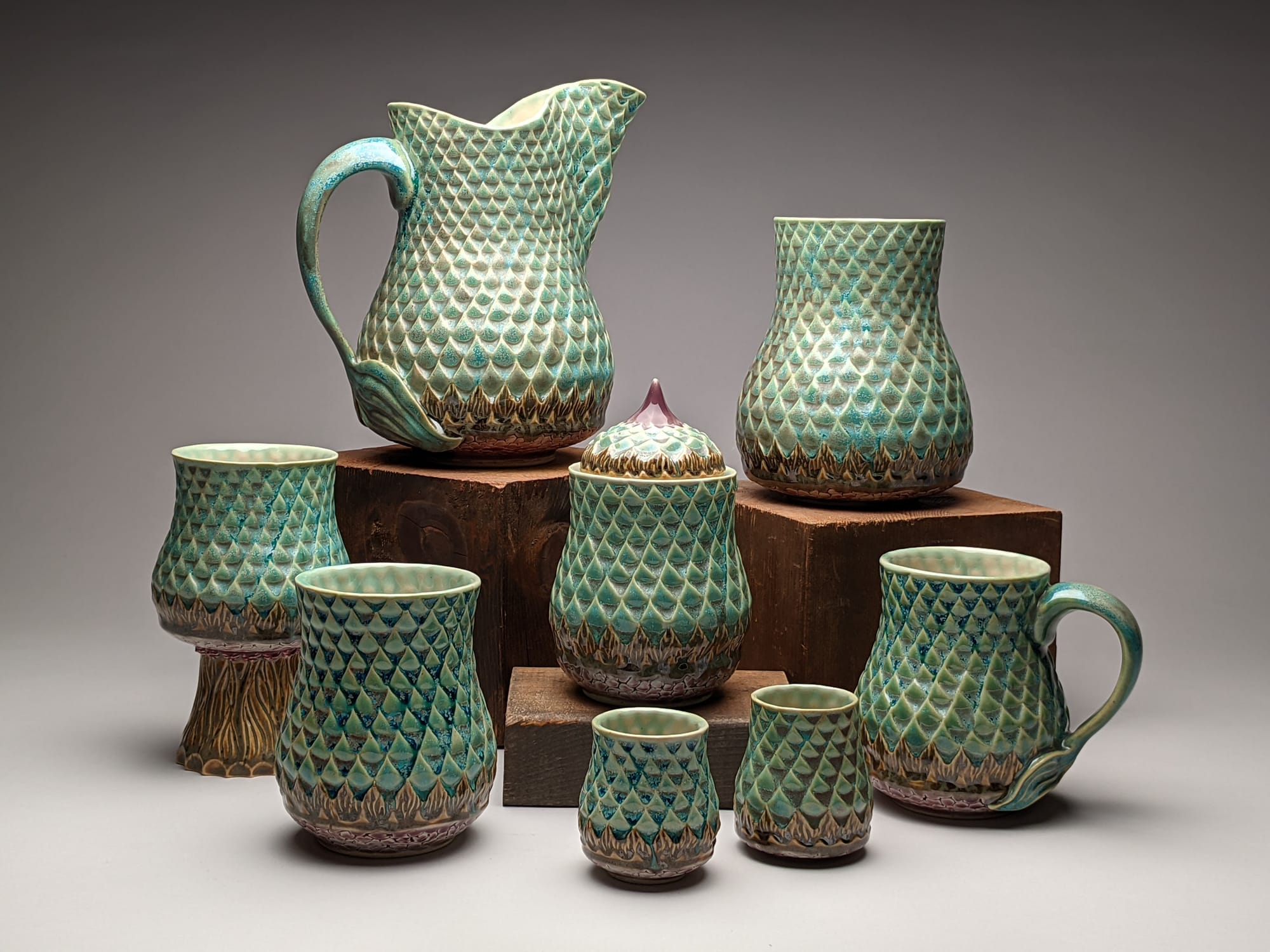
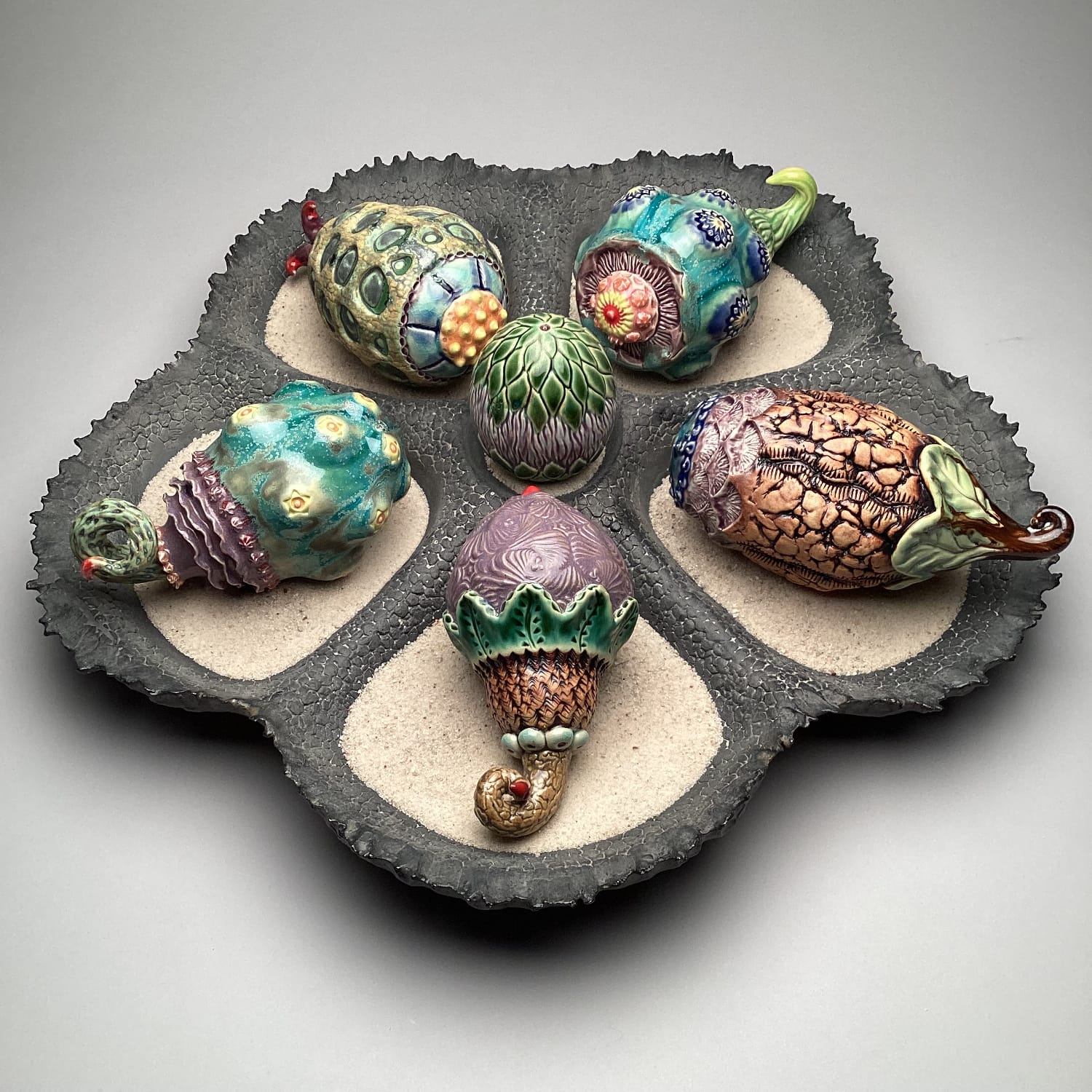
'Mermaid Collection'; 'Cosmic Podling Rattles'
How do the arts community and the WNC landscape affect your work?
BF: The number of artists in this area is mind-blowingly huge. You tend to get into this little microcosm of your own studio life, then you go out to your community, and there are artists everywhere. It's inspiring. I give thanks every day that I can live here, wake up, and be in the trees in the forest after living in a city for 10 years. It reminds me that there's a much bigger world out there that we don't know about.
I also like being able to jump in the river when I start feeling like I need to recharge or reset my brain and get out of my own head. I get really perfectionistic in my work. There's imperfection everywhere, and it's beautiful, you know? Probably the biggest thing is the inspiration it brings me and how it opens my eyes to new things people are doing and new ways the Earth is changing. There's just abundance. I'm always seeing new plants.
Who are some artists in the WNC area that inspire your work?
BF: Some [artists] here work similarly and really inspire me, like Jenny Lou Sherburne and Maggie Freeman. Kim and Pete McWhorter, my neighbors. They're like just down the road. Michael Sherrill and Christina Cordova—just the scale of ceramics that she does, the huge sculptures.
I'm also inspired by non-clay people doing sculptural stuff, like Mark Woodham. He does wood and metal, and he used to do glass. There's also Ethan and Carl Peverall, who work with huge stone. Carl gave me a whole tour of their sculpture garden, and there was this huge fountain that was just amazing… It's hard not to be inspired by the sheer amount of really talented ceramic artists here.
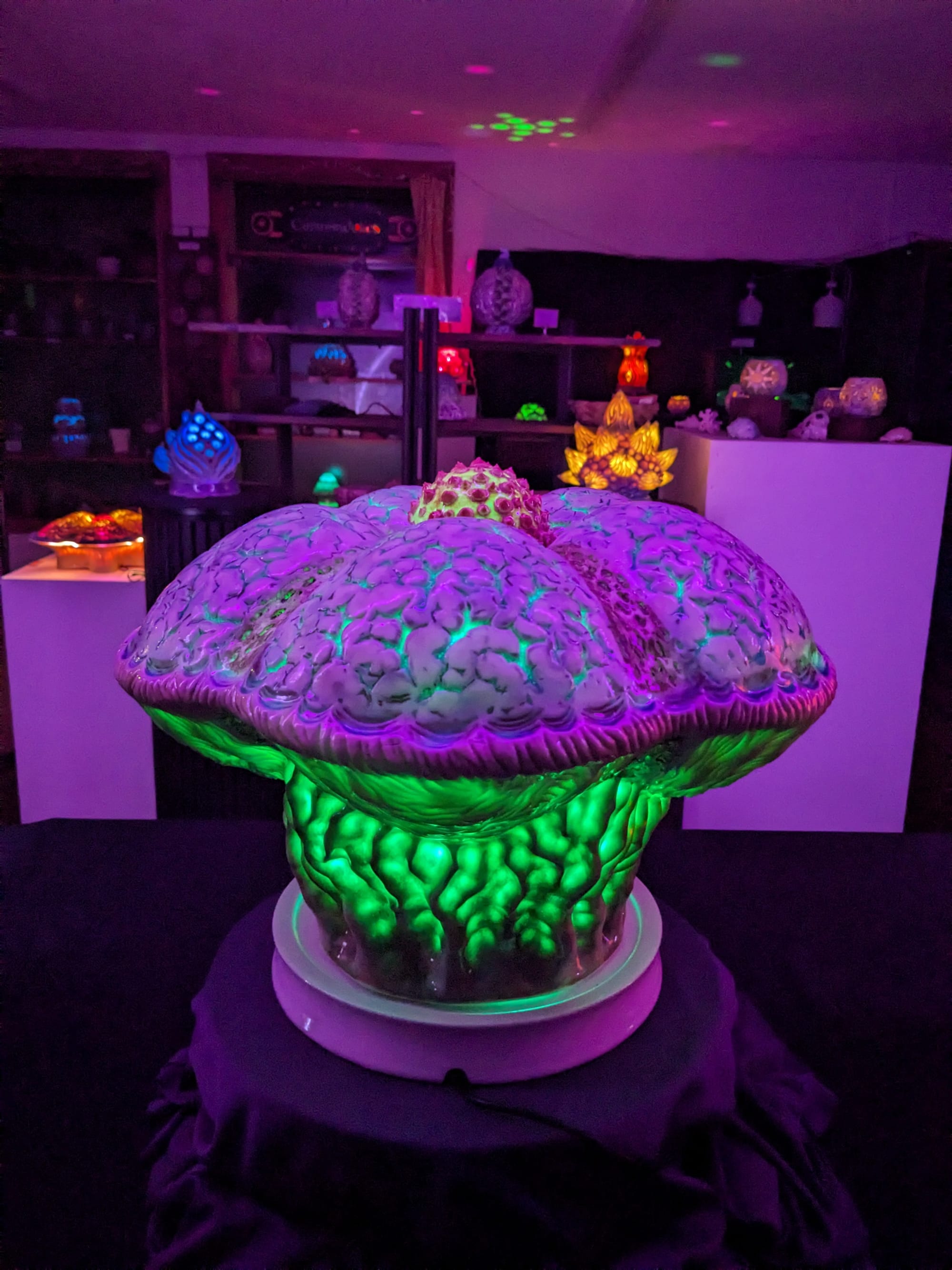
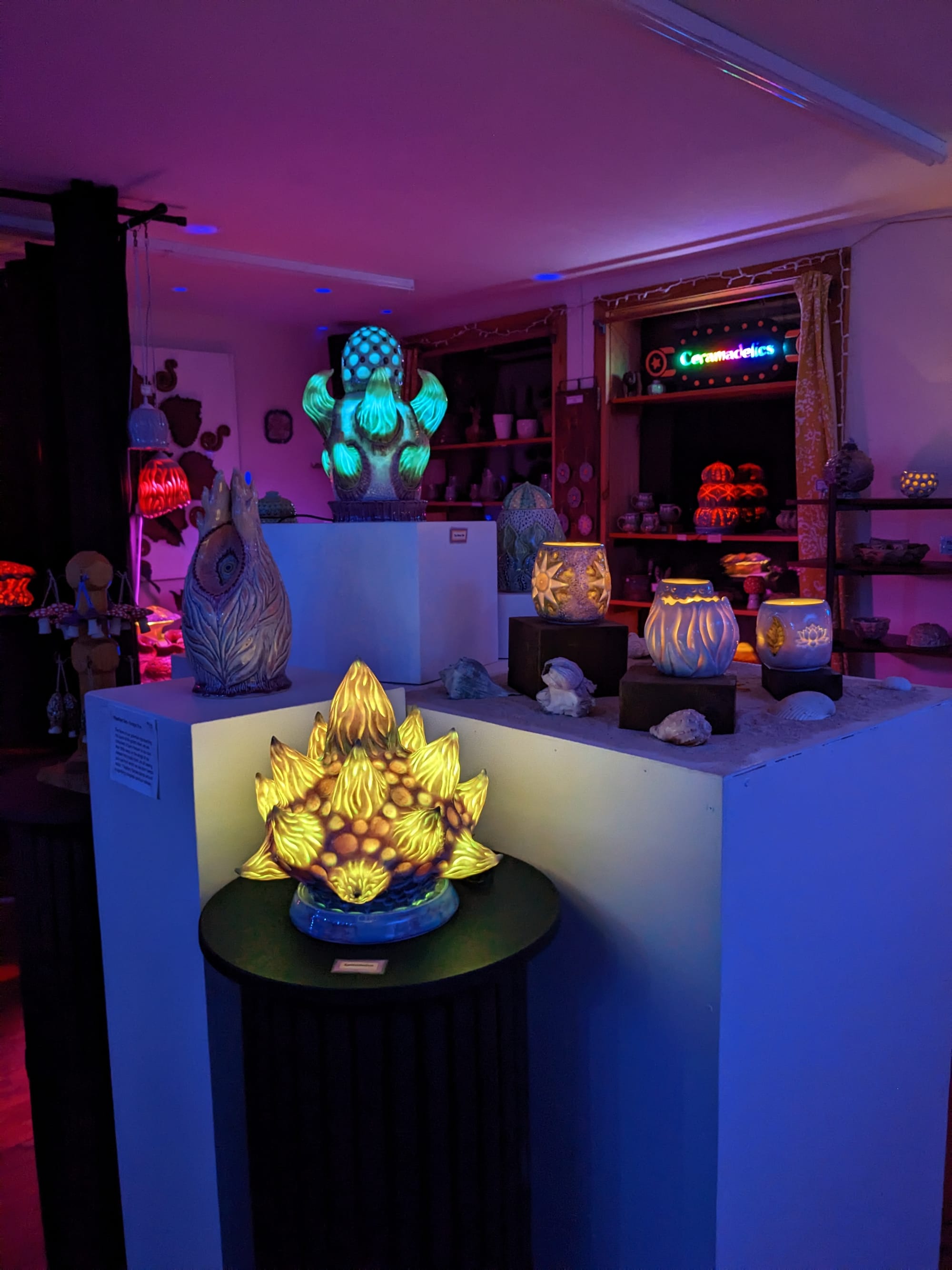
Bridget's ceramic mushroom 'Mothership' glows above the rest at Mudventions' Ceramadelics light show.
This interview has been edited for length and clarity. All images published with permission from Bridget Fox.
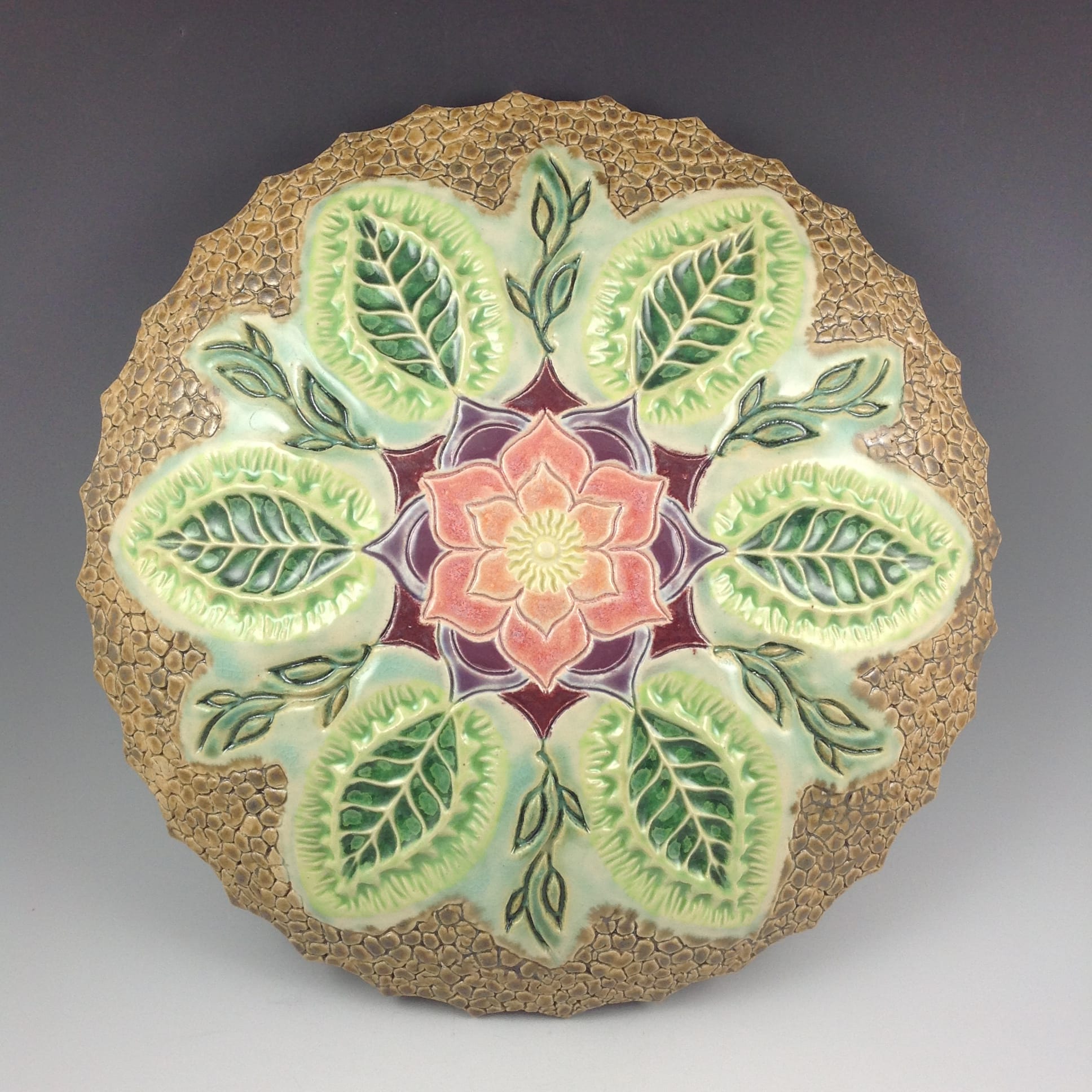
Bridget Fox, Mudventions
Website: https://mudventions.com/
Instagram: https://www.instagram.com/mudventions/
Etsy: https://www.etsy.com/shop/Mudventions
Email: BFox [at] Mudventions [dot] com