Michael Gates Reimagines Catawba Valley Pottery for a New Era
Drawing on a six-generation legacy, sculptor Michael Gates blends traditional Catawba Valley pottery methods with surrealism and esoteric symbolism.

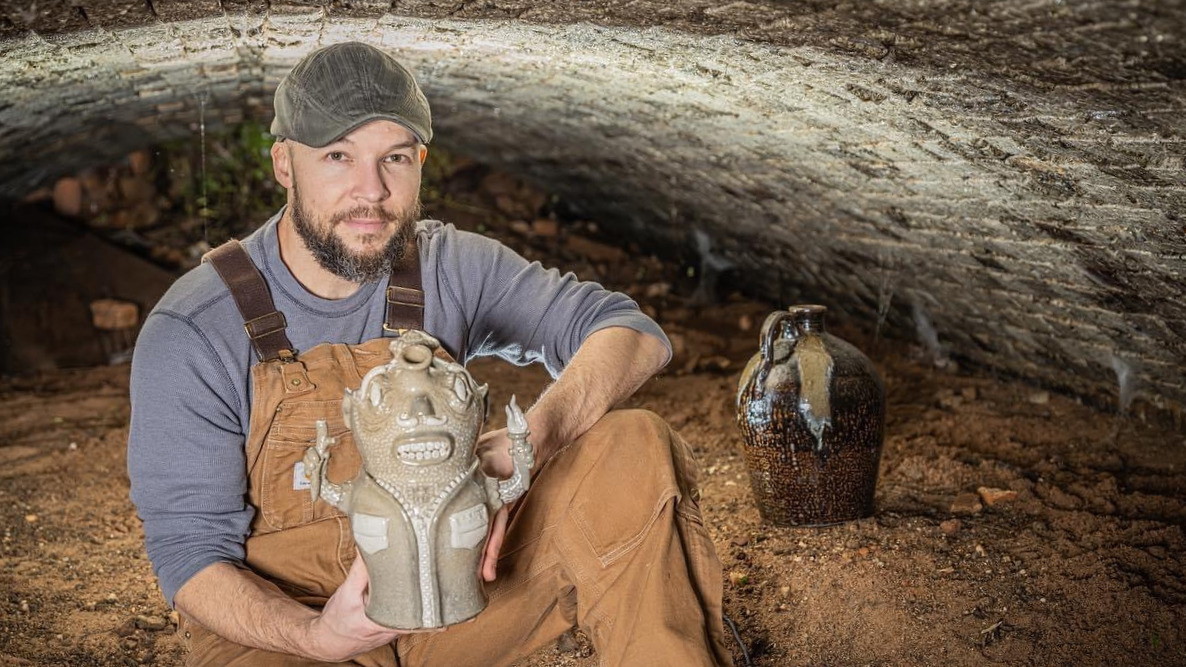
In the 1930s, sculptor Michael Gates’ great-grandfather, Enoch Reinhardt, built a modest, one-story pottery workshop on his family’s farm in North Carolina’s Catawba Valley. Outfitted with a traditional wood-fired kiln, the Reinhardt-Craig House, Kiln, and Pottery Shop was designed to expand the Reinhardt family’s tradition of crafting utilitarian ceramics—a six-generation legacy that began in the mid-1800s and lives on today through Michael’s work.
While Michael draws on influences as varied as esoteric symbolism, futuristic technology, online culture, and surrealists like Dalí and Magritte, his technique is steeped in the traditions of Catawba Valley pottery: wood-firing in subterranean “groundhog” kilns, applying alkaline glazes, and working with hand-dug North Carolina clay. His pieces in Body of Work, ArtsvilleUSA’s fall 2026 exhibition, also pay homage to an iconic regional art form: the face jug.
 Morgan Laurens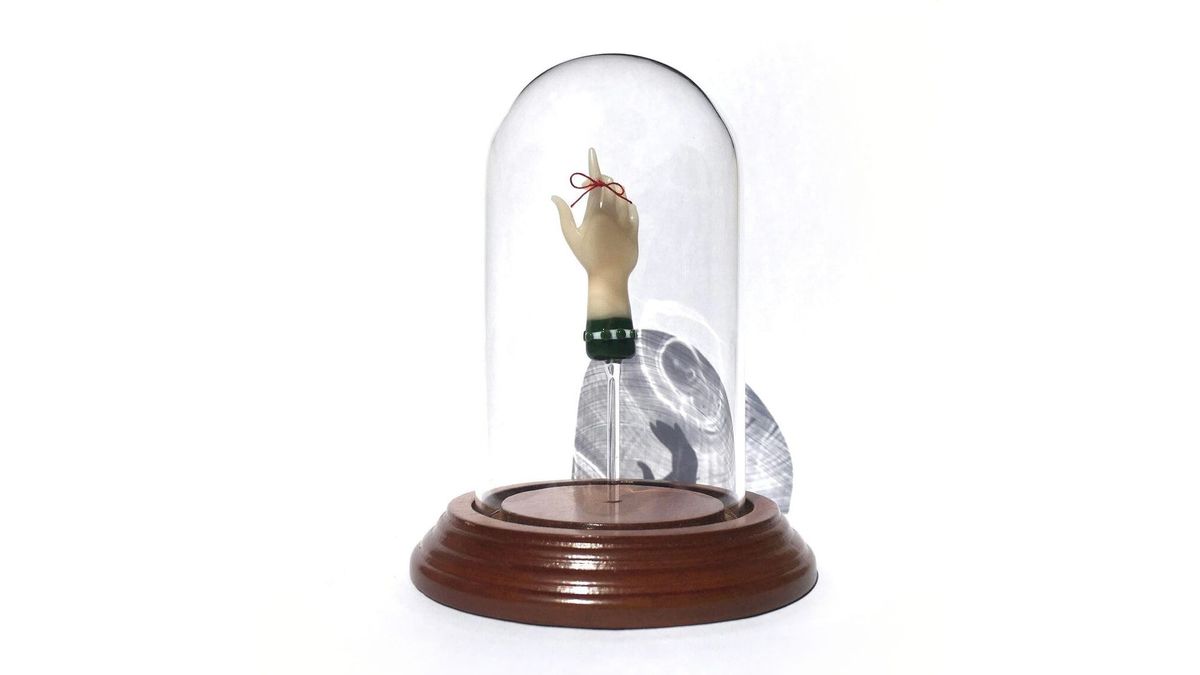
The Story Behind the Face Jug
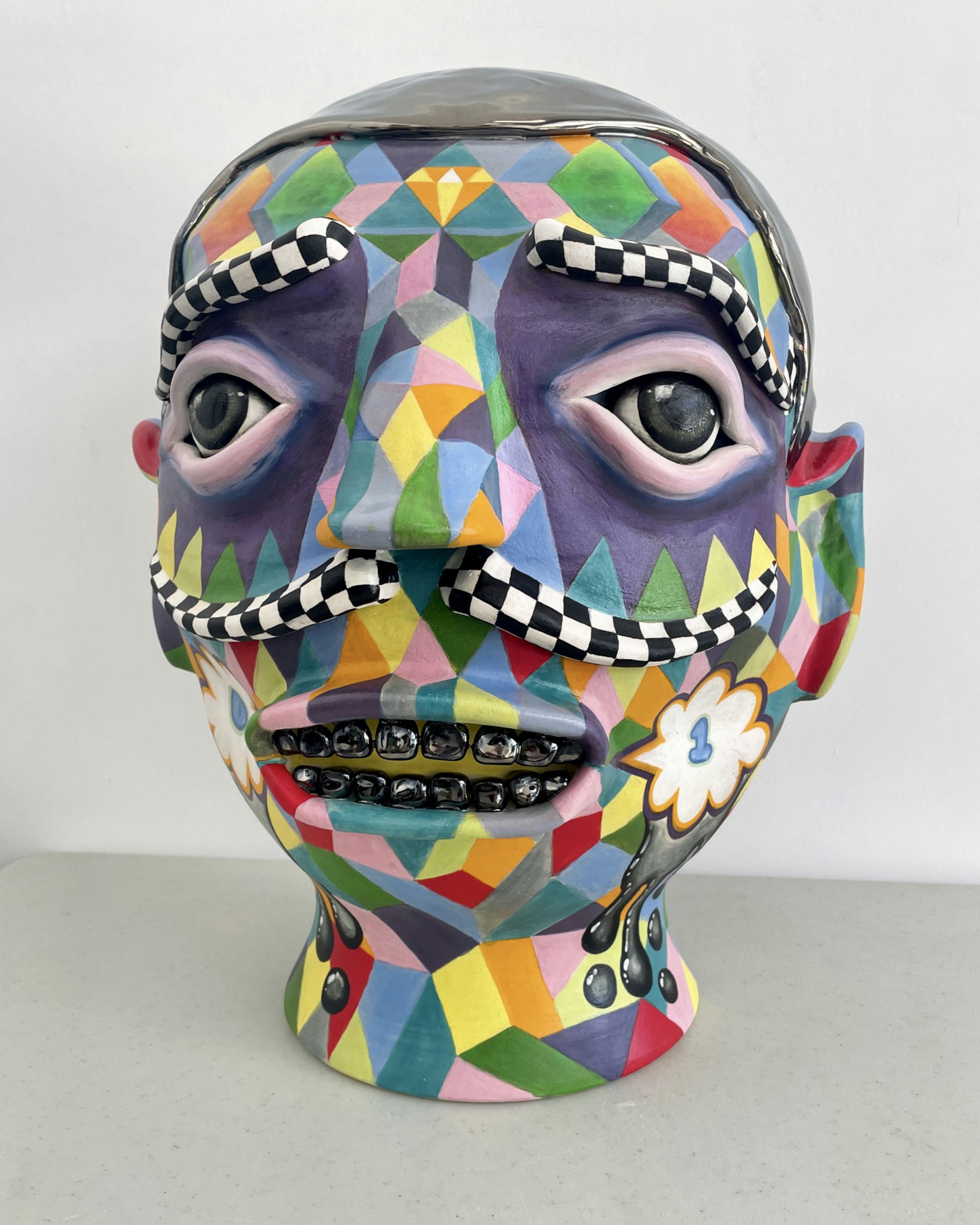
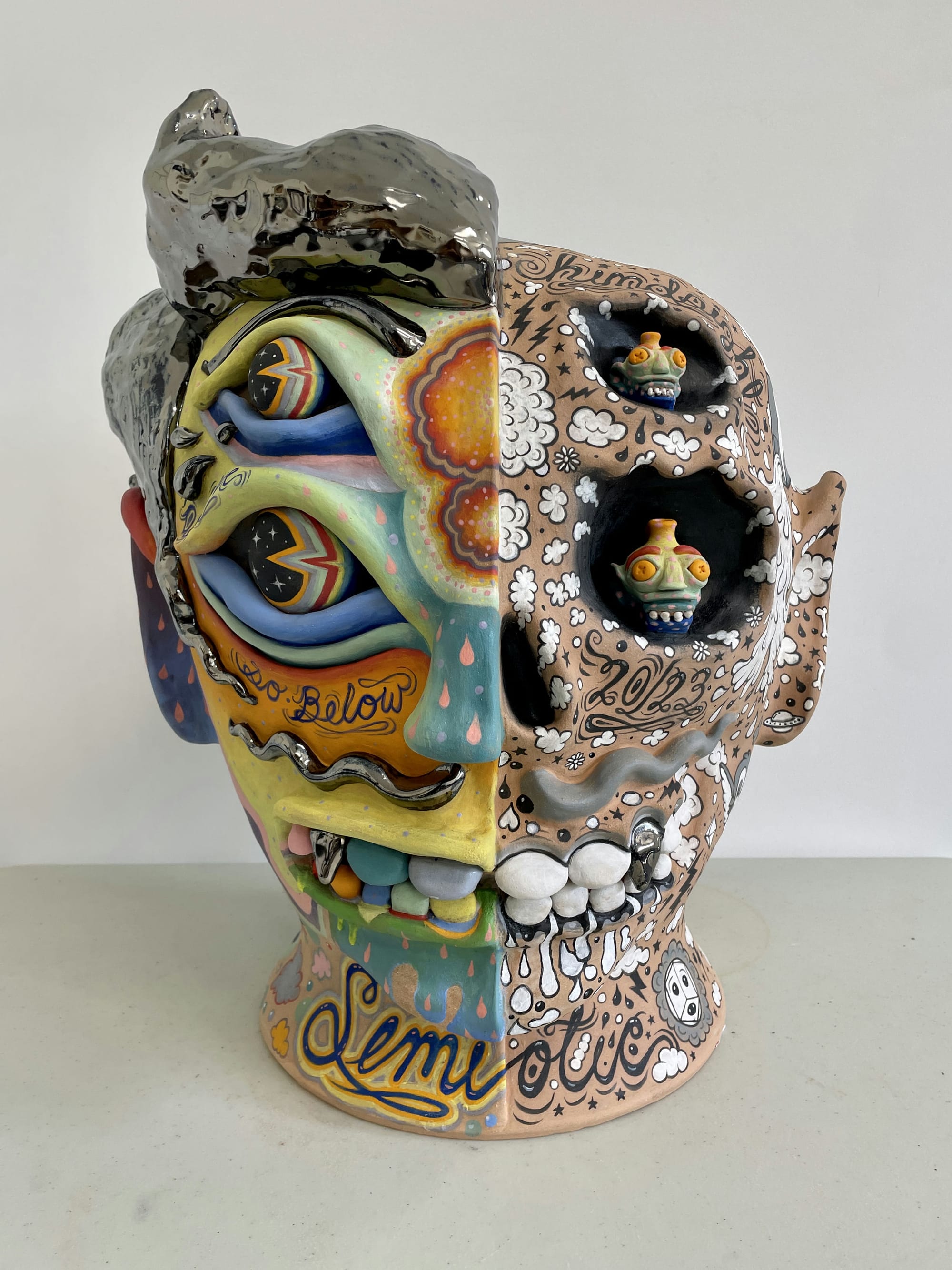
'Big Head' (l) and 'Hemi-Sync' are both featured in the ArtsvilleUSA exhibition, 'Body of Work.'
Face jugs, an American folk art, trace their origins to both freed and enslaved African American potters working in South Carolina’s Edgefield District during the latter half of the 19th century. These expressive stoneware vessels feature characteristics such as wide eyes, bared teeth, contrasting kaolin clay accents, and signature alkaline glazes.
As Jim “The Black Potter” McDowell—a WNC “ceramic activist” whose work is held by the Smithsonian and the Met—explains on an ArtsvilleUSA podcast episode, Edgefield potters crafted face jugs for spiritual purposes and to honor their African ancestors and heritage. Many early vessels were inscribed with poetic text illuminating the brutality of slavery.
After the Industrial Revolution displaced the cottage industries that once provided functional pottery to rural farms, white artists in Catawba Valley began adopting and reinterpreting various folk arts, including the face jug. Although the forms no longer held the same spiritual significance, artisans continued using the labor-intensive techniques that had long defined Catawba Valley pottery. For over two decades, master traditionalist Burlon Craig—who purchased the Reinhardt-Craig House, Kiln, and Pottery Shop from Michael Gates’ great-uncle, Harvey Reinhardt, in 1945—single-handedly preserved these pre-industrial methods. When Burlon began experimenting with face jugs in the 1970s, it led to a regional folk art revival that continues today with contemporary artists like Steve Abee, Michael Ball, and, carrying forward his family’s legacy, Michael Gates.
Traditional Techniques, Contemporary Pottery
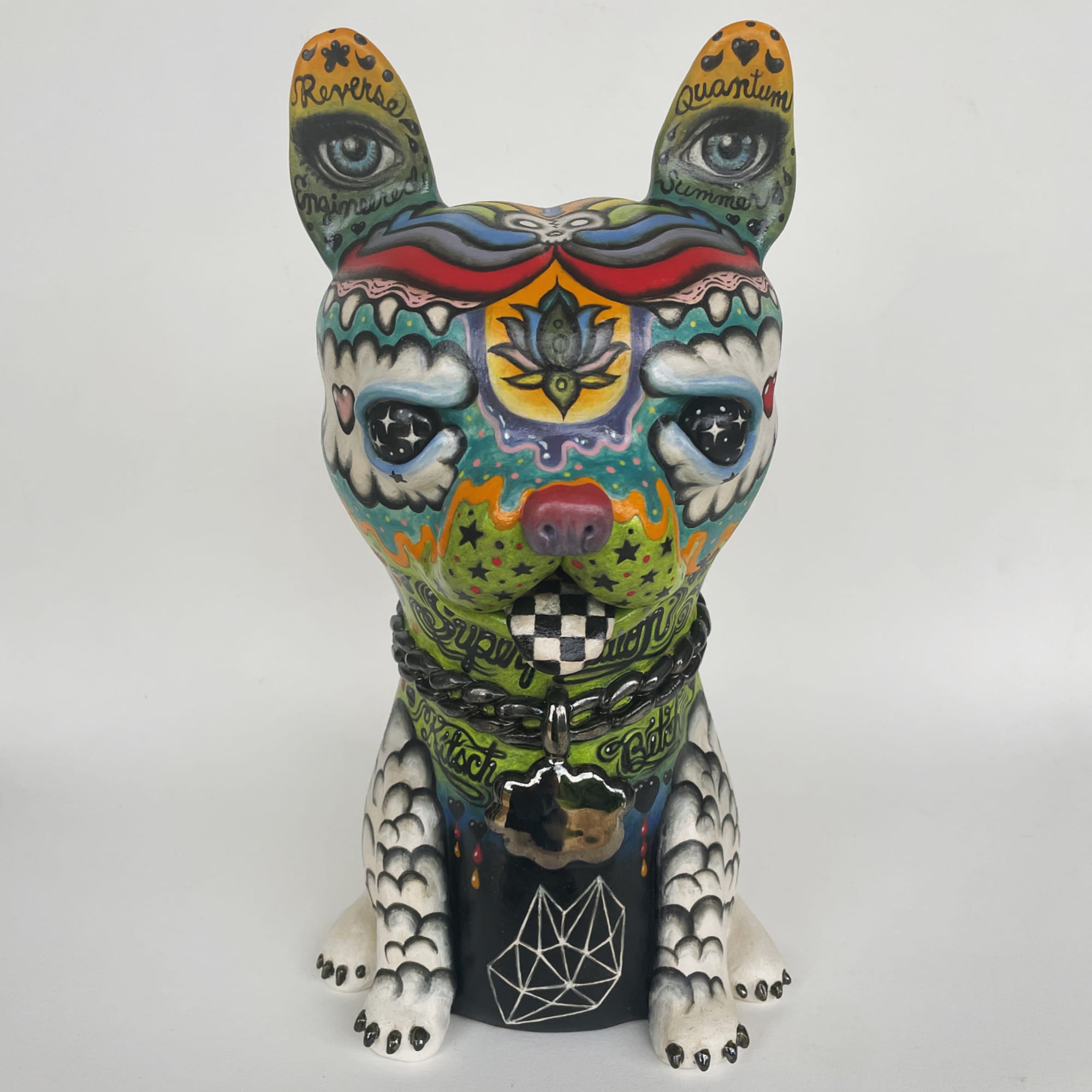
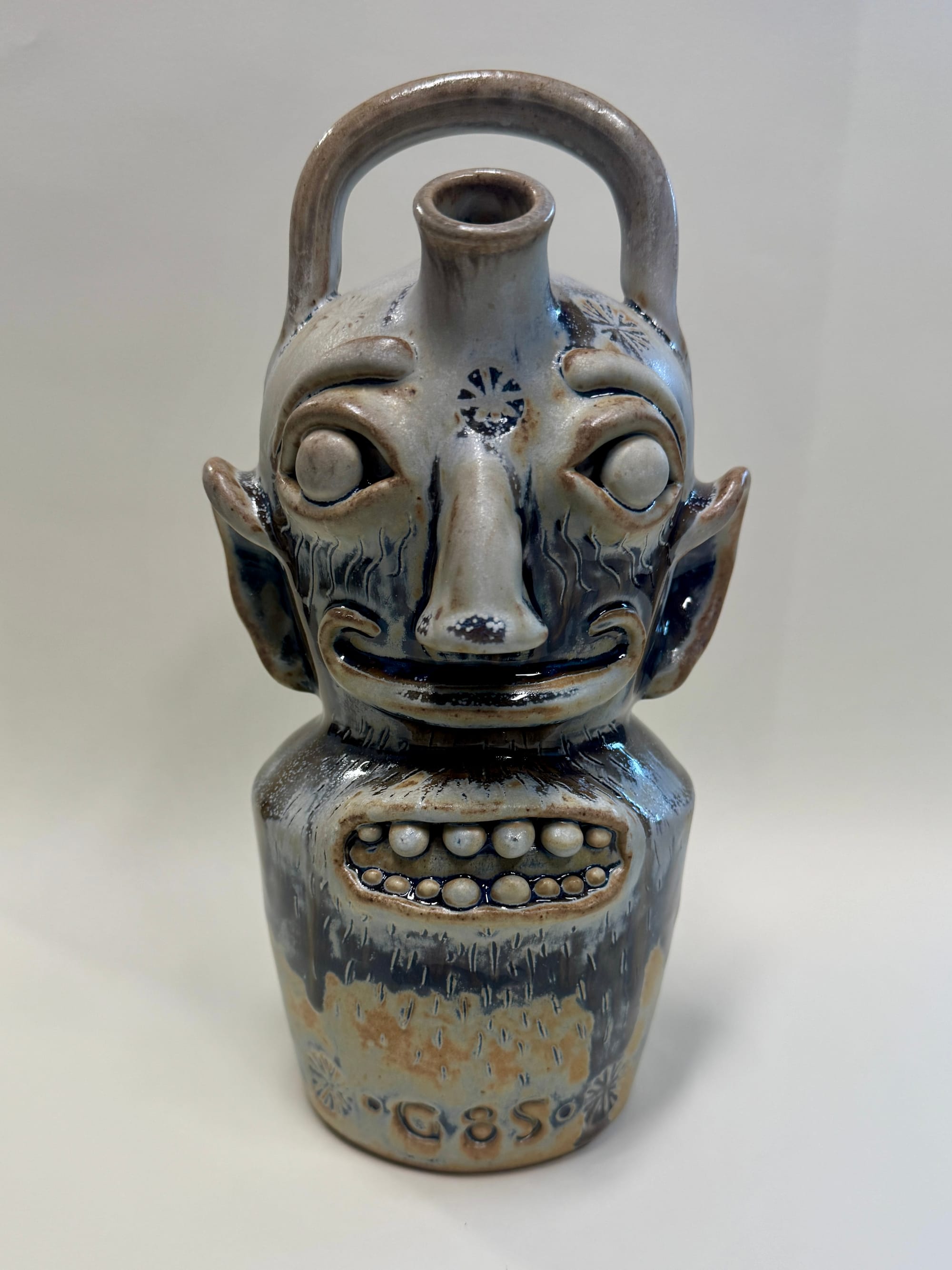
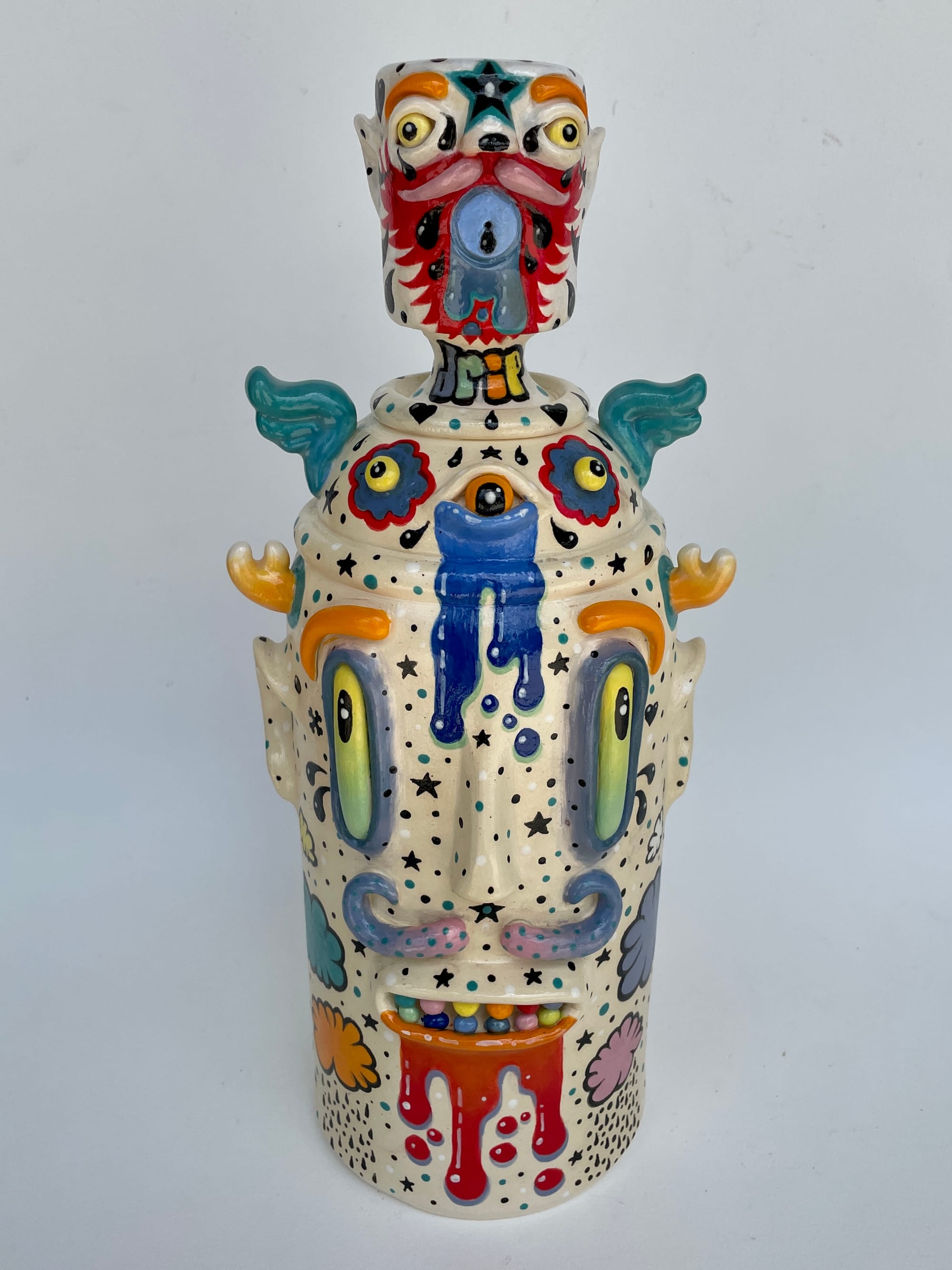
(l-r) 'Lotus Pup'; 'Monkey Jug'; 'Spray Paint Can'
Although Michael now lives in Asheville, about an hour west of the Catawba Valley, he routinely visits the region to deepen his artistic connection to his ancestors. “I always knew about the family history when I was growing up, and would hear stories about my great-grandfather,” he recalls. “But I thought pottery was just something old and obsolete that people did many years ago.”
Things changed for Michael when he signed up for a ceramics class as an art student at UNC Greensboro. After college, he moved to California, dipped his toes in graphic design, “did a lot of painting,” and had a solo show at a gallery in Los Angeles. It wasn’t until he returned to WNC and settled in Avery County that he took up the wheel again.
As Michael researched his family legacy, his focus on ceramics sharpened. “I love combining my ancestors’ simple, utilitarian pottery and the ideas and inspiration that come from these fast-moving times. Right now I’m doing a lot of sculptural pieces, playing around with form and shape and pieces that are meant to hang on a wall.”
Regardless of the project, Michael’s work hews close to traditional Catawba Valley methods, which, while similar to Edgefield techniques, developed independently. As Michael explains, “The Edgefield potters started using an alkaline glaze around the same time as my folks in the Catawba Valley did.” One distinction is that while Edgefield potters typically used lime in their glaze, producing lighter colors, Catawba Valley Potters used ash, which creates darker colors.
For decades, artisans like his grandfather and Burlon Craig dug their clay straight from the Catawba River basin in the Piedmont, which spans the central plateau of North Carolina between the Blue Ridge Mountains and the coastal plain. Following in their footsteps, Michael collects local clay by the bucketful, leaving in natural bits of quartz and other minerals for texture—what his great-grandfather called “pearls.”
“My ancestors settled in N.C. because they wanted farmland, but they also wanted clay. They found such good clay, both white and dark,” he says, alluding to spiralware, a distinctive “marblized” pottery that became a hallmark of Catawba craft, his great-uncle’s specialty, and a skill Michael has also mastered.
Keep the Kiln Burning
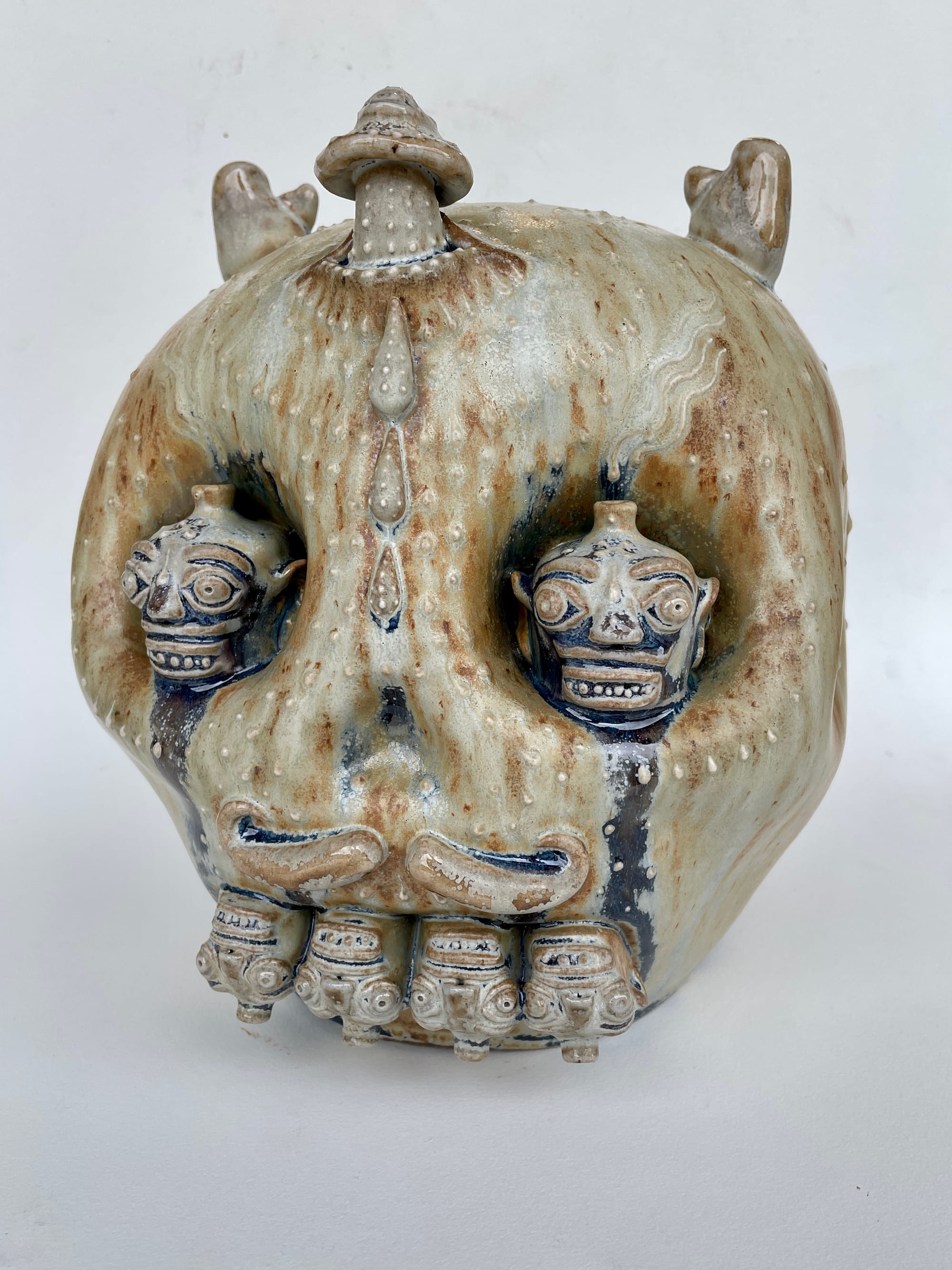
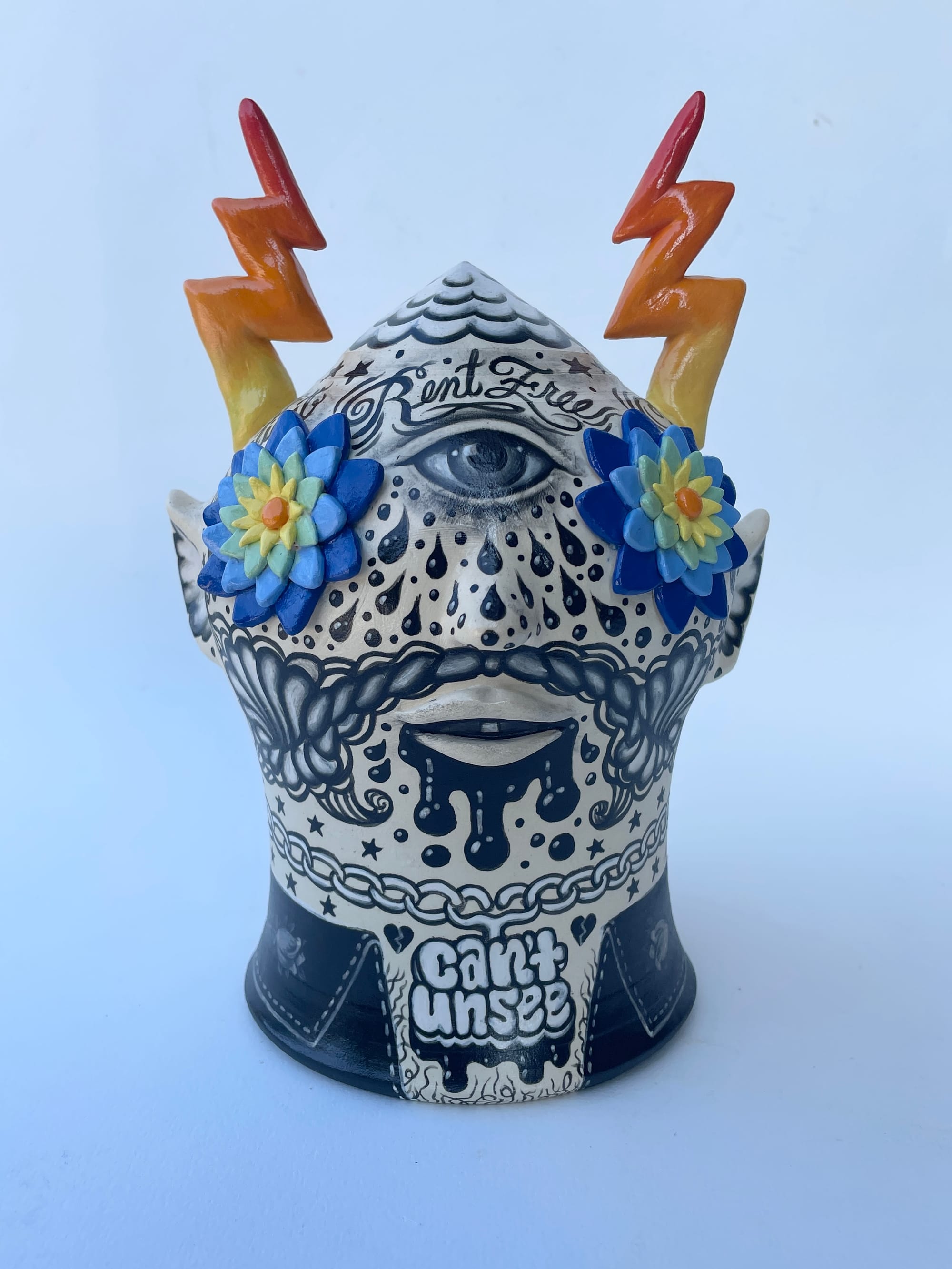
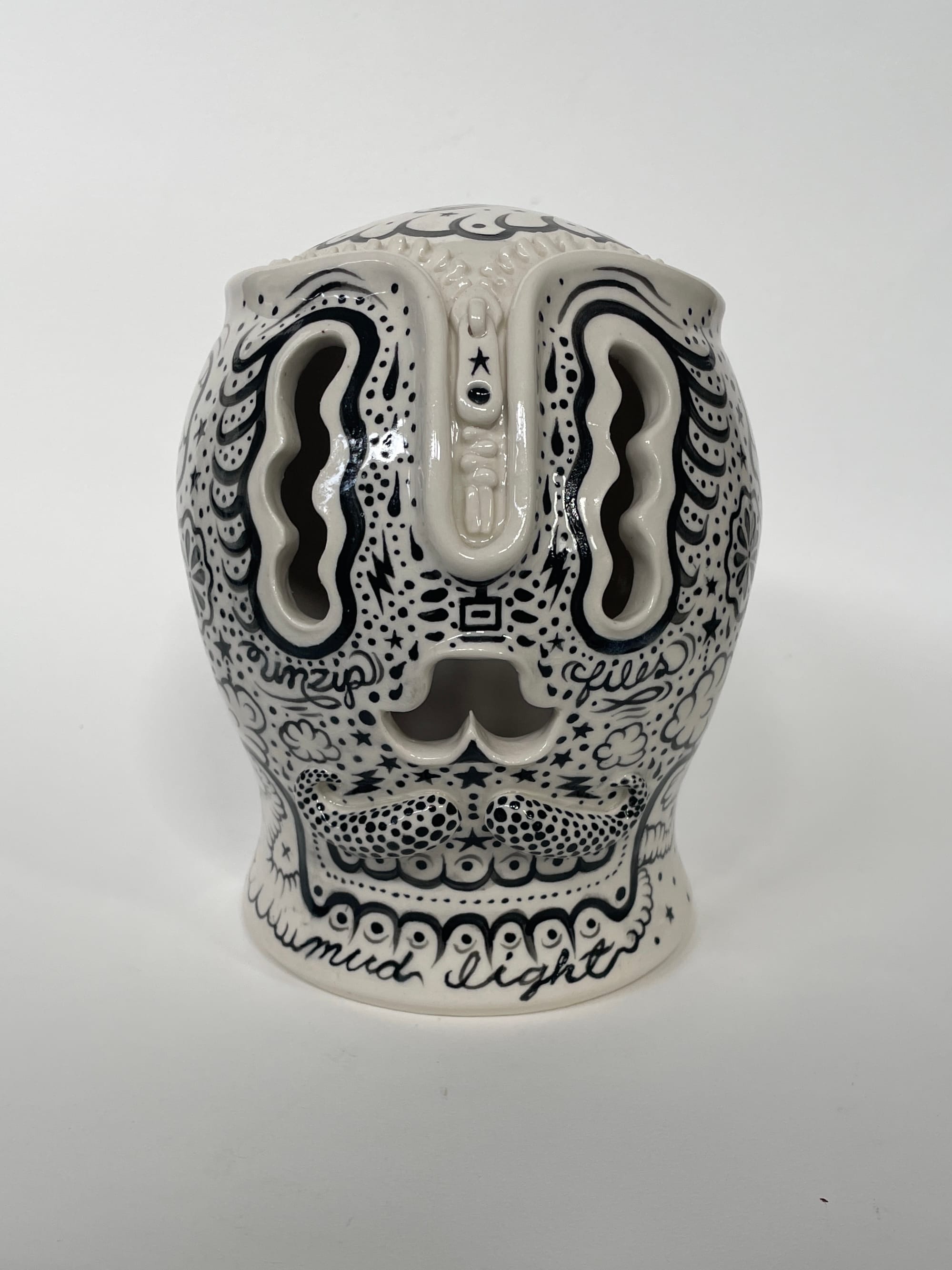
(l-r) 'Juggy Skull'; 'Rent Free'; 'Zipper Skull'
While rare today, subterranean “groundhog kilns” were dominant across the American South in the 19th and early 20th centuries, particularly in pottery hubs like Edgefield and Catawba Valley. “They are so low to the ground that you have to crawl inside to load them, but that can be kind of fun,” notes Michael, who typically fires his work in an electric kiln to achieve the bright colors that have become his signature.
A couple of times a year he’ll use a friend’s more labor-intensive wood-fired kiln. Firing with wood, as his great-grandfather did, usually yields more organic-looking and unpredictable results, as ashes fly around in random ways and live flames lick the pots. Someday soon, Michael hopes to fire work in his family’s own groundhog kiln. The one his great-grandfather built nearly a century ago still stands at the Reinhardt-Craig House, Kiln, and Pottery Shop, though its firebox and chimney need repairing after damage from Hurricane Hugo in 1989.
Today, the site is overgrown—“a jungle,” as Michael puts it—and clearing it is slow work, especially given the distance from his home in Asheville. Still, it's a way to honor his family’s legacy and keep Catawba Valley pottery alive: “It’s a work in progress, and we’re gradually getting there.”
This interview has been edited for length and clarity; all photos published with permission of Michael Gates.

Michael Gates
Website: https://michael-gates-pottery.square.site
Instagram: https://www.instagram.com/g8s_art
Facebook: https://www.facebook.com/MichaelGatesPottery